
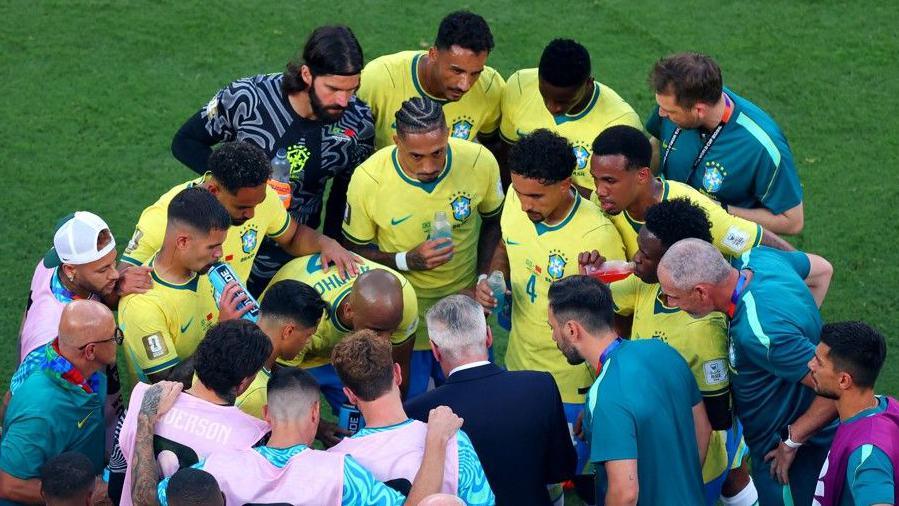
World Cup 2026 hydration breaks momentum rules explained is the question dividing football's coaching elite, former players, broadcasters, and fans as FIFA's mandatory three-minute drinks breaks at the 22-minute mark of each half in all 104 World Cup matches have already produced some of the tournament's most significant momentum shifts in its opening days, with teams trailing at the break emerging to equalise, teams on top losing their rhythm, and tactical coaches like Carlo Ancelotti and opponents of the rule like Mauricio Pochettino publicly debating whether the breaks serve the player welfare purpose FIFA designed them for or whether they have fundamentally altered the competitive dynamics of the world's most watched sporting tournament. The breaks were introduced to help players cope with the stifling heat and humidity levels in Mexico, Canada, and the United States, where summer temperatures in outdoor stadiums and even some indoor venues create the genuine physiological risk of heat stress and dehydration that FIFA's medical advisory teams identified as requiring a structural intervention rather than optional on-field hydration. However, the rule's application across all 104 games, including at stadiums with retractable roofs and interior climate control where temperatures are regulated to comfortable playing conditions, has produced the specific criticism that the rule is being applied universally when the original player welfare rationale justifies it only selectively.
USA head coach Mauricio Pochettino's blunt assessment that he does not like the breaks and only accepts them when conditions are extreme, with mandatory stops in climate-controlled venues being unnecessary in his view, captures the coaching perspective that the rule has overreached from its legitimate player welfare function into a universal interruption that changes football's natural competitive dynamics regardless of environmental conditions. US Women's coach Emma Hayes delivered the most insightful coaching analysis of the rule's competitive consequences, calling them momentum breaks rather than hydration breaks based on her observation that the team on top never wants the break while the team losing momentum always does, creating a rule that systematically advantages the trailing team regardless of whether player welfare considerations justify the intervention in any specific match. Brazil manager Ancelotti's candid acknowledgment after his team's first half equaliser against Morocco that the hydration break allowed him to explain a problem to his players and make a tactical adjustment identifies the specific mechanism through which the breaks function as coaching opportunities that FIFA's player welfare framing does not acknowledge or regulate.
The opening round's evidence for the breaks' competitive impact is already substantial, with Brazil trailing Morocco 1-0 at the break before equalising six minutes after play resumed, Canada equalising against Bosnia-Herzegovina soon after a second-half break through substitute Cyle Larin, Scotland scoring the only goal of their Haiti win shortly after a break, and Australia grabbing their opener in similar circumstances in a 2-0 win against Turkey, creating a pattern in which teams in deficit at the break moment have repeatedly found their way back into matches in the minutes immediately following play resumption. The correlation between breaks and momentum shifts does not establish causation in any individual case, because Vinicius Jr's equaliser for Brazil required individual brilliance regardless of the coaching instruction the break permitted, but the consistency of the pattern across multiple matches in the tournament's opening days creates the competitive evidence that the debate's partisans are each using to support their pre-formed positions about whether the rule is a player welfare innovation or a game-disrupting commercial accommodation.
Why FIFA Introduced Hydration Breaks and What the Research Says
FIFA's decision to mandate hydration breaks at the 2026 World Cup reflects the sports medicine research consensus that playing football in high temperatures without adequate hydration creates genuine and serious physiological risks for professional athletes whose exertion levels during competitive matches produce heat and sweat loss rates that can exceed the body's ability to regulate temperature without external intervention. The combination of high ambient temperatures, high humidity levels that reduce sweat evaporation efficiency, direct solar radiation in outdoor stadiums, and the high-intensity exertion of professional football creates the specific environmental and physiological context in which heat stroke, heat exhaustion, and severe dehydration become realistic medical risks rather than theoretical concerns that can be managed through normal on-field water provision at goal kicks and out-of-play moments. FIFA's medical advisory teams studying the conditions in the three host countries determined that the normal provision of water at natural stoppages was insufficient to ensure adequate hydration maintenance across a 90-minute match in the hottest and most humid venues, justifying a mandatory structural intervention that guarantees a minimum hydration opportunity regardless of the game's natural flow.
The 22-minute timing of the breaks in each half reflects the sports medicine assessment of when physiological heat and hydration stress begins to accumulate to the point where intervention provides the greatest preventative benefit, arriving before the full effects of dehydration and heat stress become performance-limiting and well before they become medically dangerous. The three-minute duration balances the practical requirements of players consuming adequate fluid, coaches delivering any necessary communication, and trainers assessing any players showing early signs of heat stress against the competitive disruption that longer breaks would create. FIFA's original hydration break framework, used in previous tournaments and international matches in hot climates, established the template that the 2026 mandatory application extends to all matches rather than only those where environmental monitoring systems indicate temperatures exceeding a specific threshold, and it is this universal application rather than the break concept itself that most critics have targeted.
The climate-controlled stadium application of the rule is the specific implementation decision that has attracted the most direct criticism, with Pochettino's comment about the break being unnecessary when conditions are good and De la Fuente's acknowledgment that tomorrow's match in Atlanta will be at chilled temperatures while still including the mandatory break illustrating the gap between the rule's medical justification and its universal application. FIFA's apparent decision to apply the break universally regardless of venue temperature to avoid the operational complexity of a conditions-based application, which would require real-time temperature monitoring and match-by-match decisions about break application, trades the administrative simplicity of a universal rule for the competitive distortion of mandatory interruptions in matches where no player welfare benefit exists.
How Hydration Breaks Became Commercial Controversies
The accusation from former Arsenal and England striker Ian Wright that the breaks represent another way of getting adverts into the game from an American point of view connects the player welfare framing to the commercial interests of U.S. broadcasters whose advertising revenue model depends on the structured stoppages that American sports formats provide and that football's continuous play has historically not offered in the same volume or predictability. Fox Sports' overrun of advertisements during a hydration break in the tournament's opening match between Mexico and South Africa provided the specific evidential moment that Wright's accusation required, demonstrating that the break had been used as an advertising opportunity in a way that the player welfare framing had not acknowledged as part of the rule's purpose. The perception that FIFA's player welfare innovation coincidentally aligned with U.S. broadcaster commercial interests is not evidence of bad faith in the rule's design, but it creates the specific suspicion that the universal application of the rule, including in climate-controlled venues where no player welfare justification exists, reflects commercial considerations that the player welfare framing is providing cover for.
Juan Mata, the 2010 World Cup winner with Spain, offered the former elite player's perspective that he would have disliked the three-minute break in each half when playing, identifying the rhythm disruption as the primary competitive problem from a player's vantage point. A player who has spent 22 minutes building the physical and mental intensity of competitive match play, establishing their personal rhythm, anticipating opponents' movements, and being in the tactical flow of the game as it has developed, experiences the mandatory three-minute break as an interruption to a mental and physical state that takes time to rebuild after any pause. The specific comparison to basketball timeouts that some commentators have made is imperfect because basketball's structure includes multiple timeouts as part of its fundamental competitive design in ways that football's continuous play tradition does not, making the hydration break feel more disruptive to football's competitive integrity than equivalent pauses do in sports whose structure accommodates them.
The Competitive Evidence, the Loser Pattern, and What the Tournament Will Reveal
The opening round's most dramatic example of a team damaged rather than helped by the hydration break was Curacao's experience in Houston, where the World Cup debutants from the smallest nation ever to play in the tournament by size and population were in dreamland having equalised against Germany to make it 1-1 shortly before the first-half drinks break, only to concede seven goals after the break and lose 7-1 in a collapse whose timing relative to the break created the specific before-and-after comparison that anti-break commentators have found most useful. Germany's ability to use the break to regroup after being frustrated by a smaller nation's equaliser, and Curacao's inability to maintain the competitive performance whose disruption the break enabled, documents the asymmetric competitive consequence of a rule that allows the superior team to reset mentally and tactically in ways that the inferior team's momentum-dependent performance cannot survive. The Czech Republic's loss of momentum against South Korea after leading at the first-half break, and the Netherlands' failure to hold a 2-1 lead into the second-half break against Japan before drawing 2-2, add to the emerging pattern of teams on top at break time failing to reproduce their pre-break dominance after resumption.
Spain boss Luis de la Fuente's more supportive view of the breaks, emphasising his interest in player health and describing the break as the right measure even acknowledging Monday's Atlanta game would be temperature-controlled, represents the coaching perspective that treats player welfare as the primary value that the competitive distortion concerns must be weighed against rather than the reverse. De la Fuente's framing that throughout the week huge temperatures have made exposure difficult for workers and that players need to drink water, breathe, and receive one or two directions during breaks provides the coaching endorsement of the rule's welfare dimension that FIFA's medical teams used to justify its introduction. The difference between De la Fuente's supportive position and Pochettino's critical one may partly reflect the specific tactical styles their teams employ, with teams that prefer patient possession-based football perhaps less disrupted by breaks than teams whose high-pressing, high-tempo approaches depend on sustained momentum and physical intensity that three-minute interruptions disperse.
As the tournament progresses from group stages to knockout rounds where margin for error is eliminated and single matches determine elimination, the hydration break's competitive impact will be measured against the highest possible stakes, creating the moments where a 22-minute momentum shift produced by a break could determine which teams reach the quarter-finals, semi-finals, and ultimately the final. FIFA's willingness to assess the rule's effectiveness during and after the tournament, and potentially to modify its application based on evidence of competitive distortion versus the player welfare benefits in different venue conditions, may determine whether the 2026 World Cup hydration break becomes a permanent feature of football's major tournament calendar or a well-intentioned experiment whose universal application produces the reform that selective conditions-based application always offered as an alternative.