
African Union Ebola Bundibugyo Congo Uganda response funding 2026 has been confirmed at $910 million, including $80 million from African member states themselves, as the African Union's Centres for Disease Control and Prevention announced in a Thursday statement the most significant continental health emergency funding commitment in recent years, aimed at accelerating the response to the Ebola Bundibugyo outbreak that has been affecting both the Democratic Republic of Congo and Uganda in a cross-border health emergency whose management requires the coordinated international funding that Thursday's pledge represents. The scale of the commitment, with $80 million coming directly from African member states alongside the larger total package, marks a specific and symbolically important shift in African health emergency financing toward greater continental self-reliance rather than complete dependence on international donor funding from Western governments and multilateral health organisations, reflecting the African Union's stated commitment to the Agenda 2063 vision of an Africa that funds its own development and security priorities including public health emergencies. The Ebola Bundibugyo virus, named after the Ugandan district where it was first identified in 2007, is one of the less frequently encountered Ebola species but carries significant mortality risk and the cross-border dimension of the current DRC-Uganda outbreak creates the specific containment challenge that requires both countries' health systems to coordinate response activities across an international border in ways that national response frameworks alone cannot manage without the continental and international support that Thursday's pledge is designed to provide.
The $910 million total, whose composition beyond the $80 million African member state contribution was not detailed in the AU CDC statement, represents the financial foundation for the accelerated response that outbreak control requires at the specific phase when containment is still achievable but requires the rapid deployment of healthcare workers, medical countermeasures, surveillance infrastructure, and community engagement resources at a scale that the affected countries' own health budgets cannot provide from their existing resources. Ebola outbreak response economics are characterised by the specific time-sensitivity that makes early investment significantly more cost-effective than later crisis management, because each transmission generation that occurs before containment measures are fully operational multiplies the eventual response cost, the total case count, and the mortality burden in ways that the funding's speed of deployment matters as much as its total scale. The accelerate framing in the AU CDC statement acknowledges that existing response activities have been underway but require the additional resources that the $910 million pledge provides to achieve the response intensity that containment timelines demand.
The cross-border nature of the Congo-Uganda outbreak creates the specific epidemiological and diplomatic complexity that distinguishes the current situation from single-country Ebola responses, because controlling a cross-border outbreak requires coordinated surveillance, consistent case definition application, harmonised contact tracing protocols, and agreed policies on cross-border movement of affected individuals and their contacts that national health ministries operating independently cannot achieve without the supranational coordination mechanism that the African Union and AU CDC are positioned to provide. Uganda's previous experience with multiple Ebola outbreaks, including the 2000 Gulu outbreak that killed more than 200 people and the more recent 2022 Sudan Ebola virus disease outbreak that required significant international response, gives the country's health ministry institutional experience of outbreak response that the current coordination with DRC can build on, while DRC's extensive recent experience with multiple Ebola outbreaks in its eastern provinces since the 2018 to 2020 Kivu epidemic provides the specific operational expertise in complex security environment response that the current outbreak's geography may require.
How the Ebola Bundibugyo Virus Has Affected Africa and Why This Outbreak Demands Accelerated Response
The Ebola Bundibugyo virus was first identified during a 2007 outbreak in Uganda's Bundibugyo district that infected approximately 149 people and killed 37, establishing a case fatality rate in the 25 percent range that, while lower than the highest fatality rates recorded for Ebola Zaire, still represents a severe and life-threatening infectious disease whose occurrence in any community produces the fear, social disruption, and healthcare system strain that all Ebola species produce regardless of their specific mortality profiles. The 2012 Uganda Bundibugyo outbreak, which infected 24 people and killed 6, confirmed the virus's continued circulation in the Uganda-DRC border region and its capacity to re-emerge in human populations through the zoonotic spillover events that characterise Ebola's epidemiology, with the likely animal reservoir being fruit bats whose geographic range spans the Central and East African rainforest ecosystems where both DRC and Uganda are located. The cross-border Uganda-DRC geography of the Bundibugyo virus's documented outbreaks reflects the specific ecological and epidemiological reality that the virus circulates in communities and wildlife populations that do not respect the international boundary between the two countries, making the current cross-border outbreak a predictable rather than surprising development given the virus's documented history in this specific geographic zone.
DRC's experience with multiple Ebola outbreaks across different virus species, including the catastrophic 2018 to 2020 Kivu outbreak that caused more than 3,400 cases and 2,200 deaths and represented the world's second largest Ebola epidemic on record, has generated the institutional knowledge, trained response workforce, and community awareness that provides a foundation for the current response, but also the outbreak fatigue and community distrust of health authorities in some affected areas that complicated the Kivu response and may affect the current outbreak's community engagement dimension. The specific challenges of Ebola response in DRC's eastern provinces, where multiple armed groups operate, displacement is widespread, and healthcare infrastructure has been chronically underfunded and repeatedly disrupted by insecurity, remain relevant to any outbreak response in the DRC component of the current emergency even if the Bundibugyo outbreak's specific geographic location differs from previous DRC outbreaks.
The African Union CDC's role in the current response reflects the institutional development of African health emergency governance since the 2014 to 2016 West Africa Ebola epidemic, which killed more than 11,000 people and exposed the catastrophic inadequacy of both national health system preparedness and the international response coordination mechanisms that existed at the time. The AU CDC was formally established in 2017 partly as a direct institutional response to the lessons of the West Africa epidemic, designed to provide the continental health intelligence, emergency response coordination, and technical support capacity that the lack of a functioning African health authority had made impossible to deploy during the West Africa crisis. The current outbreak's management through the AU CDC framework, including the $910 million funding pledge coordinated at the continental level, documents the institutional development that the West Africa epidemic accelerated even as it documents the continued gap between Africa's public health emergency response capacity and the scale of the challenges that cross-border outbreaks create.
The International Ebola Response Architecture and Its Financial Dependencies
Africa's historical dependence on international donor funding for Ebola and other public health emergency responses reflects the structural reality of health system financing on a continent where governments' health budget allocations as a percentage of national budgets have consistently fallen short of the 15 percent target that the 2001 Abuja Declaration committed African Union members to achieve, creating the chronic underfunding of health systems that makes emergency response dependent on the international mobilisation of external resources rather than the sustainable domestic financing that genuine health security requires. The $80 million contribution from African member states within the $910 million total pledge, while representing a relatively small proportion of the overall package, is symbolically significant precisely because it represents continental member states choosing to allocate their own resources to the emergency rather than relying entirely on external donors whose priorities, timelines, and conditionalities have sometimes complicated response efficiency in previous African health emergencies. The domestic African contribution to outbreak response funding creates the ownership and accountability that domestic financing provides, connecting the African Union's political commitment to continental health security to the financial commitment that transforms political declarations into operational resources.
The Ebola response financing architecture has evolved since the West Africa epidemic toward greater pre-positioned emergency funding, faster disbursement mechanisms, and stronger connection between surveillance investment and response capacity, with the World Bank's Pandemic Emergency Financing Facility, the Global Fund's emergency response windows, and bilateral donor commitments all having been redesigned in the aftermath of 2014 to 2016 to reduce the response lag that cost lives during the initial phases of that epidemic. The current $910 million pledge's framing as accelerating rather than initiating the response suggests that initial response activities have been underway and that the funding's purpose is to intensify those activities to the scale that containment requires rather than to fund a response that has not yet begun, which is itself a sign of the improved early response mobilisation that the post-West Africa institutional reforms were designed to achieve.
What the $910 Million Must Fund and How the Response Can Succeed
Accelerating the Ebola Bundibugyo response in both DRC and Uganda requires the simultaneous deployment of resources across multiple response components whose effectiveness depends on their integration rather than their individual quality, with the epidemiological surveillance and contact tracing that identifies chains of transmission, the isolation and treatment facilities that break those chains, the medical countermeasures including vaccines and experimental therapeutics that reduce mortality and protect healthcare workers, the community engagement that builds the trust without which communities report cases, cooperate with contact tracing, and seek treatment rather than concealing illness, and the health system support that prevents the outbreak from overwhelming the healthcare infrastructure that both affected countries' populations depend on for all conditions rather than just Ebola. The vaccine component is particularly significant for the Bundibugyo species response, because the most widely used Ebola vaccine rVSV-ZEBOV was developed and proven effective against Ebola Zaire and its cross-protective efficacy against Bundibugyo virus is less well established than for the Sudan and Zaire species, creating the specific medical countermeasure challenge that the response funding must address through the accelerated deployment of ring vaccination strategies and the clinical research that characterises the effectiveness assessment of vaccines in outbreak conditions.
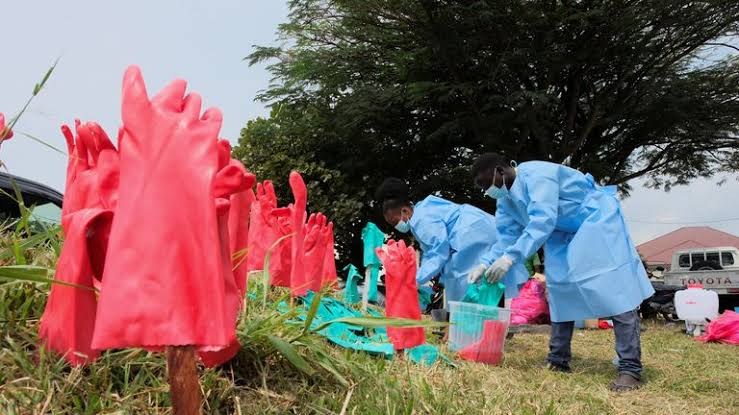
The healthcare worker protection dimension of the response funding is the most operationally critical investment for sustaining response capacity through the outbreak's containment period, because the loss of healthcare workers to Ebola infection during response operations, documented extensively in the West Africa epidemic and in previous DRC outbreaks, has a multiplier effect on the response's capacity that goes far beyond the individual human tragedy of each healthcare worker death. A healthcare worker infected with Ebola who continues working while in the early symptomatic phase creates the contact tracing challenge of identifying and monitoring every patient they interacted with, potentially overwhelming the contact tracing capacity whose strength determines whether outbreak containment or amplification is the trajectory that the following weeks produce. The personal protective equipment, training, safe burial protocols, and risk allowances that keep healthcare workers safe are therefore not simply humanitarian investments but the specific operational assets whose adequacy or inadequacy most directly determines the speed and completeness of the outbreak's containment.
The community engagement and risk communication resources that the $910 million must fund are the response components whose underinvestment in previous outbreaks has been most consistently identified as a containment failure factor, because communities that do not trust health authorities or do not understand the disease transmission risk do not report cases to health systems, do not present for treatment until late in the illness course, and do not cooperate with the contact tracing and quarantine measures that break transmission chains. The cultural and social dimensions of Ebola transmission, particularly the traditional burial practices that bring mourners into contact with the bodies of those who died from Ebola and whose modification requires the community legitimacy and respectful engagement that heavy-handed enforcement destroys, represent the specific anthropological challenge that community engagement funding must address with the sensitivity and local knowledge that external responders cannot provide without the community health worker networks and local civil society partnerships that the response investment must build and sustain.