
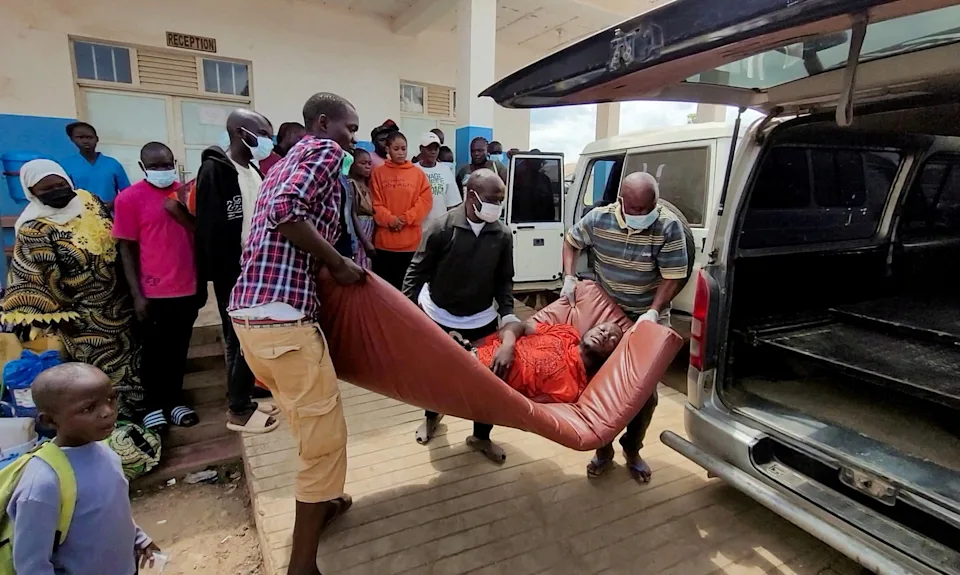
The death toll from an Ebola outbreak DR in eastern Democratic Republic of Congo has risen to 131 after 26 additional suspected fatalities were recorded within a single 24-hour period, authorities confirmed on Tuesday, as the World Health Organization's Director-General expressed deep personal concern about the epidemic's alarming pace and geographic spread. The outbreak, caused by the rare Bundibugyo strain of the Ebola virus, has now produced 543 suspected cases and 33 confirmed cases within DRC, with two additional confirmed cases identified in neighboring Uganda, raising fears of a cross-border crisis in one of the world's most conflict-affected and under-resourced regions. WHO Director-General Tedros Adhanom Ghebreyesus took the extraordinary step on Saturday of declaring the situation a public health emergency of international concern before even convening an emergency committee, the first time any WHO chief has acted with that level of urgency in the organization's history, a signal of how seriously global health authorities are treating the current threat.
The severity of the situation is compounded by the circumstances that allowed the outbreak to go undetected for weeks before health authorities could respond. Eastern DRC is a region of extraordinary geographic and logistical complexity, characterized by dense population centers, widespread armed violence, and severely limited healthcare infrastructure. Those conditions created an environment in which the Bundibugyo strain was able to circulate and spread across a heavily populated area without triggering the early detection systems that more accessible and better-resourced health systems might have caught. The outbreak's belated identification has allowed it to reach a scale that now requires a coordinated international response, and the appearance of confirmed cases in Butembo, a city of hundreds of thousands of people, on Monday underscored how rapidly the geographic footprint of the crisis is expanding even as response efforts are being mounted.
The international dimensions of the outbreak are developing quickly. Uganda has begun restricting movement across the Ishasha-Kyeshero border crossing without formally closing it, while Rwandan border authorities have been stopping Congolese people attempting to cross from Goma and Bukavu. The WHO had explicitly urged countries not to close their borders on Saturday, warning that formal closures tend to redirect movement toward informal and unmonitored crossings that are far harder for health authorities to screen and that can accelerate rather than limit viral spread. The tension between national border control instincts and the WHO's evidence-based guidance on outbreak management is a familiar challenge in major infectious disease events, and navigating it effectively will be one of the key tests of international coordination as the Ebola response scales up.
The Bundibugyo Strain, Limited Diagnostics, and Why This Outbreak Is Particularly Difficult to Contain
The Bundibugyo strain of Ebola is considerably rarer than the Zaire strain that caused the devastating West African epidemic of 2014 to 2016 and the second-deadliest outbreak in DRC's history from 2018 to 2020, which killed nearly 2,300 people. That relative rarity creates a specific and serious problem for the current response: unlike the Zaire strain, there are no approved virus-specific therapeutics or vaccines for the Bundibugyo strain. The absence of a ready-made medical countermeasure means that clinicians treating patients in eastern DRC are limited to supportive care rather than targeted antiviral therapy, and the global scientific community must work urgently to develop or adapt treatments and vaccines for a strain that has not previously demanded the same research investment as its more frequently occurring relatives.
Diagnostic capacity for the Bundibugyo strain has emerged as a critical bottleneck in the response effort. WHO's representative in DRC, Anne Ancia, told reporters that just six diagnostic tests per hour are currently possible for the Bundibugyo strain, a throughput that is wholly inadequate for an outbreak of the current scale in a region with hundreds of thousands of potentially exposed individuals. The limited testing capacity means that the confirmed case count of 33 is almost certainly a significant undercount of actual infections, with the 543 suspected cases representing a much larger population whose status cannot be definitively determined at current testing rates. This diagnostic gap creates cascading problems for contact tracing, isolation, treatment prioritization, and the epidemiological modeling that informs resource allocation decisions across the response.
Experts have been direct in connecting the current outbreak's delayed detection and limited response capacity to the consequences of cuts in global health funding by the United States and other major donors in preceding years. Sierra Leone's health minister Austin Demby, speaking at the World Health Assembly in Geneva on Tuesday, offered a pointed assessment, saying the world seemed to have wasted the lessons of the COVID-19 pandemic by reverting to pre-pandemic complacency about health preparedness investment. WHO's Ancia confirmed that reductions in health funding had had a tremendous impact on the organization's ability to counter the Ebola outbreak, even while noting that the WHO had been working productively with the US government on the current response. The tension between reduced institutional investment in global health preparedness and the operational demands of a fast-moving outbreak has rarely been more visibly illustrated than in the current situation in eastern DRC.
American Evacuation, US Response, and the Global Effort to Develop Vaccines and Treatments
The outbreak reached a new level of international visibility when the US Centers for Disease Control and Prevention confirmed on Monday that one American had tested positive for Ebola. The individual was identified as Dr Peter Stafford by his Christian mission organization, and the CDC announced that Stafford and six other Americans who had been exposed to the virus were being moved to Germany for specialized care and monitoring. The evacuation to Germany reflects the established protocol for managing Ebola exposures among international workers in outbreak zones, routing potentially infected individuals to facilities with the biosafety containment capacity and clinical expertise needed to safely manage Ebola cases while minimizing transmission risk to the surrounding community.
The US government moved to restrict entry of travelers who had been present in DRC, Uganda, or South Sudan within the preceding 21 days, with certain exceptions, for a period of 30 days, and issued guidance urging Americans to avoid travel to those countries for any reason. The US also announced an initial mobilization of 13 million dollars to support the outbreak response, with Secretary of State Marco Rubio telling reporters in Washington that American funds would help establish 50 clinics to treat Ebola cases across the affected region. Rubio acknowledged the logistical difficulty of operating in the remote and conflict-affected areas where the outbreak is centered, describing it as a little tough to get to given its rural location while expressing a commitment to leaning into the response significantly. He said further announcements about the US contribution to the response would follow.
The scientific response to the absence of approved Bundibugyo-specific treatments and vaccines is being coordinated through a WHO-led expert panel that convened on Tuesday to evaluate available options. The WHO's Ancia identified Merck's Ervebo vaccine, which was developed and proven effective against the Zaire strain, as one candidate being considered for potential adaptation or deployment, but cautioned that it would take approximately two months to become available even if that pathway were pursued. The US is separately working to develop a monoclonal antibody therapy as a potential treatment for the Bundibugyo strain, a research effort that could eventually provide a targeted therapeutic option but will not deliver results within the immediate response window. Africa CDC, the continent's leading health agency, urged against border restrictions on Tuesday, warning that such measures can hurt economies, discourage transparency about outbreak reporting, and complicate the humanitarian operations that the response depends upon.