
Iran War Escalates Strikes has struck back at military targets across the Middle East in one of its most aggressive counterattack sequences since the war began nearly two weeks ago, demonstrating that its armed forces retain significant offensive capability despite what the Pentagon described as the most intensive U.S.-Israeli bombardment of the conflict so far. At least three ships were struck in the Gulf on Wednesday, the Strait of Hormuz remains effectively closed, and Iran's new supreme leader, Mojtaba Khamenei, is believed by Israeli intelligence to have been wounded in the early strikes that killed his father, mother, wife, and a son.
Financial markets, which had been in freefall earlier this week following the record oil price surge, have partially stabilised. Investors appear to be making a calculated bet that U.S. President Donald Trump will find a way to engineer a swift end to the war he launched alongside Israel. That optimism may prove premature. There is no visible diplomatic channel, no ceasefire framework in discussion, and no sign that tankers can safely resume transit through the Strait of Hormuz the narrow waterway through which a fifth of the world's oil normally flows.
The picture on the ground is one of escalation, not wind-down. Iran is targeting banking infrastructure, Gulf energy facilities, American military bases, and Israeli cities simultaneously. The war has moved well beyond its opening phase, and both the human and economic costs are compounding by the day.
How Iran Built a Multi-Front Strike Capability Over Decades
Iran did not develop its capacity to strike targets across a 2,000-kilometre arc of the Middle East by accident. The Islamic Revolutionary Guard Corps spent the better part of three decades methodically building a layered offensive architecture ballistic missiles, cruise missiles, armed drones, and a network of allied militias positioned across Iraq, Syria, Lebanon, and Yemen designed specifically to give Tehran the ability to impose costs on adversaries even while absorbing punishment itself. The doctrine, sometimes described as forward defence, was built on the premise that Iran's enemies should never feel safe regardless of how hard they struck Iranian soil.
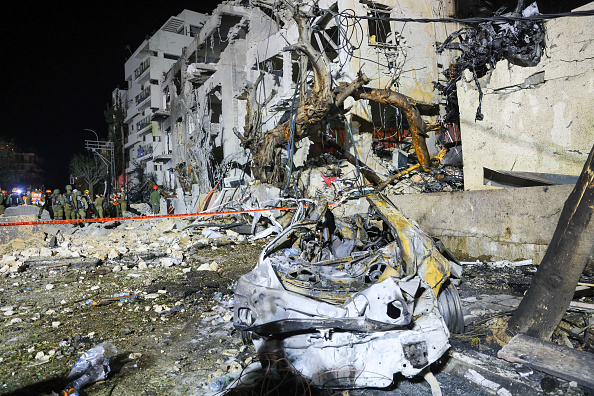
That investment is now on full display. Even as U.S. and Israeli aircraft carry out what the Pentagon has called the most intensive strikes of the war, Iranian forces have continued to launch coordinated attacks on a U.S. base in northern Iraq, the U.S. naval headquarters in Bahrain, and residential areas of central Israel. This is not the behaviour of a military on the verge of collapse. It is the behaviour of a force executing a pre-planned attrition strategy absorbing blows while inflicting enough pain on the other side to complicate any easy declaration of victory.
The architecture of allied militias matters enormously here. Hezbollah in Lebanon, various armed factions in Iraq, and Houthi forces in Yemen all represent extensions of Iranian striking power that do not require orders from Tehran to remain operationally active. Even if Iran's own military were severely degraded and the evidence suggests it has not been the broader network of forces aligned with the Islamic Republic can continue to generate pressure across the region independently.
The Banking and Financial System as the New Battlefield
Iran's announcement that it would target U.S. and Israeli banking infrastructure across the Middle East following overnight strikes on an Iranian bank represents a significant escalation in the scope of the conflict. Financial targeting is not new in modern warfare sanctions and asset freezes have been part of the Iran conflict for decades but direct physical attacks on banking facilities introduce a different kind of risk. Regional financial centres including Dubai and Bahrain host the Middle Eastern operations of dozens of global banks, and any successful strike on those facilities would send shockwaves through international finance well beyond the energy sector.
The threat also carries a psychological dimension aimed at Gulf Arab states that have quietly cooperated with or tolerated the U.S.-Israeli campaign. Countries like the UAE and Bahrain have significant financial sectors that depend on stability and international confidence to function. By explicitly threatening banking targets across the region, Tehran is signalling to Gulf governments that their own economic infrastructure is not insulated from the consequences of the war being fought on their doorstep.
This pattern of deliberately widening the target set from military facilities to energy infrastructure to financial systems reflects a strategic calculation that Iran's best chance of survival is to make the cost of continuing the war unacceptably high for a broad coalition of regional and international actors, not just for Israel and the United States directly.
Iran's History of Fighting While Wounded
The reported wounding of Supreme Leader Mojtaba Khamenei in the early strikes that killed his father, mother, wife, and a son is a detail of enormous human and political significance. Iranian state television's use of language meaning "wounded veteran" to describe him without confirming or denying the specifics follows a well-established pattern in the Islamic Republic's communications playbook: acknowledge enough to shape the narrative domestically without confirming information that adversaries can exploit.
Iran's revolutionary history is saturated with the symbolism of martyrdom and sacrifice, and the clerical establishment has shown a consistent capacity to convert personal loss and physical suffering into political legitimacy. The elder Khamenei himself governed for decades partly on the moral authority derived from injuries sustained during the revolution's early years. If Mojtaba Khamenei is genuinely wounded, the regime's propagandists will almost certainly frame that wound as a mark of honour rather than a sign of vulnerability, deepening the rally-around-the-flag dynamics that tend to consolidate authoritarian governments during wartime.
The Gulf Under Fire — Ships Struck, Dubai Airport Disrupted
At least three ships were struck in the Gulf on Wednesday, the latest in a series of maritime incidents that have extended the conflict's economic reach far beyond Iran's borders. In Dubai, two drones crashed near the international airport the world's busiest for international travellers injuring four people and forcing a significant scaling back of operations. The image of drones falling near a civilian aviation hub that handles tens of millions of passengers annually sends a stark message about how thoroughly the war has begun to degrade the normal functioning of one of the world's most important commercial crossroads.
Explosions were heard in Bahrain, where the U.S. Navy's Fifth Fleet is headquartered and where Iran said it had launched missiles. Bahrain's Bapco Energies already declared force majeure on its refinery this week following an earlier attack, and the compounding of military and energy infrastructure strikes on the small island nation illustrates how the war is simultaneously targeting military, civilian, and commercial systems in a way that makes neat categories of escalation increasingly meaningless.
The Strait of Hormuz remains closed to commercial tanker traffic. Despite the partial recovery in oil prices driven by investor hopes rather than any actual change in supply conditions the fundamental physical reality has not changed. A fifth of the world's oil is still sitting behind a blockaded channel. Storage facilities in the Gulf are filling up. Producers are being forced to cut output not by strategic choice but because there is literally nowhere to put the oil they are pumping.
Tehran's Citizens Are Living Through a Different Kind of War
While the geopolitical and financial dimensions of the conflict dominate international coverage, something quieter and more human is happening inside Tehran. Residents told reporters they are growing accustomed to nightly airstrikes a phrase that should land with its full weight. Becoming accustomed to nightly bombing is not adaptation; it is trauma normalisation, the psychological mechanism that kicks in when there is no option to escape. Hundreds of thousands of people have already fled the city for the countryside. Those who remain are breathing air contaminated by black rain — oil smoke from burning infrastructure that coats the city and its lungs.
The contamination of Tehran's air by oil smoke is not just a public health crisis. It is a visible symbol of how thoroughly the war has reached into everyday life, targeting the infrastructure that makes a modern city function. Refineries and fuel storage are burning. The lights are unreliable. The roads are crowded with people leaving. Iranian civilians, the vast majority of whom have no say over their government's military decisions, are bearing consequences that are not proportionate to any choice they made.
This human reality matters for the war's trajectory. Governments under sustained attack that generate mass civilian suffering either collapse or harden. Iran's clerical establishment has shown across four decades that it will harden. The question is at what cost, to its own people most of all.
Markets Stabilise on Hope, But the Fundamentals Are Unchanged
Oil prices have pulled back from their record highs earlier this week as equity markets in Asia and Europe staged a partial rebound, driven by investor sentiment that Trump will engineer a rapid diplomatic exit from the conflict. That sentiment deserves scrutiny. It is not based on any concrete diplomatic development there is no announced ceasefire framework, no known back-channel negotiation, and no indication that Iran's newly installed supreme leader is in a position to negotiate even if he were inclined to do so.
What markets are actually pricing is a hope: that Trump's transactional instincts will eventually override his maximalist demands and that some kind of deal perhaps falling well short of Iran's unconditional surrender will be quietly constructed. That may happen. But the gap between Trump's public demands (regime change, unconditional surrender, U.S. approval of Iran's leadership) and what any Iranian government could realistically accept is still enormous, and closing it would require a degree of diplomatic finesse that has not been visible in this administration's approach to the conflict so far.
The energy market fundamentals that drove prices to record highs have not changed. The strait is still closed. Gulf producers are still cutting. Bahrain's refinery is still under force majeure. The partial market recovery reflects psychology, not physics and physics tends to win eventually.