
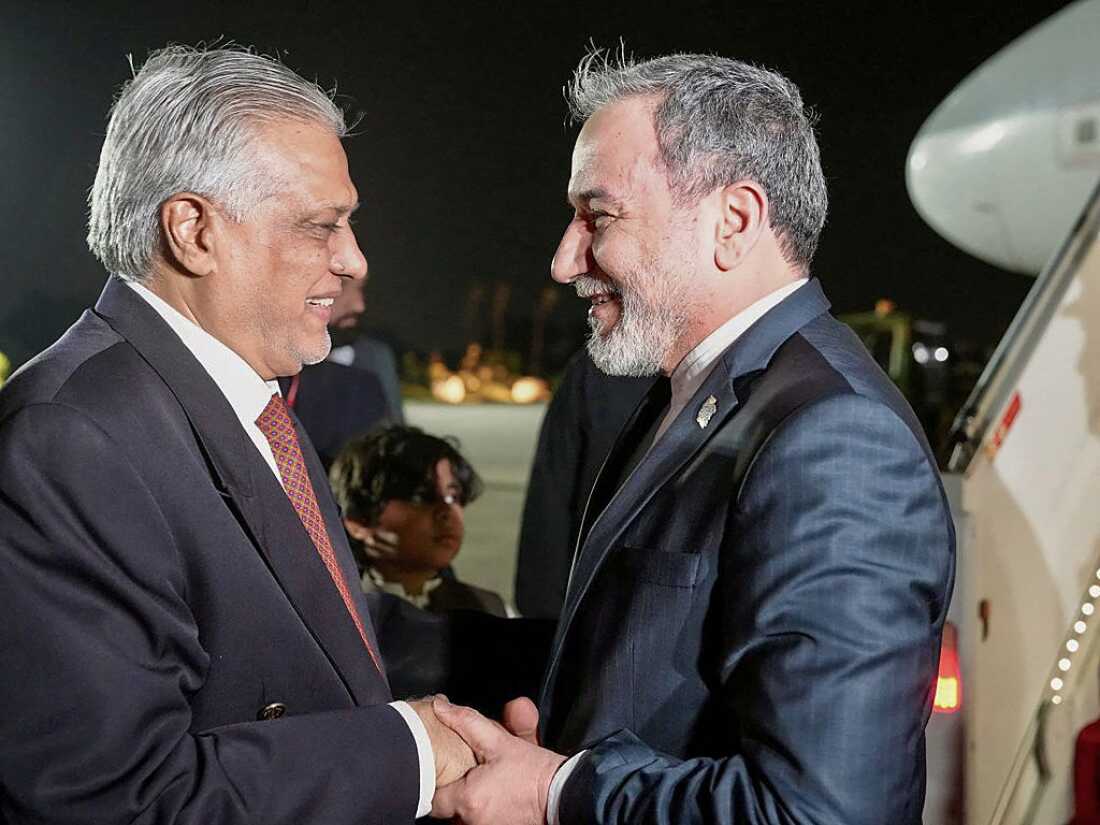
A significant and potentially consequential diplomatic convergence is unfolding in Pakistan this weekend as Iran's Foreign Minister Abbas Araghchi travels to Islamabad for talks at precisely the moment that senior American officials including White House special envoy Steve Witkoff and Jared Kushner, President Donald Trump's son-in-law and close adviser, are heading to Pakistan specifically for discussions related to the Iran nuclear standoff that has driven one of the most dangerous and economically disruptive conflicts in recent international memory. The parallel presence of senior Iranian and American diplomatic figures in the same country at the same time, even if direct face-to-face contact between the two sides has not been confirmed and Iranian officials have stated there are no plans for a direct US Iran talks Islamabad meeting, represents a form of proximity diplomacy that has historically served as a precursor to more formal negotiations when the political conditions for direct engagement are not yet fully established on either side. Pakistan's role as the geographic and political space in which this diplomatic activity is occurring reflects its longstanding position as a country with relationships across the complex fault lines of Middle Eastern and South Asian geopolitics, and its willingness to host these conversations signals a desire to play a constructive role in international diplomacy at a moment when the stakes of the Iran nuclear question could not be higher for global energy markets, regional security, and the trajectory of the broader conflict that has already driven oil prices to levels not seen since the Covid-19 pandemic era.
President Trump added a layer of deliberate ambiguity to the diplomatic situation on Friday when he acknowledged that Iran was making an offer but said he did not yet know what the offer was, a characterization that simultaneously confirmed the existence of some form of Iranian diplomatic outreach while declining to specify its content in ways that would allow either side to be locked into specific positions before the details of any proposed terms have been worked through by the officials conducting the actual negotiations. Trump's careful framing of the situation as one where an offer exists but its content remains to be assessed reflects the strategic communication style of an administration that prefers to maintain maximum flexibility and unpredictability in its approach to adversarial negotiations, keeping both allies and adversaries uncertain about the exact parameters of what would constitute an acceptable deal while signaling enough openness to Iranian overtures to keep the diplomatic channel active and productive. The open question that Washington observers and international diplomats are now asking is how much substantive progress the Pakistan conversations can actually generate, given that the gap between American and Iranian positions on the nuclear question has historically been enormous and the current context of active US military operations against Iran and a naval blockade of Iranian ports creates a hostile backdrop that makes sustained and productive negotiation considerably more difficult than it would be in a lower-tension environment.
Vice President JD Vance's status as on standby to join the Pakistan talks if needed adds a further dimension of seniority and potential escalation to the diplomatic assembly being organized around the Islamabad conversations, suggesting that the Trump administration is prepared to elevate the level of American representation if the conditions for meaningful engagement materialize in ways that would justify deploying such a senior political figure to the talks. Vance has been one of the most publicly active members of the Trump administration on the Iran question, stating after the failure of weekend negotiations that the ball is now in Iran's court and that Washington had put a great deal on the table in previous rounds of discussion. His potential deployment to Pakistan would signal a level of American seriousness about the diplomatic pathway that would be difficult to dismiss as merely procedural or symbolic, and it would also create political pressure on the Iranian side to respond with equivalent seriousness and a willingness to engage substantively on the terms that the American side has indicated are necessary for any deal to be achievable from Washington's perspective.
How the Iran Nuclear Diplomacy Crisis Reached Its Current Critical Juncture
The diplomatic activity converging on Pakistan this weekend represents the latest chapter in a prolonged and increasingly dangerous confrontation between the United States and Iran over the nuclear program that Tehran has been developing over decades and that successive American administrations have sought to constrain through combinations of economic sanctions, diplomatic pressure, and at times threatened or actual military action. The current crisis has its immediate origins in the escalation of tensions that accompanied and followed President Trump's return to the White House, with the administration adopting an aggressive posture toward Iran that included the reimposition and expansion of maximum pressure sanctions, military operations that have been publicly acknowledged, and the naval blockade of Iranian ports in the Persian Gulf that the United States Central Command confirmed was targeting ships entering or leaving Iranian coastal zones. This combination of military and economic pressure, unprecedented in its scope and directness, has created the conditions in which Iran appears to be calculating that some form of diplomatic engagement, even indirect and hedged, is preferable to the continued escalation that a purely confrontational posture would produce.
The International Energy Agency's assessment that the Iran war has already caused the greatest disruption to oil supply in recorded history provides the economic backdrop against which this diplomacy is occurring, a backdrop that creates urgent incentives for resolution on both sides and for the international community of energy-importing nations that has been absorbing the economic consequences of disrupted supply and elevated prices across all sectors of their economies. Iran's oil exports through the Strait of Hormuz had been tracking at approximately 1.7 million barrels per day before the blockade, and the disruption to those flows has tightened an already strained global oil market in ways that have driven prices to levels that are generating significant political and economic pressure in countries across Asia, Europe, and beyond that are far removed from the immediate conflict but bear real costs from its energy market consequences. The economic pain of prolonged high energy prices is generating diplomatic pressure on the United States from allied governments who want to see the Iran situation de-escalated and the oil supply disruption reduced, adding an external dimension to the calculations driving the Pakistan talks beyond the bilateral US-Iran dynamic alone.
Pakistan's emergence as the venue for this round of diplomatic activity reflects both its geographic and political positioning and the specific circumstances of a conflict that has made direct US-Iran diplomatic contact politically difficult for both sides while maintaining the need for some form of communication channel through which positions can be tested, offers conveyed, and the parameters of potential agreement explored without the political costs that a highly publicized direct meeting would impose on governments on both sides that need to manage domestic audiences skeptical of engaging with an adversary they have been portraying in maximally negative terms. Pakistan has maintained diplomatic relationships with both Iran, with which it shares a long border and significant economic and cultural ties, and with the United States, whose financial and military support has been important to Pakistani governments across different political periods, giving it the relational access to both sides that effective third-party facilitation of sensitive diplomacy requires. The willingness of both Iran's foreign minister and senior American envoys to be present in Islamabad simultaneously, even if the current formulation stops short of a direct meeting, suggests that Pakistan's facilitation role is being taken seriously by both parties as a channel through which meaningful diplomatic communication is possible.
What the Parallel Presence of Iranian and American Envoys in Islamabad Could Produce
The specific question of whether the Islamabad diplomatic activity this weekend can generate substantive progress toward the kind of agreement that would reduce military tensions, address American concerns about Iran's nuclear program, and create the conditions for unwinding the oil supply disruption that has been driving global energy price inflation is one that analysts and diplomats are approaching with cautious and carefully calibrated uncertainty. The history of US-Iran nuclear negotiations is a history of painstaking and repeatedly disrupted progress, with the 2015 Joint Comprehensive Plan of Action representing the most significant successful outcome of a negotiating process that took years and involved extensive multilateral engagement before producing an agreement that was subsequently abandoned by the Trump administration in 2018 and that both sides have been attempting to navigate the legacy of ever since. The current administration's approach to Iran negotiations is different from the multilateral framework of the JCPOA in both style and substance, with the Trump team appearing to favor direct bilateral engagement over multilateral forums and to prioritize Iranian concessions on the nuclear program, particularly around enrichment levels and centrifuge numbers, as the essential conditions for any deal worth making from Washington's perspective.
The Iranian position going into the Islamabad diplomatic activity is shaped by the combination of the economic pressure of the sanctions and blockade, the military vulnerability demonstrated by American operations, and the domestic political constraints that make significant nuclear concessions difficult for any Iranian government to accept without being able to present them as part of a comprehensive agreement that delivers concrete and verifiable benefits including sanctions relief, security guarantees, and recognition of Iran's legitimate interests in its own region. Iranian officials have been careful to maintain public ambiguity about exactly what Tehran is prepared to offer in the current round of engagement, consistent with Trump's own statement on Friday that he was aware of an Iranian offer but did not yet know its content, suggesting that the terms being explored in whatever indirect or proximity discussions are occurring in Islamabad are not yet at a stage of specificity that either side is ready to defend publicly as their actual negotiating position. This deliberate ambiguity is diplomatically conventional at early or sensitive stages of negotiations but creates genuine uncertainty about whether the current diplomatic activity represents a real breakthrough in the making or a more limited exercise in signaling and positioning that falls short of the substantive engagement needed to produce an agreement.
The involvement of Jared Kushner alongside Steve Witkoff in the American delegation heading to Pakistan is notable because Kushner, while operating as a private citizen rather than a government official, brings a specific background in Middle Eastern diplomacy from his role in the Trump administration's first term when he was centrally involved in the Abraham Accords that normalized relations between Israel and several Arab states. His presence alongside the formal envoy Witkoff suggests that the Trump administration is deploying multiple channels and relationships simultaneously in the Pakistan conversations, and that the team believes Kushner's particular relationships and negotiating style may add value in an engagement where the personal chemistry and informal dynamics between interlocutors can be as important as the formal positions each side brings to the table. Whether the combination of Witkoff's official envoy status, Kushner's informal relationship network, and the potential elevation of Vance's participation if warranted by developments produces a meaningful diplomatic outcome remains the defining uncertainty of a weekend that could mark either a genuine turning point in the Iran nuclear standoff or another episode of diplomatic activity that generates significant media attention without producing the substantive breakthrough that the scale and urgency of the underlying crisis demands.
What Progress in Pakistan Would Mean for the Broader Regional Conflict
The diplomatic conversations in Islamabad are occurring against the backdrop of continuing military conflict that underlines the urgency of finding a diplomatic pathway even as it complicates the political conditions under which such a pathway can be built. The Israeli military and Hezbollah have continued fighting despite a recently extended ceasefire agreement, with both sides accusing the other of violations in a pattern of mutual recrimination that has made the ceasefire's durability questionable and that keeps the northern front of the broader regional conflict in a state of active if lower-intensity confrontation. The persistence of Israeli-Hezbollah fighting even under a nominal ceasefire arrangement illustrates the difficulty of maintaining diplomatic progress in a region where multiple armed actors with different chains of command and different political interests can independently undermine agreements reached at the state-to-state diplomatic level, and where the connection between the various fronts of the conflict makes progress on any single dimension simultaneously dependent on and potentially undermined by developments on the others.
Any meaningful progress in the Pakistan talks toward a framework for addressing the US-Iran nuclear standoff would have immediate and significant implications for the broader regional conflict, because Iran's relationship with Hezbollah, its support for other armed groups across the region, and its own direct military posture vis-a-vis the United States are all interconnected with the nuclear question in ways that make a purely narrow nuclear deal difficult to sustain without some broader understanding about Iran's regional role and military activities. American officials have consistently indicated that any agreement with Iran cannot be limited to the nuclear dimension alone and must address the broader pattern of Iranian behavior that has contributed to regional instability, a position that Iran has historically resisted on the grounds that its regional relationships and military posture are sovereign matters not subject to negotiation with Washington. Bridging this fundamental gap between American and Iranian conceptions of what an acceptable diplomatic framework would need to cover is arguably the most difficult substantive challenge facing the Islamabad diplomacy and all subsequent rounds of engagement that might build on whatever foundations are laid this weekend.
The energy market dimension of the Iran standoff adds a global economic urgency to the regional security calculations driving the Pakistan talks, with oil prices and the availability of Iranian crude to Asian markets in particular creating economic pressure that extends the stakeholder community for a diplomatic resolution well beyond the immediate parties to the conflict. Countries including China, India, Japan, and South Korea, all of which have significant economic relationships with Iran and all of which have been absorbing the cost of oil supply disruption and elevated prices, have varying degrees of interest in a diplomatic resolution that restores energy market stability even if their ability to directly influence the US-Iran negotiating dynamic is limited. The economic pressure that sustained high oil prices are generating in these major importing economies represents an indirect but real form of international pressure on both sides to find a workable diplomatic outcome, adding to the complex of incentives and constraints that the American and Iranian teams are navigating as they explore in Islamabad what kind of agreement, if any, is possible given where both governments currently stand on the issues that have kept this confrontation active and dangerous for decades.