
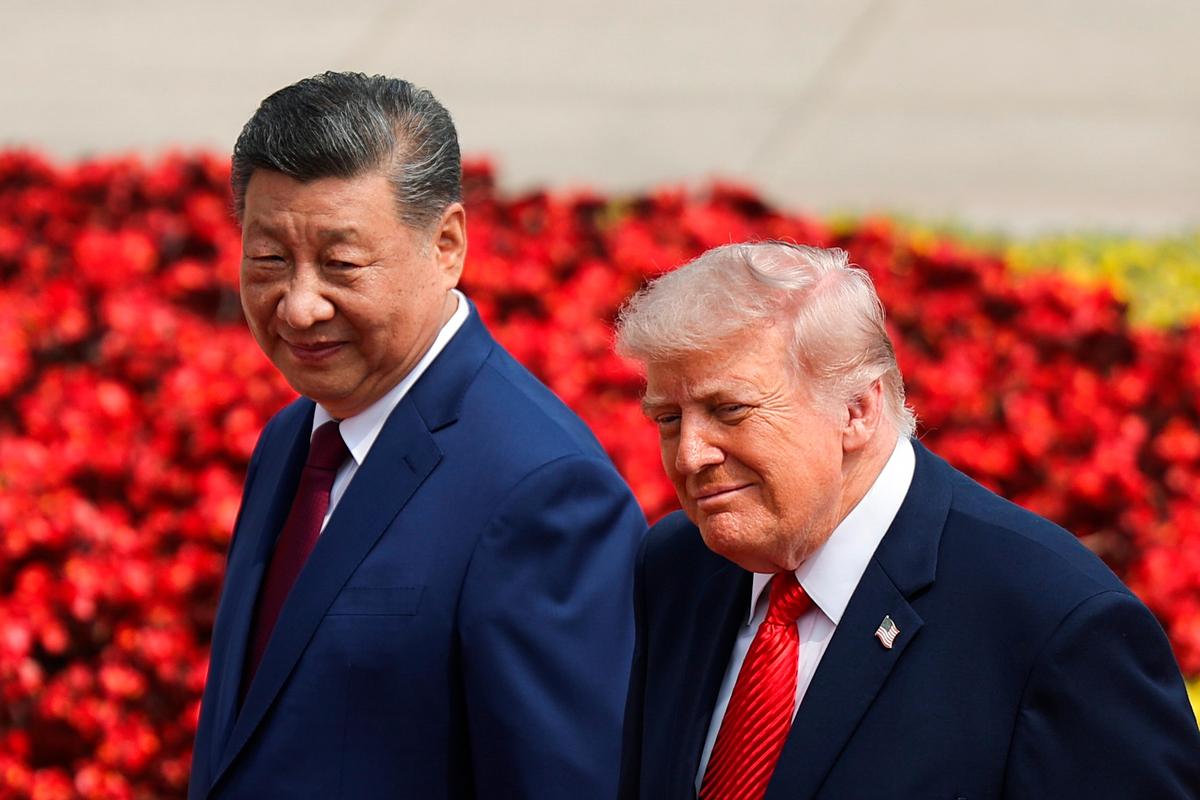
Chinese President Xi Jinping warns delivered a stark warning to President Donald Trump at the opening of a two-day bilateral summit in Beijing on Thursday, telling the American leader that disagreements over Taiwan could push the entire US-China relationship into an extremely dangerous situation and potentially lead to armed conflict between the world's two most powerful nations. The warning came despite an otherwise warm and ceremonial atmosphere at Beijing's Great Hall of the People, where an honor guard, throngs of children waving flowers and flags, and more than two hours of direct talks between the two leaders set the stage for what Trump himself described as possibly the biggest summit ever. While both sides expressed cautious optimism about progress in trade negotiations, Xi's Taiwan remarks injected a sobering note of geopolitical gravity into proceedings that the optics alone might have suggested were purely conciliatory.
The summit carries exceptional weight for both leaders, though for different reasons and from very different positions of domestic strength. Trump arrives in Beijing with his approval ratings dented by the ongoing Iran war, with American courts having constrained his ability to levy tariffs freely on Chinese and other imports, and with mounting concern that his Republican Party could lose control of one or both chambers of Congress in November's midterm elections. Xi, by contrast, faces no comparable political or electoral pressure despite China's own economic challenges, and he enters the talks with the leverage of a country that has grown considerably in global economic and strategic significance since Trump's last presidential visit to Beijing nearly a decade ago. The asymmetry in the two leaders' domestic positions is not lost on analysts tracking the summit's dynamics.
Joining Trump on the Beijing trip is a delegation of prominent American business executives, including Elon Musk and Nvidia CEO Jensen Huang, a late addition to the traveling party whose presence reflects the enormous commercial stakes that American technology companies have in the US-China relationship. Trump has signaled that his first request to Xi will be to open China further to American industry, a demand that sits alongside broader American objectives around Boeing aircraft sales, agricultural exports, and energy trade, all of which Washington views as potential tools for reducing the bilateral trade deficit that has long been a source of friction. For Beijing, the priority is easing American restrictions on exports of advanced semiconductors and chipmaking equipment, a set of controls that China views as a deliberate attempt to limit its technological development.
Taiwan Remains the Most Dangerous Fault Line in US-China Relations
Xi's decision to raise Taiwan directly and in stark terms at the very opening of the summit reflects how central the island's status remains to China's core strategic calculations and how unwilling Beijing is to allow any bilateral meeting to proceed without making that priority unmistakably clear. According to China's foreign ministry readout of the talks, Xi told Trump that Taiwan was the most important issue the two leaders faced and that if handled poorly it could push the entire bilateral relationship into an extremely dangerous situation that could cause the countries to collide or even enter conflict. The language was direct and deliberate, framed not as a rhetorical flourish but as a genuine assessment of the risk that Xi believes American policy on Taiwan creates for the bilateral relationship.
In previous US-China summits, Taiwan has consistently featured as a point of tension, but the current context gives the issue particular urgency. The status of a 14-billion-dollar American arms sales package to Taiwan, which awaits Trump's approval, remains unclear, and China reiterated on Wednesday its strong opposition to any such transfer. The United States is legally bound under the Taiwan Relations Act to provide Taiwan with the means to defend itself despite the absence of formal diplomatic ties, a commitment that creates a structural tension with China's insistence that arms sales to the island constitute interference in Chinese internal affairs. Taiwan's own cabinet spokesperson Michelle Lee told reporters in Taipei on Thursday that China's military threat was generating genuine insecurity across the region and that strengthening national defense and collective deterrence remained the most critical factor in ensuring regional peace and stability.
The Taiwan question also intersects with the broader issue of American strategic posture in the Indo-Pacific, which has been a subject of considerable international attention during Trump's second term. Xi's warning about conflict risk is calibrated partly as a signal to Washington about the limits of Chinese tolerance for American military support to Taiwan, and partly as a message to regional observers that Beijing remains determined to pursue its long-term objectives regarding the island regardless of the short-term diplomatic warmth on display at the summit. Analysts tracking US-China relations note that the gap between the two countries' fundamental positions on Taiwan has not narrowed and may have widened in the current political environment, making the management of that gap one of the most consequential diplomatic challenges of the period.
Trade Progress and the Iran Question Dominate Summit Agenda
Alongside the Taiwan warning, the summit's trade dimension produced more encouraging signals for both sides. Xi told Trump that negotiations between American and Chinese economic and trade teams held in South Korea on Wednesday had reached overall balanced and positive outcomes, language that suggested meaningful progress toward maintaining the fragile trade truce the two countries struck last October. Under that agreement, Trump suspended triple-digit tariffs on Chinese goods while Xi backed away from restricting global supplies of vital rare earth materials, a mutual de-escalation that provided some stability to a bilateral economic relationship that had been severely strained by years of escalating trade conflict. Both sides expressed interest in establishing mechanisms to support future trade and investment as part of any extended or strengthened arrangement.
The commercial interests represented by the CEO delegation accompanying Trump add a practical dimension to the trade discussions that pure government-to-government negotiations sometimes lack. Business executives from major American companies bring specific transactional concerns and opportunities that can help identify where concrete deals are achievable beyond the broad parameters of intergovernmental trade frameworks. Trump's stated opening demand that China open up to American industry encompasses a wide range of sectors from civil aviation and agriculture to energy and financial services, and the presence of executives actively seeking to expand their Chinese market access gives those demands a commercial concreteness that diplomatic language alone cannot convey.
Iran represents the most politically sensitive item on the summit agenda beyond Taiwan and trade, and the one where the gap between American hopes and Chinese willingness to deliver may be widest. Trump is expected to press Xi to use Chinese influence over Tehran to help resolve the ongoing conflict and reopen the Strait of Hormuz, through which a significant share of global oil supplies pass. Secretary of State Marco Rubio, speaking to Fox News aboard Air Force One, argued that it was in China's own interest to help resolve the Iran crisis given that Chinese ships are currently stuck in the Gulf and that a global economic slowdown caused by sustained conflict would directly harm Chinese exporters. However, analysts tracking the relationship note that Iran serves as a valuable strategic counterweight to American influence for Beijing, making it unlikely that Xi will be willing to apply the kind of pressure on Tehran that Washington is seeking.