
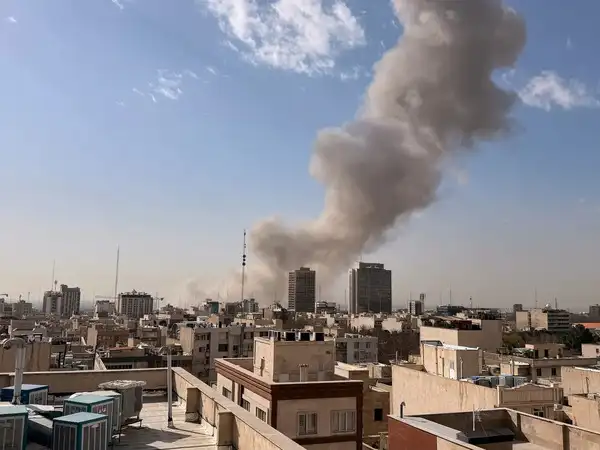
An Iranian drone Attack has crashed into a British Royal Air Force base in Cyprus, marking a serious escalation in the widening Middle East conflict and raising concerns about the safety of military personnel and civilians across the region. Cypriot President Nikos Christodoulides confirmed the incident on Sunday, saying the drone struck RAF Akrotiri, a key UK military facility located on British sovereign territory in southern Cyprus.
The United Kingdom’s Ministry of Defence said the incident occurred around midnight local time and described it as a suspected drone strike. While no casualties were reported, the base sustained minor damage, prompting authorities to move family members stationed there to alternative accommodation as a precautionary measure.
UK Confirms Heightened Security at RAF Akrotiri
The Ministry of Defence said force protection measures across the region are now at their highest level, stressing that the base responded swiftly to protect personnel and infrastructure. Officials said RAF Akrotiri continues to operate normally, with its core mission focused on safeguarding British interests and contributing to regional security.
The Sovereign Base Areas Administration later confirmed that a temporary dispersal of non-essential personnel from the base was being planned. Authorities clarified that the measures apply only to the military installation and that residents of the nearby Akrotiri village do not need to leave their homes, as civilian life in the surrounding area remains unaffected.
Cyprus Says It Is Not a Party to the Conflict
President Christodoulides emphasised that Cyprus does not intend to be drawn into any military operations related to the escalating conflict. He said the country remains in close contact with European and international partners while prioritising national security and regional stability.
European Commission President Ursula von der Leyen confirmed she had been briefed on the incident and expressed solidarity with Cyprus and other EU member states. She said that while Cyprus was not the intended target, any threat to an EU country would be met with collective resolve and support.
UK Agrees to US Request for Defensive Use of Bases
The incident follows confirmation from Prime Minister Sir Keir Starmer that the UK has agreed to a US request to use British military bases for defensive strikes linked to regional security. The government has stressed that this support is limited to defensive action and does not represent direct British involvement in offensive operations against Iran.
Sir Keir said the decision was based on the principle of collective self-defence and the need to protect British lives and allied forces. He added that the UK had learned from past conflicts, particularly the Iraq war, and would not join offensive military action against Iran.
Iran Responds to US and Israeli Strikes
The wider conflict erupted after Israel and the United States launched large-scale strikes against Iran’s leadership and military infrastructure. Iranian Supreme Leader Ayatollah Ali Khamenei was among those reported killed, triggering a wave of retaliation by Tehran.
Iran has since launched ballistic missiles and drones targeting US assets and allied nations across the Middle East, including Israel, Bahrain, Kuwait, Qatar, the United Arab Emirates, and Jordan. The strikes have raised fears of a regional war involving multiple state and non-state actors.
British Forces Intercept Iranian Drones
The Ministry of Defence confirmed that British forces have already engaged Iranian drones in defensive operations. On Sunday, an RAF Typhoon jet operating from Qatar successfully shot down an Iranian drone during a defensive air patrol, marking the first time a UK fighter aircraft has intercepted an Iranian drone during the current crisis.
In a separate incident, a UK counter-drone unit in Iraq intercepted another Iranian drone that was heading toward a coalition base housing British service personnel. Defence officials said these actions highlight the growing risks faced by UK troops stationed in the region.
Warnings Over Risks to Civilians and Troops
Defence Secretary John Healey warned that Iranian attacks across the Middle East are placing both military personnel and civilians at serious risk. He described the strikes as indiscriminate and said the UK is taking extensive measures to protect its forces and citizens abroad.
Healey also revealed that two ballistic missiles were fired toward Cyprus earlier, although he said he was confident the country was not the intended target. Cypriot officials later confirmed that Sir Keir Starmer had assured President Christodoulides that Cyprus was not being deliberately targeted.
RAF Bases Remain Central to Regional Security
RAF Akrotiri plays a critical role in British and allied military operations in the Middle East, serving as a hub for surveillance, logistics, and air operations. The base has been central to missions against extremist groups and in supporting allies during periods of heightened tension.
The BBC understands that the United States may also use RAF Fairford in Gloucestershire and the Diego Garcia base in the Indian Ocean for operations targeting Iranian missile capabilities. British officials have not confirmed specific operational details but reiterated that any involvement would remain defensive.
Growing Fears of Wider Regional War
The drone strike in Cyprus underscores how rapidly the conflict is spreading beyond its initial flashpoints. With Iranian attacks reaching countries not directly involved in strikes on Tehran, analysts warn that the risk of miscalculation and unintended escalation is increasing.
Diplomats across Europe and the Middle East are calling for restraint, warning that continued military action could destabilise global energy markets, disrupt international travel, and worsen humanitarian conditions in already fragile regions.
Uncertain Path Ahead for the Region
As military activity intensifies, governments are balancing defensive preparedness with diplomatic efforts aimed at preventing a full-scale regional war. The UK has reiterated its commitment to protecting its people while supporting international efforts to reduce tensions.
For now, RAF Akrotiri remains operational under heightened security, serving as a symbol of how the Middle East conflict is increasingly drawing in global powers. The coming days will be critical in determining whether diplomacy can slow the spiral of violence or whether the region moves closer to a prolonged and dangerous confrontation.