
US Iran Air Strikes Gulf Hormuz 2026 escalation has intensified dramatically after the U.S. military launched what Centcom described as self-defense strikes on Qeshm Island in the Strait of Hormuz in response to attempted attacks by Iran across the Middle East, while simultaneously firing a Hellfire missile into the engine room of a Botswana-flagged oil tanker attempting to reach Iran in defiance of the American naval blockade, as ceasefire negotiations that both sides had been publicly characterising as progressing collapsed without agreement over the weekend and left the fundamental disputes over the Strait of Hormuz, highly enriched uranium removal, and Iran's nuclear programme unresolved. The strikes on Qeshm Island targeted an Iranian military ground control station, with Centcom also reporting that U.S. forces shot down three Iranian attack drones that had been launched toward civilian mariners transiting regional waters, and intercepted or destroyed two Iranian ballistic missiles fired at Kuwait and three fired at Bahrain before they could reach their targets. Iran's IRGC responded with its own characterisation of the exchange, saying it had attacked U.S. bases and helicopters in a regional country using missiles and drones while warning that disrupting the security of the Strait of Hormuz will carry a heavy price for the aggressive U.S. military.
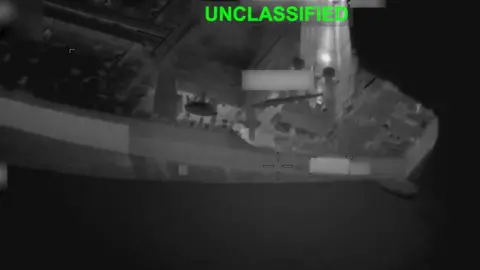
The Hellfire missile strike on the Botswana-flagged M/T Lexie, whose crew Centcom said had ignored repeated warnings and failed to comply with blockade directions from U.S. forces multiple times over a 24-hour period while sailing toward Iran's Kharg Island oil terminal, represents the most direct use of lethal force against a commercial vessel since the naval blockade took effect on April 13 and documents the escalating operational intensity of the blockade enforcement that Centcom has been conducting in the Hormuz region. Centcom released footage purportedly showing the moment the tanker was struck, with the Hellfire targeting the engine room in a shot designed to disable rather than sink the vessel, and reported that overall six commercial vessels have been disabled and another 122 redirected since the blockade began, statistics whose accumulation traces the progressive extension of U.S. naval enforcement power across the maritime approaches to Iran's oil export infrastructure. The Lexie strike takes place in the specific context of a failed weekend negotiating round that has left both sides without a diplomatic framework for the near term, making military enforcement the default mechanism of American pressure in the absence of the ceasefire extension that the negotiations were supposed to produce.
U.S. Secretary of State Marco Rubio's first public congressional testimony since the war's start provided the most specific American statement of the negotiations' current status and the conditions under which diplomatic progress remains possible, with the top diplomat telling lawmakers that U.S. negotiators had not offered Iran sanctions relief in exchange for reopening the strait and that any sanctions relief is condition-based, meaning it must be tied to the nuclear programme that the original sanctions were designed to address. Rubio's testimony creates the clearest public record of the American negotiating position at this specific moment, connecting the military enforcement actions that Centcom is conducting with the diplomatic demands that would need to be satisfied for that enforcement to be suspended, and establishing that the Hormuz reopening and sanctions relief are not available to Iran as standalone concessions but only as components of a comprehensive nuclear resolution. Iran's foreign ministry spokesman Esmail Baghaei denied on Monday that certain terms had been on the negotiating table and accused Washington of constantly changing its views and putting forward new or contradictory demands, framing the negotiating breakdown as a product of American diplomatic inconsistency rather than Iranian intransigence.
How the Ceasefire Collapsed and What the Negotiating Gap Represents
The ceasefire negotiations that stalled over the weekend had been presented by both the American and Iranian sides in the preceding days as making progress toward a framework that CBS News reported as potentially including a 60-day cessation of violence, a call to reopen the Strait of Hormuz, and a framework to reopen negotiations on Iran's nuclear programme, creating public expectations of diplomatic movement that the weekend's failure to advance has now confounded. Trump's reported request for edits to the existing terms of a potential deal, related specifically to the Strait of Hormuz arrangements and the removal of highly enriched uranium from Iran, introduced changes to a framework that both sides had been characterising as nearly complete, creating the specific breakdown dynamic in which a near-agreement becomes a failed negotiation when one party modifies the terms that the other had understood to be settled. The pattern of late-stage American demands being characterised as contradictory or new by Iranian counterparts is a recurring feature of U.S.-Iran diplomatic interactions, reflecting the domestic political constraints that both sides must manage when approaching the kinds of nuclear and sanctions concessions that their respective political bases view as unacceptable.
Trump's public communication about the negotiations has maintained the dual register of optimistic process description combined with reassurance to domestic critics, telling them to sit back and relax while characterising Iran as really wanting to make a deal, a framing that positions the American president as confident about the ultimate outcome while managing the political exposure of a negotiating process whose continued absence of agreement is accumulating domestic political cost. The approval rating pressure that the Iran war has been generating through its inflation impact on American consumers, combined with the Republican senator criticism of any deal that would leave Iran enriching uranium or receiving economic relief, creates the specific political constraints within which Trump's negotiators must operate, and his request for edits to the deal terms may reflect an assessment that the framework as it stood could not survive the Republican senator scrutiny that any announced agreement would immediately face. The IRGC's statement that disrupting Hormuz security carries a heavy price represents Iran's counter-communication that it too has domestic political constraints requiring it to demonstrate resistance to American demands.
The Centcom blockade statistics, six vessels disabled and 122 redirected since April 13, document the cumulative scale of the enforcement operation whose continuation in the absence of a ceasefire extension represents the American default position, and whose economic consequences for Iran in terms of oil export revenue denial are compounding with each passing week that the diplomatic framework fails to produce an agreement. The blockade's impact on global energy markets, documented in the elevated oil prices and inflationary pressure that the Hormuz closure has been generating since the war began, means that the American enforcement action is simultaneously pressuring Iran and imposing costs on the global economy that circle back to American domestic politics through fuel prices and inflation rates that directly affect the voter sentiment Trump's political advisers monitor. The self-defeating character of an enforcement strategy whose economic costs fall on American consumers as much as on Iranian oil revenues is one of the structural tensions in the American approach that neither the military strikes nor the congressional testimony can resolve.
The Kuwait and Bahrain Missile Interceptions and Gulf State Exposure
Iran's ballistic missile and drone attacks on Kuwait and Bahrain, where U.S. military bases are located, represent the specific regional escalation dimension of the current exchange whose implications extend beyond the bilateral U.S.-Iran confrontation to the security of the Gulf Cooperation Council states that have been caught between their longstanding security relationship with the United States and their geographic proximity to an Iran that has demonstrated its willingness and capability to strike their territory. Kuwait's military confirmation that it was confronting hostile missile and drone attacks using its air defence systems, and the Centcom report that the two Iranian missiles aimed at Kuwait fell short or broke apart en route while three missiles aimed at Bahrain were intercepted by U.S. and Bahraini air defence forces, documents the active combat situation that Gulf Arab states are experiencing as a consequence of hosting the American military infrastructure that Iran is targeting in its retaliation cycle.
Tehran's previous attack on an air base in Kuwait in response to earlier U.S. strikes established the pattern of Iranian retaliation targeting the regional hosts of American military power rather than American forces directly, a targeting logic that maximises Iranian political impact by demonstrating reach and willingness while managing the escalation risk of directly killing American service members. The Gulf Arab states' exposure to Iranian missile and drone attack as a consequence of hosting American forces creates a specific political pressure on those governments to encourage diplomatic resolution of the U.S.-Iran confrontation, because continued escalation imposes direct security costs on countries that have not themselves taken military action against Iran but whose territory is treated as a legitimate target in the Iranian retaliation framework. Bahrain's air defence cooperation with U.S. forces in intercepting Iranian missiles makes the boundary between host and participant in the conflict increasingly difficult to maintain from Iran's strategic perspective.
Rubio's Congressional Testimony, Sanctions Relief Conditions, and the Path to Resolution
Rubio's congressional testimony that sanctions relief is condition-based and must be in return for the reason those sanctions were originally imposed, namely Iran's nuclear programme, establishes the American position's irreducible core in terms that his congressional audience, the Iranian negotiating team, and the international community can all read clearly. The connection between sanctions relief and nuclear programme resolution is the specific linkage that makes the ceasefire framework's 60-day structure so difficult to finalise, because Iran's position has been that the ceasefire, Hormuz reopening, and sanctions relief should be agreed as a package that demonstrates American good faith before the harder nuclear questions are resolved through subsequent negotiations, while the American position as Rubio articulated it is that sanctions relief is tied to nuclear resolution rather than being available as a confidence-building measure in advance of that resolution.
This negotiating structure creates the specific chicken-and-egg problem that has prevented the framework agreement from closing: Iran needs economic relief from sanctions to demonstrate to its domestic political audience that the war has produced benefits rather than simply costs, but the American political system's constraints make offering sanctions relief without nuclear resolution unacceptable to the Republican senators whose criticism of any deal has been driving Trump's late-stage deal edits. The Hormuz reopening question, which Rubio identified as one of the specific terms Trump requested edits to, is similarly entangled in this sequencing dispute, because Iran's leverage in the negotiations derives substantially from its control over the strait whose closure is imposing the global economic costs that give both sides pressure to reach agreement, and giving up that leverage through Hormuz reopening before a comprehensive agreement is reached would substantially weaken Iran's negotiating position for the subsequent nuclear discussions.
Trump's message to critics to sit back and relax while characterising the Iranian desire for a deal as genuine and the eventual agreement as good for the USA reflects the public posture of a negotiator who wants to maintain confidence in the process without locking himself into specific terms that his domestic critics would immediately contest. The gap between this optimistic public framing and the military reality of Centcom strikes, Hellfire missiles into tanker engine rooms, and Iranian ballistic missiles aimed at Kuwait and Bahrain is the specific tension that defines the current phase of the conflict, where diplomatic language and military action coexist in a relationship that neither resolves the other nor prevents the other from continuing. The path to resolution requires the sequencing dispute between sanctions relief and nuclear resolution to be bridged in a way that gives both sides enough of what they need to sustain the political commitments that any agreement requires.