
Understanding the Current Conflict
The current crisis involves direct Israeli military strikes on Iranian targets and Hezbollah-linked sites in Lebanon.
It represents a sharp escalation in long-standing tensions between Israel and Iran.
The situation now affects regional stability, diplomacy and global energy markets.
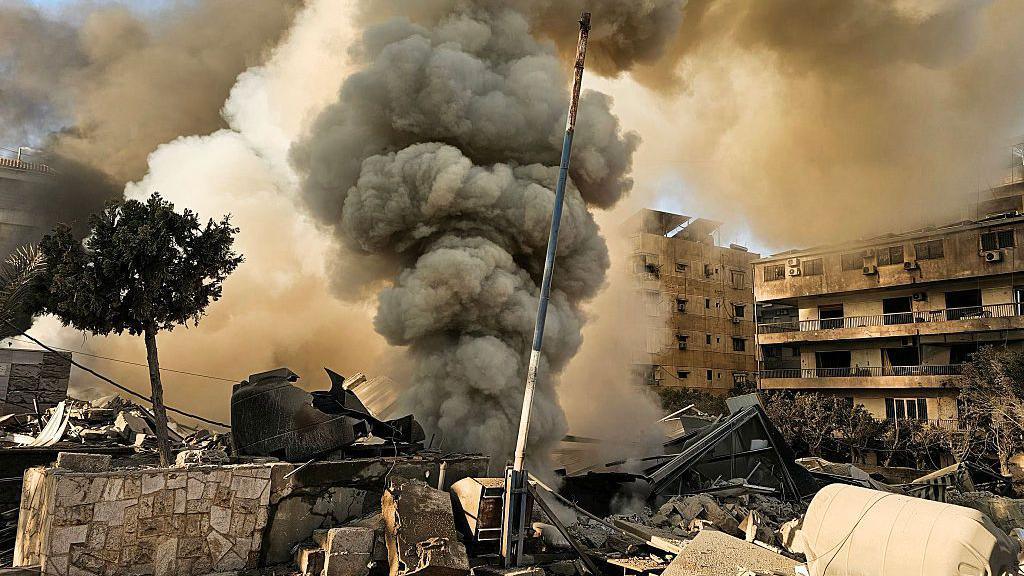
Israel attacks Tehran and Beirut in a major military escalation that is intensifying tensions across the Middle East. The latest strikes target Iranian missile infrastructure and Hezbollah-linked positions in Lebanon, raising concerns about regional stability and global energy disruption.
Fresh Israeli Airstrikes in Tehran
Israel has carried out new air operations targeting what it calls military and regime-linked facilities in Tehran.
Defence Minister Israel Katz said the objective is to weaken Iran’s missile-launch systems.
He emphasized that operations will continue for as long as security threats remain.
Israeli officials argue that degrading missile capabilities is essential to national defence.
They say the strikes are aimed at preventing future large-scale attacks on Israeli territory.
However, critics warn that continued air raids could trigger broader retaliation.
Strikes on Beirut and Hezbollah Targets
Israeli forces also launched strikes on the southern suburbs of Beirut.
The Israel Defense Forces stated that the targets were sites connected to Hezbollah.
Officials maintain that the operations are focused on military infrastructure only.
Hezbollah, backed by Iran, has been involved in cross-border exchanges with Israel.
The renewed strikes signal a possible shift in the scale of confrontation.
Civilians in affected areas now face growing uncertainty and fear.
Ground Troop Deployment in Southern Lebanon
Israel has sent additional ground troops into what it describes as strategic areas in southern Lebanon.
Authorities insist this is not a full invasion but a limited defensive step.
The move is intended to strengthen border security and protect northern communities.
Military analysts suggest the deployment may help form a broader buffer zone.
Such a zone would aim to prevent cross-border raids or rocket attacks.
However, it also raises questions about the future of Lebanon’s territorial control.
Impact on the 2024 Ceasefire Agreement
The 2024 US-brokered ceasefire was designed to reduce hostilities between Israel and Hezbollah.
Israel had partially withdrawn forces but maintained positions at five strategic points.
The new troop movements challenge the stability of that agreement.
Lebanese officials view the expansion as a violation of sovereignty.
Observers warn that trust built during mediation efforts may now weaken.
The ceasefire’s future appears increasingly uncertain.
Civilian Evacuations and Local Reactions
The IDF has instructed residents in more than 50 southern Lebanese villages to evacuate.
Families are weighing difficult decisions about whether to stay or leave.
Many fear further escalation in the coming days.
In Marjayoun, one resident said he would remain until forced to leave.
Others, including young families, have already relocated to Beirut.
Displacement once again becomes a harsh reality for border communities.
Drone Strikes Beyond the Main Front
Two drones struck the US embassy compound in Riyadh, causing minor damage.
Authorities confirmed no casualties but heightened security measures were implemented.
The attack highlights the expanding reach of the conflict.
In Oman, a fuel tank at the Port of Duqm was targeted in another drone incident.
Although damage was controlled quickly, the repeated strikes raise concern.
Regional diplomatic hubs now face increased security risks.
Energy Disruptions and Global Impact
Qatar temporarily halted liquefied natural gas production after facilities were targeted.
Saudi Arabia also suspended operations at its largest domestic refinery.
These developments have unsettled global energy markets.
Energy analysts warn that prolonged instability could drive prices higher.
About one-fifth of global LNG supply was briefly affected.
Economic consequences may extend far beyond the Middle East.
Regional Stability at a Crossroads
The conflict now stretches across Israel, Iran, Lebanon and Gulf states.
Diplomatic channels remain open but face increasing pressure.
Global powers are closely monitoring developments.
The coming days will be critical in determining the conflict’s direction.
Containment remains possible but requires careful political management.
Without restraint, the crisis risks expanding into a wider regional war.