
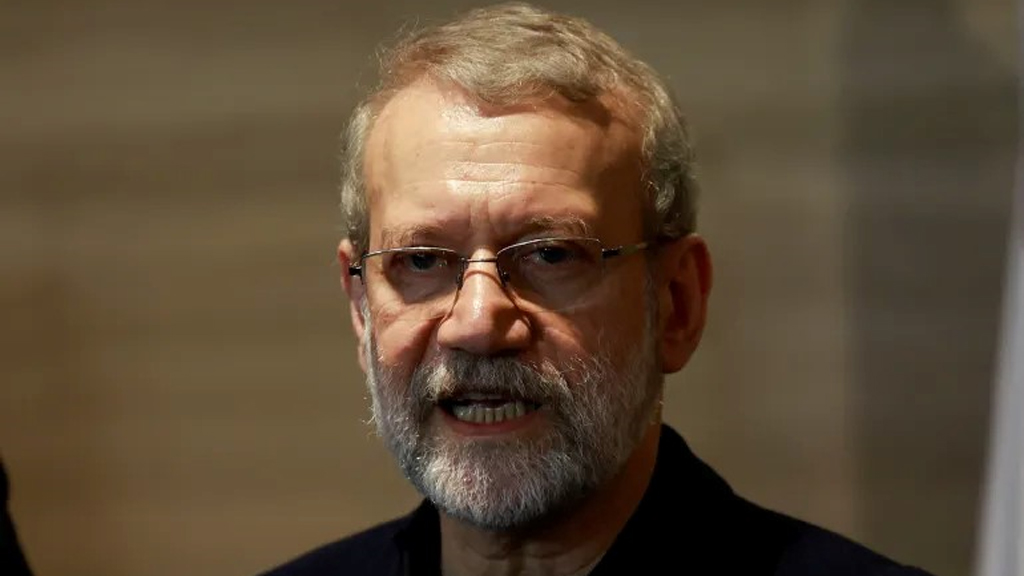
Israel's Defence Minister Israel Katz confirmed on Tuesday that the Israeli military had killed Iran's top security chief Ali Larijani killed and Gholamreza Soleimani, the commander of Iran's Basij militia, in overnight airstrikes. The announcement marks one of the most significant targeted eliminations since the conflict began on February 28. Israeli Prime Minister Benjamin Netanyahu's office confirmed the operations, stating that he had personally ordered the elimination of senior Iranian regime officials.
The killing of Ali Larijani, one of the most powerful figures in the Iranian government, represents a dramatic escalation in the ongoing U.S.-Israeli military campaign against Tehran. Larijani served as Iran's security chief and was widely regarded as a central pillar of the Islamic Republic's intelligence and internal governance apparatus. Iranian state media did not immediately respond to the reports, though they published what appeared to be a handwritten note by Larijani earlier in the day, commemorating Iranian sailors killed in a U.S. attack.
Larijani's death would make him the most senior Iranian official to be assassinated since Supreme Leader Ayatollah Khamenei was killed on the opening day of the Israeli-U.S. airstrike campaign. Alongside him, Gholamreza Soleimani, who commanded the Basij forces, a part-time paramilitary unit under the Islamic Revolutionary Guard Corps, was also confirmed killed. The Basij has historically been deployed to suppress domestic protests and maintain internal order across Iran.
Background to the Conflict: How the U.S.-Israel War on Iran Began
The U.S.-Israeli military campaign against Iran entered its third week on Tuesday, having launched on February 28 with strikes that killed Supreme Leader Ayatollah Khamenei on the very first day. The conflict has since claimed the lives of at least 2,000 people and shows no signs of a diplomatic resolution. Both Washington and Tel Aviv have described the campaign as a decisive move to dismantle Iran's military and security infrastructure, which they argue posed an existential regional threat.
The war's origins stem from years of escalating tensions over Iran's nuclear program, its proxy militia networks across the Middle East, and a series of direct and indirect attacks on Israeli and American assets. The Biden-to-Trump transition brought a sharper military posture, and the current administration moved quickly to authorize joint operations with Israel. The strikes have targeted command centers, missile launch sites, nuclear-related facilities, and now the most senior figures within the Iranian regime's leadership chain.
From the first days of the campaign, Iran made clear it would not stand down without resistance. Tehran has continued launching long-range missile strikes against Israeli territory despite suffering significant degradation of its military capabilities. Analysts have noted that Iran's ability to maintain sustained ballistic missile attacks after more than two weeks of heavy bombardment underscores the depth and resilience of its weapons stockpiles and dispersed military infrastructure.
Iran Strikes Back Overnight Despite Weeks of Bombardment
Iran launched a fresh wave of missiles toward Israel overnight on Tuesday, confirming that Tehran retains the capacity to conduct long-range offensive strikes even as its leadership structure collapses under sustained Israeli and American pressure. The Israeli military responded by announcing a new round of strikes targeting Iranian regime infrastructure across Tehran, as well as Hezbollah positions in Beirut. Israel has now stated publicly that it has drawn up detailed operational plans for at least three more weeks of war against Iran.
The persistence of Iranian missile launches has surprised some Western defense analysts, who expected Iran's strike capabilities to diminish far more rapidly under the scale of the U.S.-Israeli bombardment. Instead, Tehran has demonstrated a degree of strategic depth and pre-positioned weaponry that has allowed it to continue operations even as its top commanders and political figures are killed one by one. The psychological and operational significance of this ongoing capacity is not lost on regional observers or on U.S. allies watching closely from the Gulf.
Inside Iran, the killing of the Basij commander Gholamreza Soleimani carries particular symbolic weight. The Basij is not merely a military unit. It is a deeply embedded social and political institution that has shaped Iranian civil society for decades, from enforcing moral codes to mobilizing support for the regime during elections and crises. Its commander's death sends a signal that Israel and the U.S. are deliberately dismantling not just Iran's military but its entire governing ecosystem.
The Strait of Hormuz Crisis and Global Energy Consequences
The Strait of Hormuz, through which approximately 20 percent of the world's oil and liquefied natural gas flows, remains largely closed as a direct result of the ongoing conflict. The closure has sent energy prices sharply higher across global markets, with downstream effects felt from European heating bills to Asian manufacturing costs. U.S. President Donald Trump has publicly called on American allies to help reopen the waterway, but so far those appeals have been met with reluctance and quiet refusal from key Gulf partners.
The stakes surrounding the Strait cannot be overstated. It is one of the most strategically vital chokepoints in the global economy, and its prolonged closure is beginning to strain diplomatic relationships that Washington has long relied upon. Gulf states, many of whom quietly tolerated or even supported early phases of the anti-Iran campaign, are now facing a direct economic cost from the conflict's expansion. Tehran has made clear that its ability to threaten the Strait remains one of its most powerful remaining leverage points.
Energy analysts warn that if the Strait remains closed for another two to three weeks, global oil supply disruptions will begin to translate into more severe economic consequences, including potential fuel shortages in import-dependent nations. LNG markets in particular are under acute pressure, with spot prices for Asian deliveries reaching levels not seen since the 2022 European energy crisis. The conflict has effectively transformed a regional military campaign into a global economic event.
Regional Spillover and the Targeting of Hezbollah in Beirut
Alongside its campaign inside Iran, Israel has continued striking Hezbollah infrastructure in Beirut, tying the Lebanese militant group's fate directly to the broader war against Tehran. Israel views Hezbollah as an Iranian proxy force and has seized on the current conflict to simultaneously degrade its northern military threat. Strikes on Beirut were reported again on Tuesday, targeting what the Israeli military described as weapons depots and command facilities linked to Hezbollah's Iranian supply chain.
Lebanon, already economically devastated and politically fragmented, is bearing a disproportionate civilian cost from the expansion of the conflict. Beirut residents have reported widespread power outages and displacement in southern suburbs as Israeli strikes continue. International humanitarian organizations have called for a ceasefire or at minimum the opening of humanitarian corridors, but both Israel and the United States have shown no willingness to pause military operations at this stage.
The dual-front nature of Israel's campaign, fighting simultaneously against Iran proper and Hezbollah in Lebanon, reflects a strategic calculation in Tel Aviv that this moment represents a generational opportunity to reshape the security architecture of the Middle East. Whether that calculation proves correct will depend heavily on whether the Iranian state, now largely decapitated of its top leadership, fractures or consolidates resistance in the weeks ahead.