
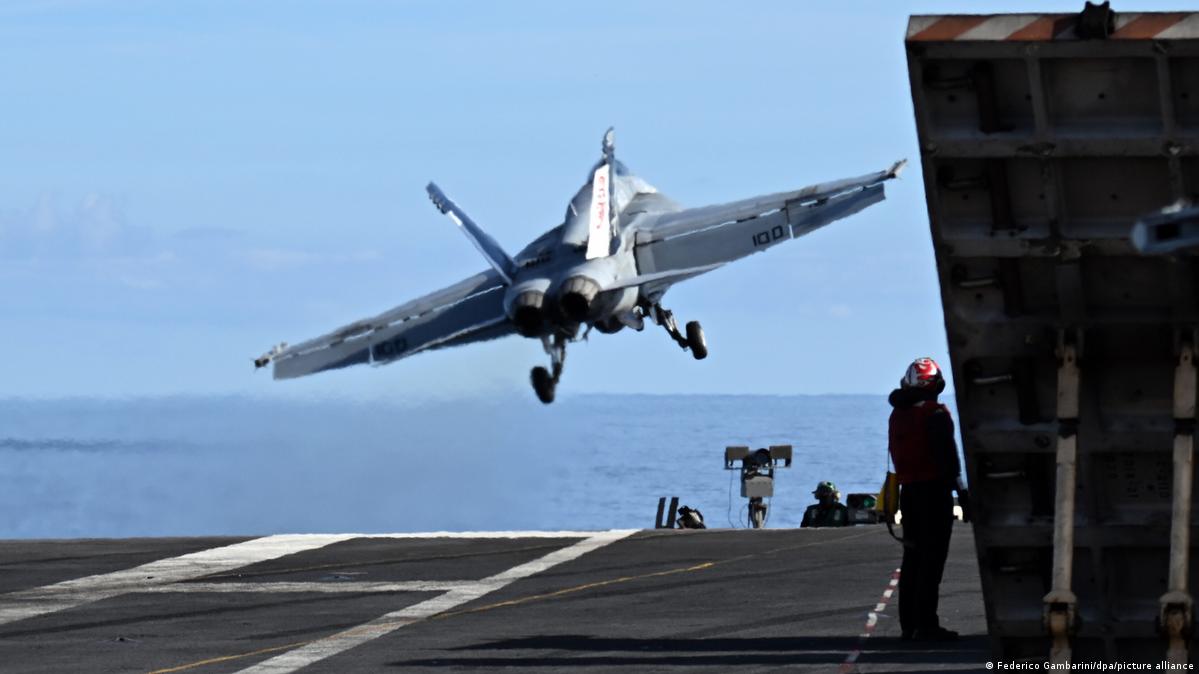
The United States military has carried out a second round of strikes on Iranian targets within three days, hitting a military installation in Bandar Abbas, a strategically vital port city on the northern coast of the Strait of Hormuz, the narrow waterway through which roughly one fifth of the world's oil and liquefied natural gas normally travels every single day. US Central Command confirmed the US strikes Iran and said its forces also shot down four Iranian one-way attack drones that were assessed as threats to shipping and military assets in the strait. Iran's Islamic Revolutionary Guard Corps responded by claiming it had targeted a US air base in retaliation, without disclosing the location. Kuwait's army separately announced it was intercepting hostile missile and drone threats, adding another front to a conflict whose economic shockwaves are now being felt in fuel markets, food supply chains, and commodity prices across every continent.
The economic consequences of the standoff are no longer theoretical. Since the US and Israel launched the initial strikes against Iran on February 28, commercial traffic through the Strait of Hormuz has collapsed from its normal volume of 125 to 140 vessel transits per day to only a few dozen. Thousands of commercial tankers remain stranded as a result of the conflict, unable to pass through a corridor that sits at the centre of global energy logistics. The resulting supply shock has driven oil and gas prices sharply higher, raising costs for refiners, utilities, airlines, shipping companies, and ultimately consumers who are paying more for petrol, heating fuel, fertiliser, and food than at any point in recent years.
US Treasury Secretary Scott Bessent escalated the financial pressure on Tehran this week by announcing sanctions against the Persian Gulf Strait Authority, the Iranian body collecting fees from ships passing through the waterway. The Treasury warned that any vessel paying those fees would itself be exposed to sanctions risk, effectively forcing international shipping companies to choose between paying Iran and maintaining their access to US financial markets and dollar-denominated trade. Iranian foreign ministry spokesman Esmaeil Baqaei insisted Tehran would continue managing and collecting fees for navigational services in the strait, but Bessent dismissed the arrangement as "the Iranian military's latest attempt to extort global maritime trade" and proof that Iran is "desperate for cash."
How Three Months of Conflict Have Already Damaged the Global Economy
The economic damage inflicted by the US-Iran war over the past three months has been cumulative and compounding. From the moment the Strait of Hormuz began operating at severely reduced capacity following the February 28 strikes, energy markets began repricing risk across every commodity tied to Persian Gulf supply. Oil futures climbed sharply as traders factored in reduced throughput from a waterway that serves as the primary export route for Saudi Arabia, the UAE, Kuwait, Iraq, and Qatar, collectively among the largest hydrocarbon producers on the planet. LNG markets were particularly hard hit given that Qatar, the world's largest single exporter of liquefied natural gas, routes virtually all of its output through the strait.
The consequences have been unevenly distributed globally but broadly damaging. Energy-importing economies in Asia, particularly Japan, South Korea, India, and several Southeast Asian nations, have faced sharply higher import bills for oil and gas at a time when many were already managing post-pandemic fiscal pressures and currency weakness against the dollar. In Europe, where memories of the 2022 energy crisis caused by the Russia-Ukraine war are still fresh, the renewed pressure on global LNG supply has pushed gas storage strategies back onto government agendas and reignited debates about energy security and diversification that had begun to fade. Emerging market economies that import energy and export food have been hit twice: once through higher fuel costs and again through the fertiliser price increases that flow directly from elevated natural gas prices.
The US itself has not been immune, though its position as a major domestic oil and gas producer gives it more insulation than most. US West Texas Intermediate crude prices have been volatile throughout the conflict period, and the knock-on effects on transport, agriculture, and industrial production have been visible in inflation data that Federal Reserve officials are monitoring carefully. The broader geopolitical risk premium now embedded in energy markets, driven by the ongoing uncertainty over whether a deal will be reached or whether the US will "finish the job" as Trump has repeatedly threatened, is adding a persistent floor to prices that is proving difficult for any diplomatic signal to fully dislodge.
Sanctions, Stalled Talks, and What a Resolution Would Mean for Markets
The current moment is defined by a striking contradiction: active military strikes occurring simultaneously with active peace negotiations, and a US president publicly oscillating between optimism and threat within the same week. Trump said over the weekend that a deal with Iran had been "largely negotiated," a statement that briefly lifted market sentiment and prompted speculation about an imminent announcement. By Wednesday's cabinet meeting, the tone had shifted entirely. Trump told reporters the US was "not satisfied" with where talks stood, that Tehran had not "gotten there" yet, and that the alternative to a deal was to "finish the job." That level of public ambiguity from the commander in chief of an active military campaign makes rational price discovery in energy markets extremely difficult for traders, utilities, and governments trying to plan around the disruption.
The sanctions on the Persian Gulf Strait Authority represent a significant escalation of the economic war running alongside the military one. By threatening secondary sanctions on vessels that pay Iranian navigation fees, Washington is effectively weaponising the global shipping industry's dependence on access to US financial infrastructure. Major international tanker operators and their insurers are acutely sensitive to sanctions exposure, and the warning alone is likely to be enough to suppress fee compliance even without enforcement action. The practical result is that Tehran's ability to extract revenue from the strait it claims to control is directly constrained by the same dollar dominance that Iran has spent years trying to reduce its exposure to.
Iranian state television published what it said were details of a draft agreement that included reopening the Strait of Hormuz and the withdrawal of US forces from the region, a document the White House immediately branded a "complete fabrication." The episode illustrated how far apart the two sides remain on the terms of any settlement even as both claim to want one. For the global economy, the critical variable is not whether a deal is announced but whether it is durable enough to restore shipping confidence in the strait, bring stranded tankers back into service, and begin unwinding the energy supply premium that has accumulated over three months of conflict. Markets have learned the hard way in recent years that ceasefires announced without verified implementation mechanisms do not move oil prices for long.