
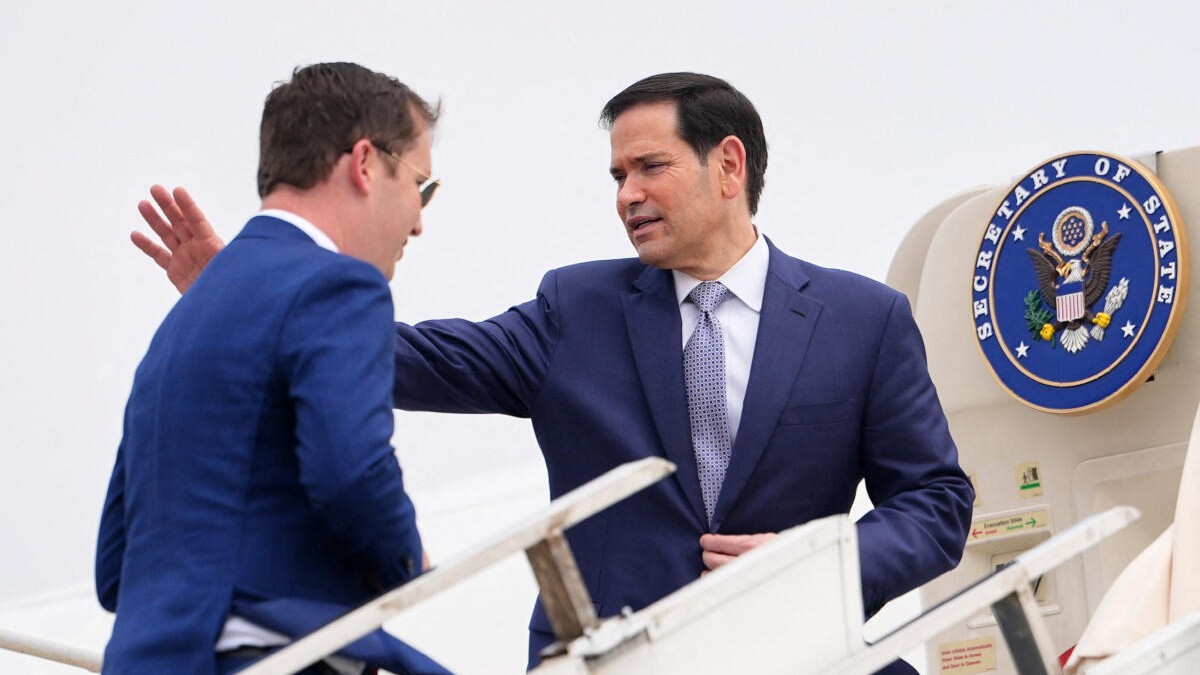
US Secretary of State Marco Rubio India visit has arrived in India on a four-day diplomatic visit aimed at rebuilding a partnership that has been visibly strained under the Trump administration. Landing first in Kolkata, where he visited the headquarters of the humanitarian organisation founded by Mother Teresa, Rubio then travelled to New Delhi for a meeting with Prime Minister Narendra Modi. The visit, Rubio's first to the South Asian nation, also includes stops in Agra and Jaipur, and signals Washington's recognition that the relationship needs active repair work after months of friction.
The State Department confirmed that Rubio's talks with Indian officials would centre on three core areas: trade, energy cooperation, and defence ties. These are not new agenda items, but their urgency has grown considerably given the events of the past year. From punishing tariff decisions to Washington's warming ties with Islamabad and Beijing, India has had multiple reasons to question just how much of a priority it remains for the current US administration, and Rubio's trip is in part an attempt to answer that question with reassurance.
The trip comes at a moment when both governments are looking for ways to stabilise a relationship that neither side wants to see drift. Analysts and former officials have described the current mood in New Delhi as one of anxiety rather than outright alarm, with Indian policymakers watching US moves in the region carefully before deciding how far to lean into deeper bilateral engagement. Rubio's presence in the country is a diplomatic signal, but whether it translates into concrete progress on the outstanding issues between the two countries remains the central question hanging over the visit.
How Trump Tariffs and US-Pakistan Ties Damaged a Strategic Partnership
The foundation of the current strain can be traced directly to the tariff decisions taken by the Trump administration last year. Washington imposed some of the highest US tariffs on Indian goods, a move that blindsided New Delhi and undermined the goodwill that had been carefully built up over the preceding years. India had been treated as a vital strategic partner under the Biden administration, with Prime Minister Modi receiving a state visit to the White House in 2023 that was seen as a high-water mark in bilateral relations. The tariff shock reversed much of that momentum almost overnight.
An interim framework was eventually announced in February, bringing the duty rate on Indian goods down from a punishing 50 percent to 18 percent. But the US Supreme Court's decision to strike down Trump's tariffs in late February complicated matters further, effectively dropping the rate to 10 percent while leaving New Delhi uncertain about what would follow. The Trump administration subsequently launched investigations under unfair trade practices legislation, widely expected to restore a significant portion of the earlier levies, leaving Indian trade negotiators in a prolonged holding pattern rather than a settled agreement.
On top of the trade friction, the US grew noticeably closer to Pakistan during the same period. Islamabad emerged as a key interlocutor in efforts to end the war triggered by the conflict, a development that New Delhi watched with deep unease. Pakistan and India share one of the most fraught bilateral relationships in the world, and any sign of Washington tilting toward Islamabad carries significant political and strategic weight in India. Trump's visit to Beijing this month added another layer of concern, amplifying what one former State Department official described as a "perfect storm of anxiety" in India about where it stands in America's strategic priorities.
What Rubio Is Working With and What Analysts Are Saying
Rubio arrives in India carrying a specific message on energy. He stated ahead of the visit that the US wants to expand its share of India's energy supply, saying plainly that Washington wants to sell India "as much energy as they'll buy." This matters because the energy crisis triggered by the ongoing conflict has set back US efforts to reduce India's dependence on Russian oil, a key irritant in the bilateral relationship given that half of the original 50 percent tariff rate had been explicitly linked to India's continued purchases of Russian crude.
On the diplomatic front, the visit includes a Quad foreign ministers meeting in New Delhi, bringing together the US, India, Japan, and Australia. However, analysts have noted that this will be the third such gathering held at the foreign minister level without a leaders' summit, which Richard Rossow of the Center for Strategic and International Studies described as an "unannounced downgrade" of the grouping. India has repeatedly pressed for a Trump visit tied to a Quad summit, but those requests have gone unanswered, with trade tensions and other geopolitical distractions repeatedly pushing the idea off the agenda.
US Ambassador Sergio Gor, who arrived in New Delhi in January and is regarded by observers as a trusted Trump confidant and effective relationship builder, has been working steadily to reset the bilateral tone. Described by Atlantic Council analyst Michael Kugelman as "the India whisperer," Gor has played an active role in stabilising the day-to-day relationship even as the larger structural issues remain unresolved. But Rossow cautioned that Rubio's visit was unlikely to produce a dramatic turnaround, noting that the absence of a finalised trade deal more than three months after the interim framework announcement "clouds other areas of engagement" and limits how much ground can actually be covered in a four-day trip.