
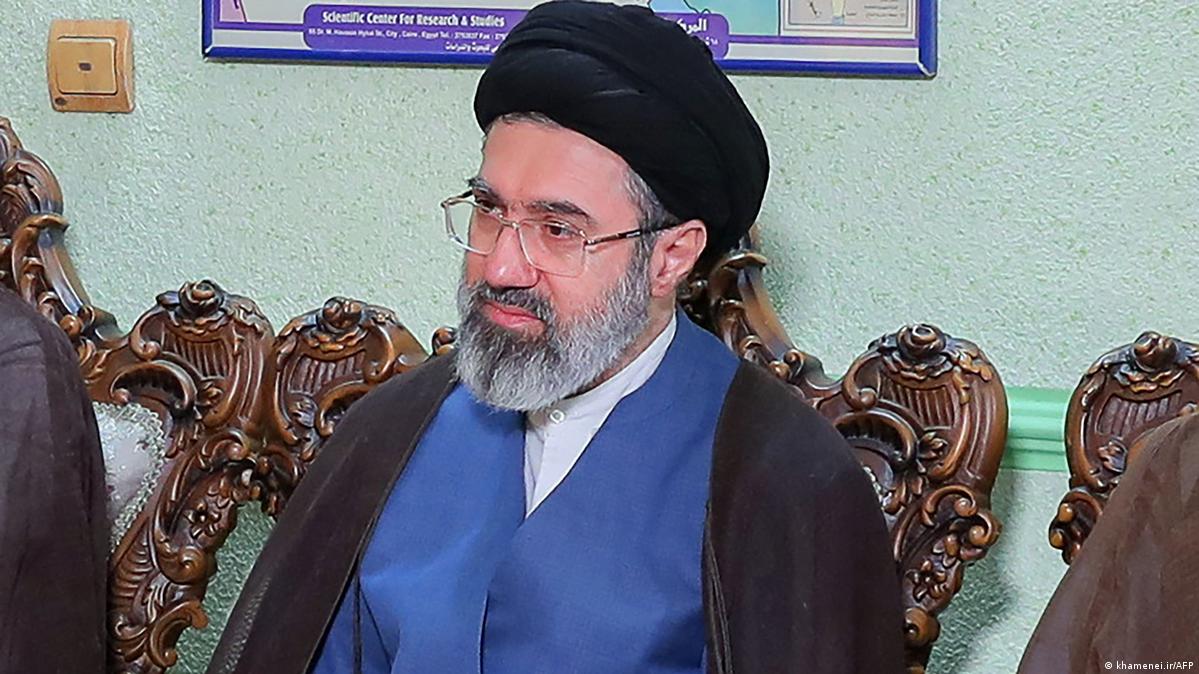
Iran has officially appointed Mojtaba Khamenei new supreme leader following the death of his father, Ali Khamenei, in one of the opening strikes of the ongoing conflict. The decision, made by a body of 88 senior clerics known as the Assembly of Experts, has immediately reshaped the geopolitical landscape, signalling that hardliners will continue to steer the Islamic Republic through one of its most dangerous chapters in modern history.
The appointment carries enormous consequences far beyond Iran's borders. The United States, Israel, and global financial markets all reacted swiftly, as analysts warned that any hope of a swift diplomatic resolution to the Middle East war has effectively been extinguished. Oil prices surged past $100 a barrel within hours of the announcement, rattling stock markets from Tokyo to London.
For millions of people across the region from Tehran to Beirut this leadership transition signals that the conflict is not winding down. It is, by all indications, escalating. Understanding who Mojtaba Khamenei is, why his selection matters, and what comes next is critical for anyone following the crisis unfolding in real time.
Who Was Ali Khamenei and How Did He Shape Iran?
Ali Khamenei served as Iran's supreme leader for over three decades, consolidating clerical authority over every major institution in the country, from the military and judiciary to state media and the economy. He championed the doctrine of revolutionary resistance against the United States and Israel, positioning Iran as the central power broker of what became known as the Axis of Resistance, a network that included Hezbollah in Lebanon, Hamas in Gaza, and various armed factions in Iraq and Yemen.
Under his rule, Iran developed its ballistic missile arsenal and moved steadily toward nuclear capability, drawing repeated rounds of international sanctions and covert sabotage operations widely attributed to Israel and the United States. He survived internal uprisings, including the Green Movement of 2009 and the nationwide protests of 2019 and 2022, during which his security forces killed thousands of demonstrators. Those crackdowns deepened the rift between the clerical establishment and large segments of Iranian society, particularly the urban youth.
His death in the opening salvo of the current conflict marked the end of an era — and the beginning of an urgent scramble to maintain the revolutionary order he had spent a lifetime building. The Assembly of Experts convened within days, under extraordinary wartime pressure, to choose a successor who could hold the system together while Iranian cities absorbed an unprecedented bombing campaign.
Mojtaba Khamenei: The Son Groomed for Power
Mojtaba Khamenei has spent decades operating largely out of public view, yet those who track Iran's internal politics closely have long identified him as one of the most influential figures within the Islamic Revolutionary Guard Corps (IRGC) and its vast commercial empire. He cultivated deep ties with the Basij, the paramilitary force that has served as the regime's primary instrument of domestic repression, and with senior commanders in the IRGC's intelligence directorate.
His path to succession was not without controversy. Dynastic succession carries a theological awkwardness in a system that claims to derive its legitimacy from divine authority rather than bloodline. Senior clerics debated his qualifications, and some reportedly raised objections behind closed doors. But the wartime emergency appears to have overridden those reservations, with the establishment closing ranks around a figure they believed could maintain ideological continuity and command loyalty from the security forces.
At 56, Mojtaba Khamenei is significantly younger than many expected successors. He lacks the formal clerical credentials that his father accumulated over a lifetime, a gap that critics say undermines his religious authority. But within the opaque world of Iranian power politics, command over armed institutions has consistently mattered more than theological rank, and on that measure, he enters the supreme leadership from a position of genuine strength.
The History of the Strait of Hormuz as a Global Energy Chokepoint
The Strait of Hormuz, the narrow waterway between Iran and Oman, has been a flashpoint in international energy security for decades. Roughly one-fifth of the world's traded oil and a significant share of liquefied natural gas pass through its waters, making it one of the most strategically sensitive maritime corridors on Earth. Iran has repeatedly threatened to close the strait during periods of heightened tension, understanding full well the economic devastation such a move would unleash on the global economy.
In the current conflict, the strait has not been formally closed by decree, but the practical effect has been the same. Tanker operators have refused to risk their vessels and crews in waters where missiles and drone strikes have already caused multiple incidents. Insurance premiums for vessels transiting the region have risen to prohibitive levels, and a growing number of oil producers in the Gulf have found themselves unable to export their product. Storage facilities have filled to capacity as crude with nowhere to go backs up in pipelines and terminals.
The economic consequences of this de facto closure are already being compared to the oil shocks of 1973 and 1979, events that triggered recessions across the industrialised world. The difference today is that global supply chains are more tightly integrated and more dependent on continuous energy flows than they were in either of those earlier crises, which means the potential damage, if the disruption is prolonged, could be even more severe.
Oil Surges Past $100 a Barrel as Energy Crisis Deepens
Brent crude futures surged more than 15 percent on Monday morning, briefly touching $119.50 per barrel before settling around $107 as markets digested the implications of Mojtaba Khamenei's appointment. The move represented one of the largest single-day percentage gains in oil prices in modern market history, outstripping even the spikes seen during the Gulf War and the Arab Spring. Traders responded not just to the immediate supply disruption but to the dawning realisation that a negotiated end to the conflict may now be further away than previously hoped.
The energy crisis has already extended beyond Iran's own oil infrastructure. A major refinery in Bahrain was struck overnight, prompting state oil company Bapco to declare force majeure — a legal clause that releases a company from contractual obligations due to circumstances beyond its control. Black smoke rose from facilities in Tehran itself, as strikes targeted Iran's domestic refining capacity, escalating the conflict's economic dimension and signalling a deliberate strategy to degrade Iran's ability to sustain its war effort from within.
Asian and European stock markets fell sharply on Monday, with technology and consumer sectors leading the decline as investors priced in the likelihood of higher inflation, slower growth, and sustained energy cost pressure. Futures markets indicated that Wall Street was set to open lower as well. The economic mood was one of genuine alarm, with central bankers in several countries issuing statements acknowledging the unprecedented nature of the energy supply shock now working its way through the global economy.
Trump, Netanyahu, and the Question of Iran's Political Future
U.S. President Donald Trump has made clear that Washington will not recognise Mojtaba Khamenei as a legitimate leader and has stated bluntly that the new supreme leader will not last long without American approval. Trump has broadened the stated war aims of the United States beyond the original objectives of destroying Iran's missile capabilities and nuclear programme to include the installation of a government acceptable to Washington an extraordinarily expansive demand that critics say amounts to a call for regime change without using those words.
Israeli Prime Minister Benjamin Netanyahu has echoed this maximalist position, with Israel publicly stating that it would eliminate whoever succeeded Ali Khamenei unless Iran fundamentally altered its hostile policies toward Israel and its neighbours. The two leaders have framed the war's conclusion as a joint decision, with Trump telling media that ending the conflict would be a mutual choice between himself and Netanyahu, a formulation that leaves little apparent space for Iranian agency in any eventual resolution.
This alignment between Washington and Jerusalem has hardened Iran's domestic political landscape in ways that may actually strengthen the new supreme leader's grip on power in the short term. When a nation is under sustained military attack, even governments with limited popular legitimacy often benefit from a rally-around-the-flag effect. Iran's defence council has already issued a statement of absolute loyalty to Mojtaba Khamenei, and public loyalty ceremonies were announced for Monday. Anti-government activists have noted that it is simply too dangerous to take to the streets while the bombing continues.
Lebanon, Hezbollah, and the Expanding Battlefield
The conflict has not remained contained within Iran's borders. Israel has expanded its military campaign to Lebanon, where Hezbollah resumed cross-border fire following the escalation against Tehran. The Israeli military confirmed that it struck Beirut early on Sunday, targeting what it described as Iranian commanders operating from the Lebanese capital. At least four civilians were killed when an Israeli strike hit an apartment in a hotel building in central Beirut, according to local reports, adding to the mounting toll of civilian casualties across the region.
The Israeli military also confirmed the deaths of two of its soldiers in southern Lebanon, the first fatalities among Israeli troops since hostilities with Hezbollah resumed. These losses, though relatively small in number, carry significant political weight inside Israel, where public tolerance for troop casualties in a multi-front war requires careful management by the Netanyahu government. The second front in Lebanon adds operational complexity and resource strain to an already demanding military campaign.
The United States has also absorbed losses in the conflict. A seventh American service member died on Monday from wounds sustained during Iran's initial counter-attack a week earlier. The deaths come as Trump has been managing the domestic political dimensions of the war, including presiding over a ceremony marking the return to the United States of the remains of the six previously confirmed American casualties. Each additional death tests the administration's narrative that the operation is proceeding according to plan.