
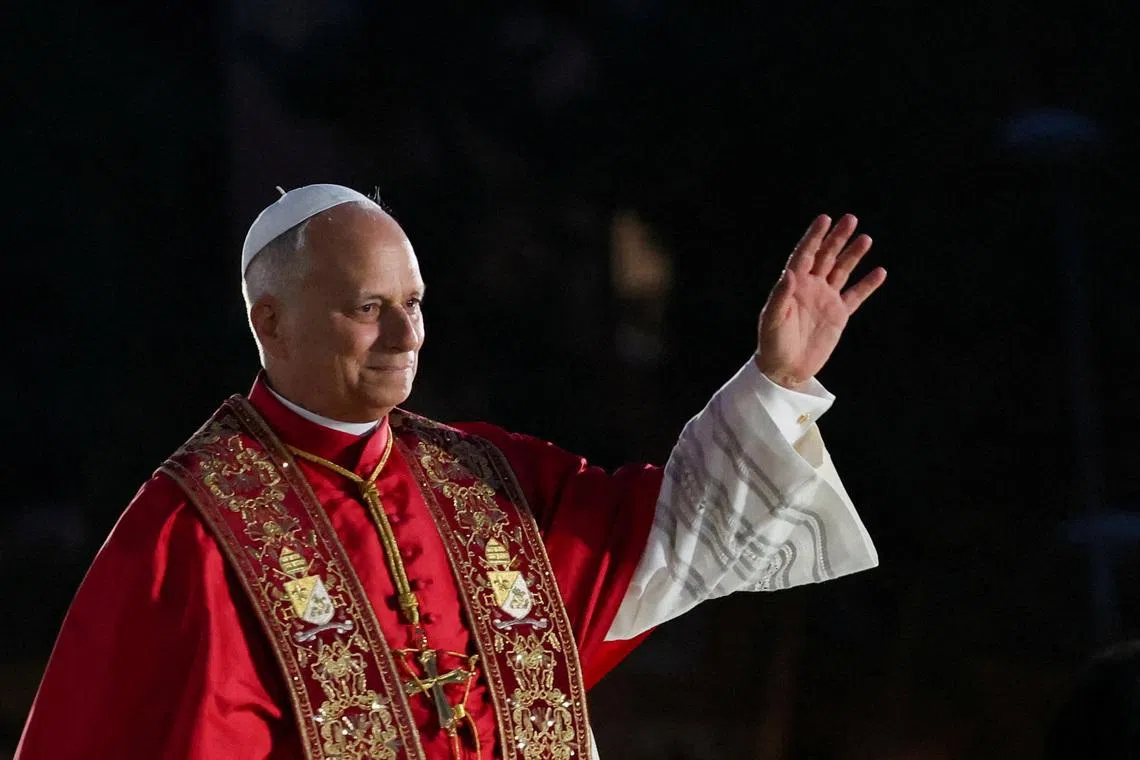
Pope Leo Sagrada Familia Barcelona world tallest church 2026 has been confirmed with the inauguration of the 172.5-metre Tower of Jesus Christ on Wednesday, as the pontiff blessed the soaring spire crowned with a five-storey ceramic cross visible across the Catalan capital during a Mass attended by thousands including Spain's King Felipe, Queen Letizia, and Prime Minister Pedro Sanchez, making Antoni Gaudi's modernist masterpiece the tallest church building in the world and marking the 100th anniversary of the visionary architect's death in a ceremony whose religious, cultural, and political dimensions made it one of the most significant papal visits to Spain in recent memory. Leo called the basilica an architectural masterpiece and described it as an eloquent catechesis made of stones, colours and light, while also using the sermon to deliver a message that drew a direct line from the sacred space to the conflict consuming the international community, stating that Christians cannot believe in Jesus and promote war, a declaration that follows his earlier criticism of the Iran war for which U.S. President Donald Trump drew ire toward the new pontiff. The ceremony on the 100th anniversary of Gaudi's death in 1926, when the architect was struck by a tram in Barcelona after spending more than 40 years working on the building he had made his life's mission, gave the inauguration a historical resonance that connected the architectural completion milestone to the human story of devotion and sacrifice that the Sagrada Familia represents in the Catholic tradition.
The Tower of Jesus Christ whose blessing by Leo makes the Sagrada Familia the world's tallest church at 172.5 metres is the central spire whose height surpasses the Cathedral of Ulm in Germany, previously the world's tallest church at 161.5 metres, completing the vertical hierarchy that Gaudi's design placed at the spiritual centre of a basilica whose 18 nature-inspired towers collectively represent the 12 apostles, the four evangelists, the Virgin Mary, and Jesus Christ in an architectural theology translated into stone, ceramic, and reinforced concrete. The five-storey ceramic cross that crowns the tower is visible across Barcelona from multiple distances and directions, creating the urban skyline landmark whose presence transforms the Catalan capital's visual identity in the way that Gaudi's original designs had promised but whose realisation required the engineering innovation, financial sustenance through entry fees, and continued construction effort of the nearly century since the architect's death to actually achieve. Leo's blessing of the exterior cross after celebrating Mass in the interior, where the light-infused nave translates Gaudi's vision of sacred geometry into the lived experience of worshippers, connected the spiritual purpose of the blessing to the physical reality of a building whose beauty draws nearly 5 million visitors annually.
The papal message that Christians cannot believe in Jesus and promote war arriving in the context of the ongoing Iran war whose ceasefire violations are generating the escalation cycle documented in Wednesday's concurrent news cycle, creates the specific political risk dimension of a papal visit that combines cultural celebration with moral challenge to the political leaders present in the congregation and watching internationally. Leo has already drawn Trump's ire with previous criticism of the Iran war, and his sermon's explicit statement that Christian faith and war promotion are incompatible, delivered at a ceremony attended by Spain's political leadership and covered globally, represents a continued papal engagement with the conflict's moral dimensions that the political leaders conducting the war must respond to or absorb. The sermon's framing of the incomplete basilica as a reminder that the Christian life is always a journey is both a theological reflection on the building's unfinished state and an implicit commentary on the moral journey that political leaders involved in the conflict must undertake, giving the architectural inauguration's message a political resonance that Gaudi's original design could not have anticipated.
How Gaudi Built His Life's Mission and What the Sagrada Familia Represents
Antoni Gaudi's decision to dedicate the last 43 years of his life to the Sagrada Familia, from 1883 when he took over the project from its original architect until his death in a tram accident in 1926, represents one of the most complete acts of artistic and religious devotion in the history of architecture, producing a building whose complexity, originality, and spiritual ambition has no equivalent in the modern architectural tradition. Gaudi was a devout Catholic whose faith was inseparable from his architectural practice, and who understood the Sagrada Familia as a collective act of devotion by the Catholic community of Barcelona rather than as a commission to be completed for a client, accepting no salary for his work on the project in his final years and directing all income toward its construction. The Vatican's description of Gaudi as God's architect, contained in media portal reporting that preceded the important step toward sainthood approved last year, reflects the institutional Catholic recognition of his life as a model of Christian devotion expressed through creative work, making his potential canonisation the formal theological affirmation of what his biography already documents.
The three facades in different architectural styles that define the Sagrada Familia's exterior narrative, the Nativity facade in the flamboyant organic style of Gaudi's mature work, the Passion facade in the geometric severity commissioned after Gaudi's death and executed by sculptor Josep Maria Subirachs, and the Glory facade still under construction that will be the principal entrance, document the architectural complexity of a project whose realisation has required multiple generations of architects, engineers, and craftspeople to interpret and extend Gaudi's original designs using materials and construction technologies that did not exist when he drew them. The 18 towers whose nature-inspired forms draw from Gaudi's study of organic geometry and natural structures, ranging from the 12 apostle towers at intermediate heights through the four evangelist towers to the Virgin Mary tower and the central Tower of Jesus Christ now inaugurated by Leo, create the vertical theology whose completion in Wednesday's ceremony represents the architectural realisation of a design conceived by a man who knew he would not live to see it finished. Gaudi is reported to have said that his client, meaning God, was not in any hurry, a statement that the century required to reach this milestone has made literally accurate.
The completion timeline that has now been pushed back to 2035 from the original 2026 target, despite the Tower of Jesus Christ's inauguration representing a major milestone, reflects the ongoing complexity of completing a building whose remaining elements include the Glory facade's full development, the completion of several supporting towers, and the interior finishing work that the liturgical and visitor experience requirements demand. The entry fees paid by the 4.9 million visitors who set a new record last year provide the construction funding that keeps the project moving forward, creating the specific economic model in which the basilica's own global draw as a tourist destination finances the work that is transforming it from a perpetually unfinished monument into the completed vision that Gaudi designed. Leo's observation that the unfinished state does not mar the beauty but reminds believers that the Christian life is always a journey reframes the construction timeline not as a project management failure but as a theological statement about the nature of spiritual aspiration and its permanent incompleteness.
Three Popes and the Basilica's Evolving Relationship With the Papacy
Leo is the third pope to visit the Sagrada Familia, following John Paul II, who consecrated the basilica as a minor basilica in 1982, and Benedict XVI, who elevated it to the status of minor basilica with additional liturgical privileges in 2010, documenting the progressive deepening of the institutional Catholic relationship with a building that spent decades in a legal and ecclesial grey area between construction site and sacred space. Each papal visit has added a layer of institutional recognition to a building whose status was always experiential and devotional for the millions who visited it long before its formal Catholic institutional recognition caught up with its popular religious significance. Leo's visit, which completes the Tower of Jesus Christ blessing and inaugurates the building's claim to the world's tallest church title, represents the most architecturally definitive papal engagement with the Sagrada Familia yet, transforming the previous recognitions of what the building was becoming into the inauguration of what it has now achieved.
The Vatican's approval of an important step toward Gaudi's sainthood in the year before Leo's visit creates the specific parallel narrative in which the basilica's architectural completion milestone and its architect's potential canonical recognition are advancing simultaneously, with the building's completion trajectory and the architect's sainthood cause as parallel testimonies to the same devotional tradition. A canonised Gaudi would be the first architect in the modern Catholic tradition to be formally recognised as a saint, and the Sagrada Familia's status as the world's tallest church whose construction was funded by the donations of ordinary Catholics would become a pilgrimage site associated with a modern saint whose life story is inseparable from the building that embodies it. Leo's visit's timing, on the 100th anniversary of Gaudi's death, gives the sainthood cause's progress its most significant public moment since the Vatican's approval, with the papal presence at the building creating the visual and spiritual association between the architect's memory and the Church's contemporary institutional recognition.
The Anti-War Message, Prison Visit, and Papal Cultural Diplomacy in Catalonia
Leo's sermon statement that Christians cannot believe in Jesus and promote war, delivered at a ceremony attended by Spain's king, queen, and prime minister and covered globally as one of the week's most significant cultural and religious events, represents the continuation of a papal moral engagement with the Iran war that has already put the pontiff in direct conflict with Trump and that uses the soft power of cultural and religious authority to maintain a moral counterpoint to the military logic that has governed the conflict's management since February 28. The Sagrada Familia setting gives the anti-war message its maximum cultural amplification, because the basilica is not a political venue where such statements might be expected but a sacred space whose beauty and spiritual purpose create the context within which a statement about the incompatibility of Christian faith and war promotion carries the moral authority of sacred ground rather than the political resonance of a policy statement. The presence of Spain's political leadership in the congregation creates the specific accountability moment that papal statements in such settings have historically produced, where the moral challenge cannot be avoided through non-attendance or dismissed as occurring in a context that does not require response.
Leo's visit to Brians 1 prison earlier on Wednesday, becoming the first pope to visit a Spanish prison, extended the moral leadership dimension of the Spain tour beyond the architectural and anti-war messaging to the specific advocacy for prisoner dignity and rehabilitation that has been a consistent theme of his pontificate. His statement that a person's past does not condemn the future but rather offers the possibility of changing decisions and choices is the specific message of redemptive possibility that criminal justice reform advocates have been applying to systemic arguments about incarceration, rehabilitation, and the possibilities of post-conviction life, and its delivery in a prison context by a global moral authority gives it a specific weight that academic or advocacy statement cannot replicate. The visit's historic first status, as no previous pope had entered a Spanish prison, amplifies the symbolic commitment to prisoner dignity that the visit represents beyond whatever specific pastoral effect the encounter has for the individuals present.
The Montserrat abbey visit's instruction to monks and Christians to renounce hurtful words, hasty judgement, gossip, and slander, specifically including on social media, carries both the pastoral dimension of guidance to a monastic community and the broader cultural commentary on the social media communication environment that is inseparable from the same political disruption that the Iran war and Trump's Twitter diplomacy represent in Wednesday's broader news context. Leo's brief use of the Catalan language at Montserrat, acknowledged by the 54-year-old local resident who told reporters that a pope speaking Catalan gives her goosebumps, represents the cultural sensitivity and political awareness of a papacy that understands regional identity and language as expressions of human dignity rather than as political complications to be managed. The Catalan dimension of Leo's visit creates the specific bridge between the basilica's Gaudi heritage, deeply embedded in Catalan cultural identity, and the contemporary political context of Catalan regional identity that Spanish politics has been managing with varying degrees of conflict and accommodation across multiple decades.