
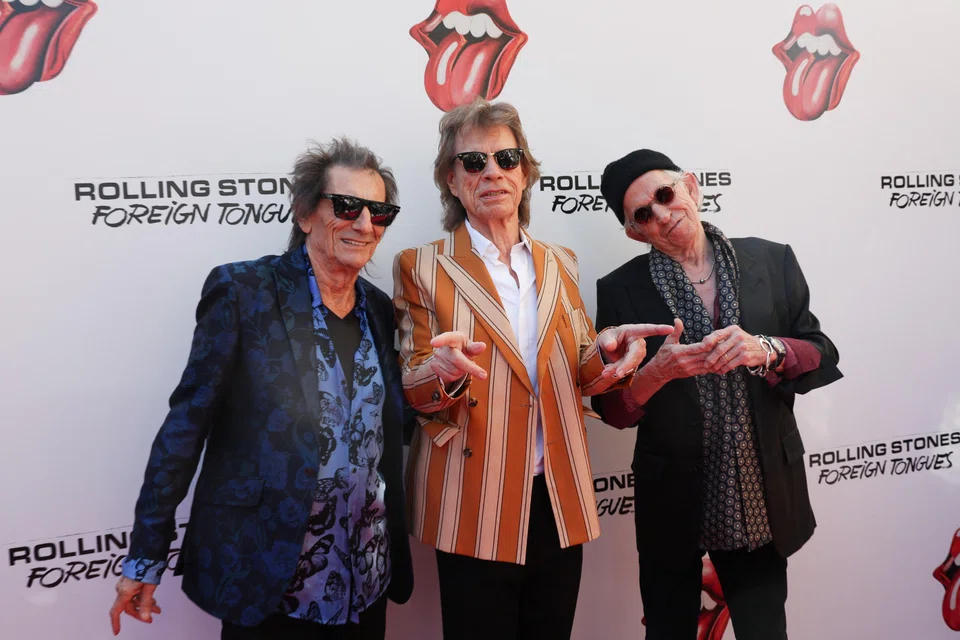
Rolling Stones Foreign Tongues album 2026 release has been celebrated at a red carpet event in Brooklyn where the three surviving members of the world's most enduring rock band gathered on Tuesday to mark the forthcoming arrival of their 25th studio album, a 14-track collection scheduled to debut on July 10 as Mick Jagger, Keith Richards, and Ronnie Wood approach the 64th anniversary of the band they built from blues and rhythm and blues roots into one of the most commercially successful, critically influential, and culturally durable acts in the history of popular music. The launch party was held at the Weylin, a landmark special-events venue in Brooklyn, where the three Stones walked a red carpet, posed for photographs, and participated in an interview session hosted by comedian and talk show host Conan O'Brien, creating the kind of celebratory public moment that befits an album release from a band whose cultural significance extends well beyond any single record or era into the accumulated mythology of six decades of rock and roll. The album follows the Grammy-winning 2023 release Hackney Diamonds, the band's celebrated comeback after 18 years without original studio material, and arrives with guest appearances from Paul McCartney, Steve Winwood, Robert Smith of The Cure, and Chad Smith of the Red Hot Chili Peppers.
The album's title, Foreign Tongues, invokes the band's iconic lips-and-tongue logo in a title that connects the new work to the visual identity that has been one of the most recognisable symbols in popular music since its creation, while the album cover created by painter Nathaniel Mary Quinn adds a striking artistic dimension with its colourful and almost grotesque three-in-one composite portrait of Jagger, Richards, and Wood, their exaggerated and jumbled facial features assembled into a single disfigured likeness that captures something essential about the band's collective identity and its relationship to physical and artistic extremity. The album's lead single, In the Stars, was released digitally on Tuesday alongside the opening track Rough and Twisted, providing the first widely available taste of the new material for a fan base that had been intrigued since April when Rough and Twisted received a limited vinyl-only release as a single credited to the Cockroaches, an old pseudonym that the Stones used to generate buzz about the album while allowing the music to circulate without the full weight of a formal Stones release announcement. Neil McCormick, chief music critic for the Telegraph, described Rough and Twisted as a stomping, raucous, frayed and tattered blues belter that would not sound out of place on the band's seminal 1972 album Exile on Main Street, a critical comparison that is both a high compliment and a commercially useful framing for a band whose core audience measures new work against its greatest historical achievements.
The Brooklyn launch event captures the cultural geography of a band that has never truly belonged to any single place despite its British origins, operating as a genuinely global cultural institution whose most enthusiastic audiences are as likely to be found in New York as in London, as likely to be in Brazil as in Germany, and whose artistic lineage draws on American blues as directly as on any British musical tradition. Jagger's comment that the album's producer Andrew Watt had been trying to bring him together with McCartney to write something but that they never actually managed it is the kind of casual backstage disclosure that fans cherish, adding a layer of what-might-have-been to a collaboration that still produced one of the album's most anticipated contributions from the former Beatle who also appeared on Hackney Diamonds. The combination of historical weight, celebrity gravitational pull, and the simple fact of Jagger, Richards, and Wood still creating new music together at ages 82, 82, and 78 respectively makes the Foreign Tongues launch something more than a standard album release event.
The Rolling Stones' Sixty-Four Year Journey and the Road to Foreign Tongues
The Rolling Stones were founded in London in 1962 with a lineup that included Jagger as vocalist, Richards on guitar, and multi-instrumentalist Brian Jones, whose vision for a blues-rooted British band provided the initial creative foundation from which one of the most significant acts in popular music history would emerge. The band's name, drawn from a Muddy Waters song, announced its American blues reverence from the outset and distinguished it from the more pop-oriented British acts of the early 1960s, positioning the Stones as the dangerous, blues-obsessed counterpoint to the Beatles' more melodic and commercially polished appeal. That opposition, partly cultivated by their management and partly genuine in its musical and personal expression, created the cultural narrative of the Rolling Stones as rock and roll's defining outlaws that has sustained their image across six decades of commercial and critical evolution.
Drummer Charlie Watts and bassist Bill Wyman joined the band in its early years to complete the first stable roster that would carry the Stones through their peak creative years of the 1960s and 1970s, during which albums including Beggars Banquet, Let It Bleed, Sticky Fingers, and Exile on Main Street established the band's artistic legacy in ways that continued to define critical assessment of their work for generations afterward. The band navigated Brian Jones's deteriorating mental and physical condition and his replacement by Mick Taylor before Jones's death by drowning in 1969, a trauma that the Stones absorbed by continuing to work and releasing the critically celebrated Let It Bleed later that same year. Ronnie Wood joined in the 1970s to replace the departing Taylor, completing the lineup of Jagger, Richards, and Wood that has persisted through the subsequent half-century of Stones activity.
Wyman's departure in the early 1990s and Watts's death in 2021 at the age of 80 reduced the Stones to the current core trio, each departure marking a generational loss that the band absorbed while maintaining its creative and touring commitments in ways that demonstrated the resilience and adaptability that 64 years of survival in the brutally competitive and often physically demanding world of rock music requires. Charlie Watts was widely regarded as one of the greatest drummers in rock history, and his distinctive understated style, rooted in jazz as much as in rock, gave the Stones' rhythm section a musicality that set it apart from comparable bands of their era. His 2021 death preceded the Hackney Diamonds sessions but was not entirely absent from them, as the album contained some of the last studio work Watts recorded before his passing, providing a valediction of sorts that connected the Grammy-winning comeback directly to the band's complete history.
Hackney Diamonds, the Grammy Win, and Why It Set Up Foreign Tongues
Hackney Diamonds arrived in 2023 as the Stones' first album of original material in 18 years and was received with a critical and commercial warmth that confirmed the band's continued creative relevance rather than treating the release as a sentimental nostalgia exercise from artists operating well past their creative peak. The album's Grammy Award for best rock album was the formal institutional validation of what most reviewers had observed informally: that Jagger, Richards, and Wood were still capable of making compelling, vital rock music that could be evaluated on its own terms rather than purely against the historical catalogue they carry. The Grammy win gave the Stones a contemporary credibility marker that distinguished them from the archive-focused legacy status that most bands of their generation have accepted, setting the commercial and critical baseline from which Foreign Tongues must build.
Producer Andrew Watt, who oversaw Hackney Diamonds, returns for Foreign Tongues, providing the creative continuity that allows the new album to develop from the successful template of its predecessor rather than beginning a new production relationship from scratch. Watt has established himself as one of the most effective producers of classic rock artists in the current period, with his ability to capture the organic energy of live-oriented rock recording while maintaining the sonic clarity that contemporary releases require making him particularly well-suited to the Stones' working method. His continued relationship with both McCartney and the Stones across both albums reflects the personal and professional networks that make the most ambitious rock collaborations possible, and his disclosure through Jagger that he had attempted to facilitate a Jagger-McCartney co-writing session suggests an ambition for the Foreign Tongues sessions that went beyond what was ultimately realised.
The guest artist list for Foreign Tongues reads as a curated assembly of rock music royalty whose presence both honours the Stones' place in the music's history and introduces the new album to each artist's own dedicated following. McCartney's appearance, as on Hackney Diamonds, connects the two surviving giants of British rock's foundational generation in a collaboration whose symbolic weight exceeds the specific musical contribution it represents. Steve Winwood brings the blues and soul credentials that have defined his career from Traffic through his solo work, contributing to the musical authenticity that the Stones have always prioritised over commercial calculation. Robert Smith of The Cure adds an unexpected dimension that bridges the Stones' classic rock world and the post-punk alternative music tradition, potentially introducing the album to audiences who might not otherwise engage with a Rolling Stones record.
Charlie Watts's Presence and Steve Jordan's Contribution as Drummer
The promotional materials' reference to a special appearance from Watts on Foreign Tongues, the drummer who died in 2021, is one of the most emotionally resonant elements of the album's pre-release narrative, connecting the new work to the complete history of the band in a way that acknowledges the loss while refusing to let it be the final word. The specific nature of Watts's contribution, whether previously recorded material incorporated into new tracks or archival performances repurposed in a new context, has not been detailed in the promotional communications, but its mention ensures that the album's reception will include the dimension of tribute and memory that Watts's absence has made a permanent feature of the post-2021 Stones.
Steve Jordan, who joined the Stones as their studio drummer for Hackney Diamonds following Watts's death, returns for Foreign Tongues alongside bassist Darryl Jones in the rhythm section that now provides the band's foundational groove. Jordan's acceptance into the Stones' creative family, demonstrated by his Hackney Diamonds contribution and his return for the follow-up, reflects both his musical qualities and the personal relationships that sustain the kind of creative collaboration that produces albums at the level Hackney Diamonds achieved. His Grammy connection through the best rock album award for Hackney Diamonds gives him the same career milestone that the Stones have accumulated across decades of work, placing him in a specific relationship with the band's ongoing legacy.
Chad Smith of the Red Hot Chili Peppers adds another drumming dimension to an album that already has an extraordinary rhythmic heritage in its production and performance credits, suggesting that drum arrangements and contributions on Foreign Tongues may be more layered and varied than the relatively conventional attribution of a single drummer to a full album would imply. Smith's association with the hard rock end of the guitar-based spectrum connects Foreign Tongues to the contemporary rock world in ways that the Stones have always sought to maintain, treating their cultural leadership as an ongoing obligation to engage with where rock music is rather than simply where it has been.
July 10 Release, Lead Singles, and What Comes After Foreign Tongues
The Tuesday release of In the Stars as the album's lead single and Rough and Twisted as the opening track provides the first widely available musical evidence of Foreign Tongues's character and direction, with Rough and Twisted's critical comparison to Exile on Main Street suggesting that the album's musical DNA is rooted in the same blues-rock authenticity that has defined the Stones' most critically respected work. McCormick's description of Rough and Twisted as frayed and tattered is particularly apt for a band that has worn its experience visibly in its music and performance style, with the roughness he identifies being a feature rather than a flaw of the Stones' aesthetic at this stage of their existence.
The Cockroaches pseudonym under which Rough and Twisted was initially released in April reflects the kind of playful misdirection that the Stones have occasionally employed across their career, and its use to build pre-release buzz for Foreign Tongues demonstrates a marketing awareness that understands how to generate genuine music fan intrigue rather than simply making conventional press announcements. A limited vinyl-only release under an obscure pseudonym creates the kind of collector's item discovery experience that vinyl culture prizes, and the subsequent revelation of the Cockroaches identity connected the April release to the July album in a way that rewarded the fans who had engaged with the anonymous release and created an additional narrative thread in the album's pre-release story.
The July 10 release date places Foreign Tongues in the summer of 2026, a period when the music calendar is typically less congested with the major releases that cluster around Christmas and the autumn season, potentially giving the album more cultural oxygen and media attention than it would receive in a more competitive release window. Summer releases of major catalogue artists' new work have historically benefited from the increased leisure time and music consumption that the season produces in the band's core demographic, and the Stones' touring activities, if any accompany the release in the traditional album-support format, would be particularly well-suited to the outdoor festival and stadium summer touring season that remains the dominant live music format for acts of their stature.
At 82 and 78, the Stones Are Not Done Yet
The report by The Times' chief rock and pop critic Will Hodgkinson in April that the band has amassed at least 10 more unused songs from their latest sessions as potential material for another album is perhaps the most astonishing single piece of information in the entire Foreign Tongues pre-release narrative, because it means that Jagger, Richards, and Wood at their current ages are not only making one album but potentially have the creative material for two. The stockpile of unused songs indicates a recording process whose productivity exceeded what a single album could accommodate, suggesting genuine creative momentum rather than the laboured assembly of just enough material to fulfil an album commitment that some legacy act releases represent.
The possibility of a 26th studio album from the Rolling Stones, implied by the 10 unreleased songs Hodgkinson reported, is both a remarkable fact about three musicians in their late seventies and early eighties and a natural extension of a creative pattern that has never allowed the Stones to fully retire from the studio even when their touring activities have provided more than sufficient commercial activity and audience engagement. Richards in particular has spoken throughout his career about the centrality of recording and songwriting to his sense of identity and purpose, treating the studio as a permanent vocation rather than a commercial obligation, and the surplus of material from the Foreign Tongues sessions is consistent with that creative disposition persisting well into his ninth decade.
For fans and critics who have approached each Rolling Stones release since the 1990s as potentially the last, the combination of Foreign Tongues's July release, the positive critical reception of Rough and Twisted, the all-star guest contributions, and the reported stockpile of additional material represents a compelling argument that the band's creative life remains genuinely unfinished rather than operating on borrowed time. The 64th anniversary of the Stones' founding that July's release will mark is not a farewell milestone but a data point in a continuing story whose next chapter is already apparently written and waiting in Watt's production archives for the moment when the band decides that the world is ready for album 26.