
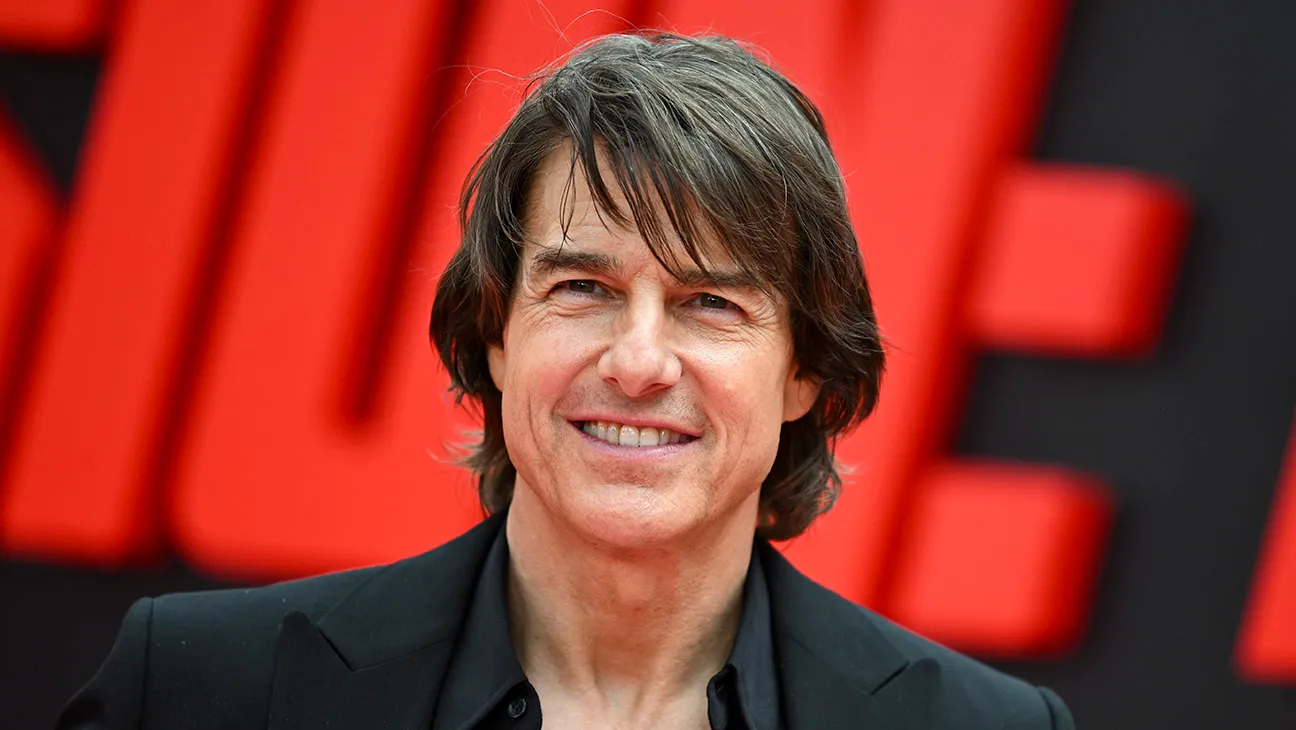
Tom Cruise stepped onto the CinemaCon stage in Las Vegas on Tuesday to introduce something that audiences have never seen from him before, a transformation so complete and so far removed from the action hero roles that built his global stardom that the first images from the film reportedly drew audible reactions from the theater owners gathered in the convention hall. The film is called Digger, a dark comedy from Warner Bros scheduled to debut in theaters in October, and Cruise described it to the audience with barely contained enthusiasm, calling it wild, funny, and unlike anything he has done in four decades of filmmaking. For a star whose career has been defined by physical fearlessness, record-breaking stunts, and an almost singular dedication to keeping audiences in cinema seats, the decision to anchor his next major release in character transformation rather than action spectacle represents a genuinely significant creative pivot that the industry will be watching closely.
The images Cruise introduced at CinemaCon showed the 63-year-old actor transformed into Digger Rockwell, an eccentric oil tycoon who sits at the center of the film's darkly comic narrative. The transformation is striking by any measure. Cruise appears with thinning gray hair, a beer belly, a Southern accent, and what the film's promotional materials describe as a fondness for cats, a collection of physical and behavioral details that collectively place the character at a considerable distance from anything in Cruise's previous filmography. The character Rockwell inadvertently unleashes an ecological disaster that carries the world to the brink of nuclear war, before spending the remainder of the film scrambling desperately and comedically to try and save the planet from the consequences of his own actions. It is a premise that combines geopolitical stakes with dark humor in ways that suggest a film with considerable ambition and tonal complexity.
Cruise was direct and personal when he spoke about what the role means to him in the context of his career. He told the theater owners gathered at CinemaCon that it took 40 years of acting to reach a place where he could put on the boots of Digger Rockwell and play the many layers of the character. That is not the kind of statement Cruise makes casually or for promotional effect alone. It reflects a genuine sense that this role demanded a level of character immersion and emotional range that his earlier career, for all its commercial and technical achievement, did not fully prepare him for or require from him. For an actor who has consistently pushed physical boundaries throughout his career, the suggestion that a character-driven dark comedy represents his most demanding professional challenge is both surprising and creatively significant.
How Seven Years of Development Brought Digger From Concept to CinemaCon Stage
The journey that brought Digger to the CinemaCon stage in April 2026 began seven years ago with a conversation between Tom Cruise and four-time Oscar-winning director Alejandro Inarritu, the filmmaker behind Birdman, The Revenant, Amores Perros, and 21 Grams, one of the most consistently celebrated and creatively ambitious directors working in contemporary cinema. Inarritu, who joined Cruise on stage at CinemaCon on Tuesday, confirmed that the two men first discussed the film seven years ago, a development timeline that speaks to both the complexity of the project and the seriousness with which both Cruise and Inarritu approached the process of bringing it from initial creative conversation to production-ready screenplay and ultimately to the screen.
The story of how that initial conversation happened carries its own cinematic quality. Cruise was filming Top Gun: Maverick at the time Inarritu reached out and asked to meet. Cruise, who has described himself as a long-time admirer of Inarritu's films, did not wait for a formal meeting to be arranged through the usual Hollywood channels. He rode his motorcycle directly to the director's house as soon as he received the invitation, an anecdote that captures something authentic about Cruise's personality and his genuine enthusiasm for connecting with filmmakers whose work he respects. That initial meeting planted the creative seeds for a collaboration that has taken seven years to germinate and has now arrived at what both men clearly regard as a genuinely important and ambitious piece of work.
Inarritu's assessment of what Cruise brings to the role of Digger Rockwell was striking in its directness and in the specific quality of courage he chose to highlight. He acknowledged that audiences know Cruise as physically fearless, someone who performs his own stunts, flies his own planes, and executes the kind of dangerous practical action sequences that have become the defining signature of his most commercially successful films. But Inarritu insisted that the fearlessness required for Digger is of an entirely different and in some ways more demanding kind. He described the performance as a high-wire act and suggested that this role could be the most challenging of Cruise's career, a statement that carries considerable weight when it comes from a director who has worked with some of the most accomplished performers in world cinema and who has an exceptionally refined understanding of what genuine acting difficulty looks like.
Warner Bros Uses CinemaCon to Showcase a Star-Studded Slate Ahead of a Major Corporate Transition
Tom Cruise's presentation of Digger was the opening act of a broader and celebrity-filled showcase of upcoming Warner Bros releases at CinemaCon, and the studio came to Las Vegas with both commercial momentum and corporate complexity as its backdrop. Warner Bros is coming off a year of significant commercial success and a remarkable 11 Oscar wins, a combination of box office performance and awards recognition that has restored confidence in the studio's creative direction after a period of uncertainty and strategic repositioning. The studio's ability to attract and showcase a project as distinctive as Digger, featuring one of the world's biggest stars working with one of the world's most acclaimed directors, reflects a creative ambition that goes beyond simply chasing sequels and franchise extensions.
The corporate backdrop to Warner Bros' CinemaCon presentation is significant and potentially transformative for the studio's future direction. The company is currently in the process of being sold to Paramount Skydance in a $110 billion deal that will reshape the competitive landscape of the Hollywood studio system in ways that are still being fully assessed and understood by industry observers. A deal of that scale will inevitably produce questions about creative priorities, leadership continuity, and how the combined entity will position itself relative to other major studios and the streaming platforms that continue to compete aggressively for both talent and audience attention. For the theater owners gathered at CinemaCon, who depend on studio output for the content that fills their screens, the Warner Bros presentation was an opportunity to assess whether the studio's creative momentum will survive the transition intact.
The studio's presentation extended well beyond Digger and included major announcements for other anticipated releases that collectively painted a picture of a studio with a genuinely strong near-term content pipeline. Zendaya, Timothee Chalamet, and Jason Momoa appeared on stage to promote Dune: Part Three, the conclusion to the critically acclaimed and commercially successful science fiction series that is scheduled for release in December. The film is set 17 years after the events of the second Dune movie, a significant time jump that Zendaya addressed directly in her remarks to the audience. She described a world where the years have not been kind to anyone on Dune, characterizing the intervening period as difficult, challenging, and unkind, with much still left to fight for. The framing suggests a conclusion that leans into emotional and political complexity rather than offering a straightforward triumphant resolution to the saga.
What Digger Represents for Tom Cruise's Legacy and Hollywood's Appetite for Original Films
The significance of Digger in the context of Tom Cruise's career extends beyond the obvious interest generated by a dramatic physical and character transformation from one of Hollywood's most recognizable leading men. It represents a deliberate and considered creative choice by an actor who, at 63, has earned the commercial leverage and industry standing to make films on his own terms and who has chosen to use that leverage to pursue a project defined by character complexity and tonal risk rather than the familiar action spectacle formula that has made him one of the highest-grossing actors in cinema history. The Mission: Impossible franchise alone has demonstrated repeatedly that Cruise can deliver massive global box office returns with physical action as his primary creative tool. Choosing Digger as his next major release is a statement about what he wants to accomplish as an actor in this phase of his career.
The collaboration with Inarritu is itself significant beyond the specific project it has produced. Inarritu is a filmmaker whose work is characterized by emotional intensity, visual ambition, structural innovation, and a refusal to make concessions to commercial expectation at the expense of artistic integrity. His films do not typically generate the kind of global box office numbers that Cruise's action vehicles produce, but they command a level of critical respect and awards recognition that reflects the highest ambitions of the filmmaking craft. The combination of Cruise's global commercial reach and Inarritu's artistic credibility creates a project with the potential to attract audiences across a broader spectrum than either collaborator might draw independently, which is precisely the kind of creative combination that studios and theater owners value most in an environment where original non-franchise films struggle to compete for audience attention.
For the theater owners who gathered at CinemaCon to assess the upcoming slate and plan their programming strategies for the remainder of 2026, the presentation of Digger alongside Dune: Part Three and the broader Warner Bros lineup offered a reasonably compelling argument that the theatrical experience remains capable of delivering content that streaming platforms cannot easily replicate. A Tom Cruise character transformation directed by Alejandro Inarritu, a dark comedy about an eccentric oil tycoon who almost ends the world, is exactly the kind of event film proposition that gives audiences a reason to leave their homes and buy a cinema ticket rather than waiting for a streaming release. Whether Digger ultimately delivers on the considerable expectations generated by its CinemaCon introduction will be determined when it reaches theaters in October, but the early signals suggest a film that is ambitious, distinctive, and genuinely difficult to categorize, which in the current Hollywood landscape is itself a form of commercial and creative courage.