
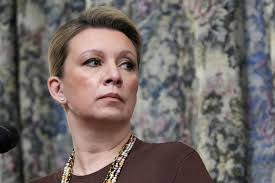
The war in the Middle East has entered a deeply alarming phase. On Thursday, March 12, 2026, Russia calls for halt to Iran war formally called on the United States and Israel to halt their ongoing military campaign against Iran and return to the negotiating table. Russian Foreign Ministry spokeswoman Maria Zakharova made the statement directly to reporters, warning that thousands of Iranian civilians had already lost their lives as a result of what Moscow is calling an illegal military operation. The demand reflects growing international concern over a conflict that has now stretched beyond two weeks with no clear end in sight.
Zakharova did not mince words. She stated that Russia would actively work to de-escalate the situation in the Middle East "as soon as possible" and resolve outstanding contradictions through peaceful means. The civilian death toll, she emphasized, had climbed into the thousands according to Iranian authorities. Whether or not Western governments accept that figure, the humanitarian cost of the conflict is undeniable, and Russia's public position is increasingly that Washington and Tel Aviv bear direct responsibility for those deaths.
How the Iran War Started and What Led to Russia's Response
The current conflict traces back to February 28, 2026, when the United States and Israel launched nearly 900 strikes in the first 12 hours of what Washington code-named Operation Epic Fury, targeting Iranian missiles, air defenses, military infrastructure, and leadership, killing Supreme Leader Ali Khamenei and dozens of other officials in the opening salvo. The strikes also caused civilian casualties, including deaths near a girls' school struck in error. Iran immediately launched retaliatory missile and drone attacks across nine countries in the Middle East, targeting US military bases, Gulf Arab states, and Israeli-linked assets.
Russia's condemnation came swiftly. Foreign Minister Sergei Lavrov told UAE Foreign Minister Abdullah bin Zayed in a February 28 call that the US-Israeli strikes on Iran were "unprovoked aggression" and "unacceptable," and both ministers agreed on the need for an immediate cessation of all hostilities.Since then, Russian President Vladimir Putin has been actively positioning Moscow as a potential mediator, holding phone calls with multiple Gulf leaders and offering to help stabilize the region through diplomatic channels.
Russia's relationship with Iran runs deep. The two countries signed a strategic partnership agreement in 2025, and Russia has billions of dollars in shared energy and infrastructure projects with Tehran. These include a planned multibillion-dollar railway route between Russia and Iran through the South Caucasus and a 25-billion-dollar deal to build four nuclear reactors in southern Iran. A destabilized or regime-changed Iran would represent a significant strategic and economic loss for Moscow, giving Russia every incentive to push for an early end to the conflict.
The Current State of the War on the Ground
As of March 12, the war shows no signs of slowing. Despite Washington and Israel claiming to have struck more than 5,000 targets and decimated Iran's air force and navy, the Iranian government has not collapsed. Iran's new supreme leader, Mojtaba Khamenei, the son of the slain Ali Khamenei, was elected on March 8 with the full backing of the Islamic Revolutionary Guard Corps and Iran's top political leadership. The United States and Israel have both expressed opposition to his ascension, leaving analysts to warn that this war could evolve into a prolonged conflict with no clear exit.
On the economic front, the situation is already catastrophic for global markets. Iran has restricted traffic through the Strait of Hormuz, driving Brent crude oil prices past 100 dollars a barrel and prompting fears of a global energy crisis. The International Monetary Fund has warned of global inflation risks, and G7 finance ministers are in emergency discussions about releasing strategic oil reserves. According to the Center for Strategic and International Studies, the first 100 hours of Operation Epic Fury cost the United States approximately 3.7 billion dollars, mostly unbudgeted.
Iran's foreign ministry has stated clearly it has no interest in ceasefire talks while under active bombardment. A senior Iranian official told CNN there is no prospect for an immediate end to the conflict and that Israeli strikes on oil and fuel depots have pushed the war into a "new phase."The absence of any off-ramp has allowed the war to spread across the broader region in ways that many foreign policy experts did not anticipate when the first strikes were launched.
International Pressure and Russia's Push for Diplomacy
Russia is not alone in calling for an end to the fighting. UN Secretary-General Antonio Guterres condemned the military escalation and called for an immediate cessation of hostilities, warning that the conflict undermined international peace and security and carried grave consequences for civilians and regional stability.France, Germany, and the United Kingdom have all called for diplomacy, though their positions differ on who bears primary responsibility for the crisis.
President Trump has so far rejected any negotiated settlement on conventional terms. He has publicly demanded Iran's unconditional surrender and declared there would be no deal until that condition was met. Meanwhile, Russia's Putin has offered to serve as a bridge between Tehran and Gulf capitals, with Saudi Crown Prince Mohammed bin Salman acknowledging that Russia could play a stabilizing role given its ties to both sides. Whether that offer gains any traction depends on whether Washington is willing to allow Moscow a seat at any future diplomatic table, which remains far from certain.
What Comes Next for the Middle East Conflict
The next phase of this war will likely be determined by two things: how long Iran can sustain its retaliatory capacity, and whether any third-party mediator succeeds in creating conditions for talks. Russia's public call for de-escalation on March 12 is the most direct diplomatic pressure Moscow has applied since the conflict began. It signals that the Kremlin is moving from quiet back-channel diplomacy to open public advocacy for a ceasefire.
The human cost continues to mount. Civilian deaths in Iran are in the thousands. Flights across the Middle East remain disrupted. Gulf states are absorbing Iranian missile attacks on their soil. And a new Iranian supreme leader has taken power, vowing continuity with his father's resistance. The war that many assumed would be short and decisive has instead become an open-ended regional conflict, and Russia's demand for its end may be the most significant diplomatic development this week.