
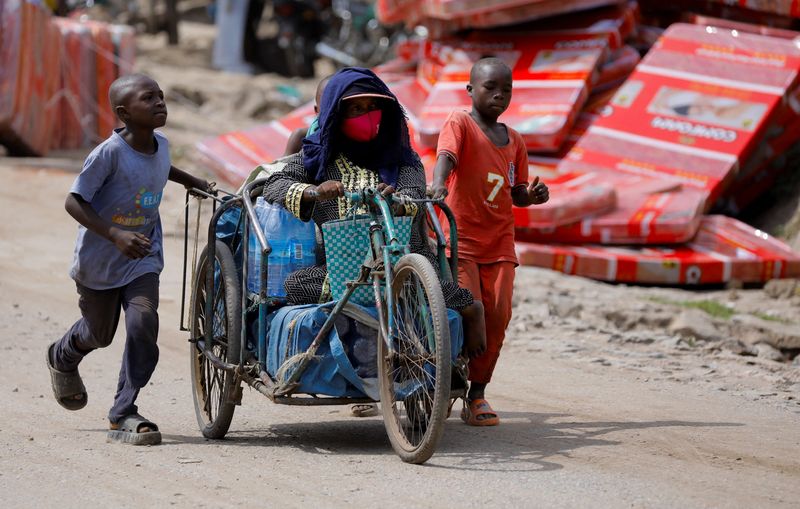
The World Health Organization has reported 906 suspected cases of Ebola in the Democratic Republic of Congo, including 223 suspected deaths currently under investigation, as an outbreak of the rare Bundibugyo strain continues to spread across the country's densely populated eastern region with cases also confirmed in neighbouring Uganda. The WHO has declared the outbreak a public health emergency of international concern, the organisation's highest level of global health alert, triggering an international response framework that mobilises resources, expertise, and coordination mechanisms across member states. What has alarmed public health officials most acutely is not the raw case count, which is still being established as testing backlogs are cleared, but the fact that the outbreak spread undetected for approximately two months before it was identified, a delay that has made contact tracing, isolation, and outbreak containment significantly harder to execute.
The Bundibugyo strain is one of the rarest and least understood variants of the Ebola virus family, and critically, there is currently no approved vaccine available to protect against it. This places the outbreak in a categorically different risk environment from the Zaire strain outbreaks that dominated previous Ebola responses in the DRC, for which vaccines developed after the 2014 to 2016 West Africa epidemic have provided a critical public health tool. The absence of a Bundibugyo-specific vaccine means that containment depends entirely on non-pharmaceutical interventions including surveillance, case isolation, contact tracing, personal protective equipment for healthcare workers, and community engagement, all of which are harder to implement quickly in a region that had already been experiencing active conflict and humanitarian strain before the outbreak began.
Anais Legand from the WHO's High Threat Pathogens Team within the Health Emergencies Programme put the fatality picture into language that removed any ambiguity about the severity of the threat. "It's huge. It means that up to five out of 10 people are likely to die," Legand said, noting that the case fatality rate among confirmed infections is running between 30 and 50 percent. She was careful to note the data is preliminary and requires further validation as testing capacity improves, but the directional signal is unambiguous. In the context of global infectious disease outbreaks, a confirmed fatality rate in that range places Bundibugyo Ebola among the most lethal pathogens currently active anywhere in the world.
How the Bundibugyo Strain Spread Undetected and Why the Absence of a Vaccine Changes Everything
The Bundibugyo strain was first identified in 2007 in the Bundibugyo district of Uganda, giving it its name. It is one of six known species of the Ebola virus genus and has historically caused far fewer outbreaks than the Zaire strain, which has been responsible for the largest and most deadly Ebola epidemics on record. That relative rarity is part of what makes it so dangerous in an outbreak setting: healthcare workers, laboratory staff, and community health systems have less accumulated experience recognising and responding to it, and the diagnostic infrastructure that has been built up in the DRC around Zaire strain surveillance is not automatically calibrated for Bundibugyo detection. The two-month window during which the current outbreak spread before detection is a direct consequence of that diagnostic gap operating in an already compromised health system environment.
The pharmaceutical dimension of the outbreak is stark and widely understood within the global health community. The vaccines that proved transformative in controlling Zaire strain outbreaks, most notably rVSV-ZEBOV developed by Merck and the Ad26.ZEBOV and MVA-BN-Filo two-dose regimen from Janssen, were specifically designed for and validated against the Zaire species. They provide no cross-protection against Bundibugyo. The global health research community has known for years that Bundibugyo and other non-Zaire strains represent vaccine gaps in the outbreak preparedness architecture, but the rarity of Bundibugyo outbreaks historically made it difficult to justify the commercial investment required to advance a candidate vaccine through clinical trials. That calculus has now changed, and the WHO declaration of a public health emergency of international concern is expected to catalyse emergency research funding and accelerate any existing Bundibugyo vaccine candidates currently in preclinical or early clinical development.
There are no currently approved therapeutic treatments specifically validated for Bundibugyo Ebola either, though some of the monoclonal antibody treatments developed for the Zaire strain, including REGN-EB3 and mAb114, are being assessed for potential cross-reactive activity. The WHO and its partners are working to establish treatment centres with supportive care protocols that, while not curative, have been shown to significantly improve survival outcomes when applied early. Legand's emphasis on early care as a driver of lower fatality rates reflects the clinical evidence that aggressive supportive treatment including fluid management, electrolyte replacement, and management of secondary infections can move the case fatality rate meaningfully toward the lower end of the 30 to 50 percent range, even without a targeted antiviral or vaccine.
What WHO, Testing Capacity, and the First Recovered Patient Tell Us About Where the Outbreak Stands
The most clinically significant development reported alongside the raw case numbers was the discharge of the first recovered patient from a health centre in the DRC following two consecutive negative Ebola tests. In the context of a disease with a 30 to 50 percent fatality rate and no approved vaccine, a confirmed recovery is not merely a human interest story. It is a data point that informs clinical teams about the effectiveness of the supportive care being delivered, the immune response profile of survivors, and, critically, the potential for convalescent plasma therapy in which antibody-rich blood from recovered patients is used to treat those currently infected. Survivor plasma has been used in previous Ebola outbreaks with varying degrees of documented efficacy, and the existence of even one confirmed survivor immediately opens the door to exploring that option in the current outbreak.
The WHO confirmed on Friday that testing capacity is being actively expanded and that the agency expects the backlog of unprocessed samples from suspected cases to be cleared within days. The significance of that backlog cannot be understated from a pharmaceutical and epidemiological standpoint. Until samples are tested, clinical teams cannot confirm whether patients have Bundibugyo Ebola or another condition with similar symptoms, which directly affects treatment decisions, isolation protocols, and the accuracy of all case and fatality count data. The WHO's acknowledgement that the number of suspected cases is likely to rise as the testing backlog is cleared is a public health communication that balances transparency about the evolving picture with the reassurance that rising numbers reflect improved surveillance rather than exponential uncontrolled spread. Legand's statement that rising numbers are "a sign that surveillance is working" is precisely the framing that epidemiologists use when they want to maintain public confidence without minimising the genuine severity of an ongoing outbreak.
The question of whether the outbreak has passed its peak remains unanswered, with WHO officials explicitly declining to make that assessment at this stage. From a global health preparedness standpoint, the current outbreak has already exposed critical gaps in the international community's readiness to respond to non-Zaire Ebola strains. The combination of no available vaccine, limited therapeutic options, an extended undetected spread window, and a case fatality rate that can reach 50 percent in the absence of early care represents a compound vulnerability that the global health and pharmaceutical community will need to address with urgency. The WHO emergency declaration is the formal trigger for that response, but the underlying research, manufacturing, and distribution infrastructure for a Bundibugyo vaccine does not yet exist at the scale needed to make the kind of difference that vaccines made in the 2018 to 2020 DRC Zaire outbreak, where ring vaccination of contacts helped bring a complex outbreak to a close even in an active conflict zone.