
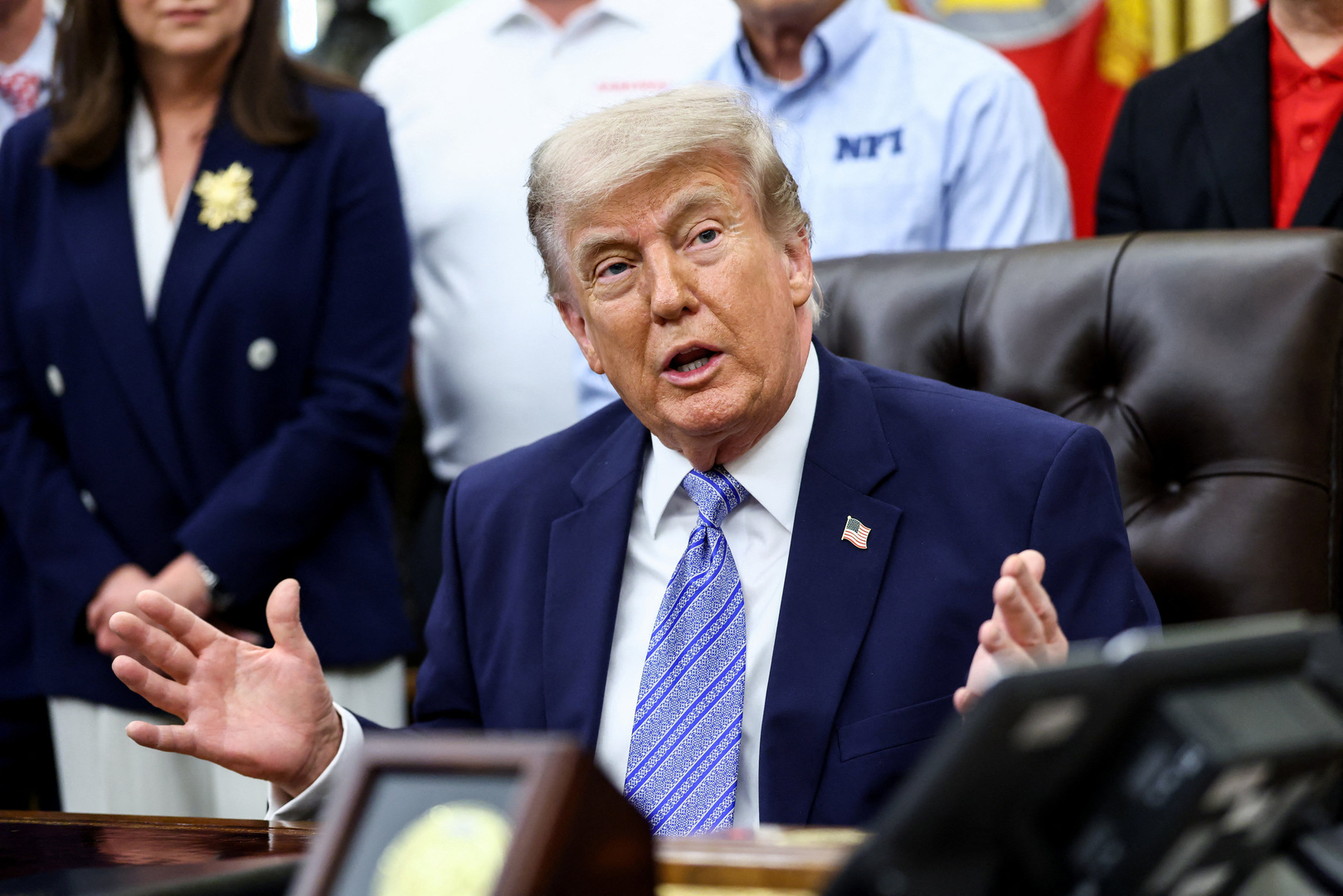
President Donald Trump has dramatically expanded the stakes of his Iran ceasefire diplomacy by publicly demanding that Saudi Arabia, Qatar, Pakistan, Turkey, Egypt, and Jordan join the Abraham Accords and normalise relations with Israel as part of a broader Middle East settlement. In a post on Truth Social, Trump Trump Abraham Accords to described his request as mandatory, framing mass Arab and Muslim-majority country recognition of Israel as both a condition and a complement to any deal that ends the current war with Iran. The announcement linked two of the most complex diplomatic challenges in the region into a single, highly ambitious package that analysts and governments have already begun pushing back against.
Trump said he personally spoke on Saturday with the leaders of all six countries, along with the United Arab Emirates and Bahrain, which have already signed the accords. "I am mandatorily requesting that all Countries immediately sign the Abraham Accords, and that, if Iran signs its Agreement with me, as President of the United States of America, it would be an Honor to have them also be part of this unparalleled World Coalition," Trump wrote. The framing was vintage Trump: sweeping, bold, and presented as if the outlines of a new regional order were already within reach if only everyone agreed to move together.
The immediate reaction exposed just how wide the gap is between Trump's vision and political reality on the ground. Pakistan rejected the proposal outright through official channels, with a source familiar with the matter stating that the two issues are "not interlinked and cannot be made so" and that Pakistan is "under no compulsion to adhere to any such demand." None of the other named countries offered a public response, and analysts across the region noted that popular sentiment in Muslim-majority nations toward Israel remains deeply hostile following the scale of its military offensive in Gaza, making any government seen embracing normalisation politically toxic at home.
How the Abraham Accords Were Built and Why Expanding Them Was Always Going to Be Hard
The original Abraham Accords were brokered by Trump during his first term in the White House and represented a genuine diplomatic breakthrough when they were signed in 2020. The United Arab Emirates and Bahrain became the first Arab states in a quarter century to formally recognise Israel, breaking a longstanding regional taboo that had made such recognition unthinkable for decades. Morocco and Sudan joined in the months that followed, giving the accords a total of four signatories and generating significant momentum that Trump's team hoped would continue to build over time.
The countries that normalised in 2020 were all in very different positions from the ones Trump is now targeting. None of them had the religious symbolic weight of Saudi Arabia, which as the birthplace of Islam and the custodian of Mecca and Medina occupies a unique place in the Muslim world. For Riyadh, recognising Israel is not simply a foreign policy choice that can be weighed against economic or security incentives; it is a decision tied fundamentally to the unresolved question of Palestinian statehood. Saudi Arabia's longstanding and publicly stated position has been that it will not sign any normalisation agreement unless there is a credible roadmap to a Palestinian state, a condition that has not come close to being met.
Egypt, Jordan, and Turkey already maintain diplomatic relations with Israel, but those ties were built under very different circumstances and have been severely strained since the outbreak of the Gaza war. Asking these governments to deepen or publicly celebrate their Israel connections at a moment when public anger over Gaza is near its peak is a very different ask than it would have been even two years ago. The political calculation for any leader in the region right now is not whether normalising with Israel is strategically sensible in isolation; it is whether doing so under current conditions is survivable domestically.
Why Analysts Say Trump Is Trading One Diplomatic Fantasy for Another
The response from foreign policy experts to Trump's announcement was sceptical at best. Ali Vaez, the Iran project director at the International Crisis Group, captured the prevailing view among independent analysts succinctly. "Trump is trying to sell an Iran deal as an Abraham Accords sequel: good for Israel, good for the region, tough enough for Washington," Vaez said. "But he is trading one fantasy for another: from forcing Iran to surrender to pretending a fragile deal can anchor a new Middle East order." That framing reflects a widely held concern that Trump is bundling together problems of vastly different complexity and presenting their combined solution as if the will to announce it is the hardest part.
Not everyone was dismissive. Longtime Trump ally Senator Lindsey Graham endorsed the idea of linking Iran to the Abraham Accords, arguing it would drive regional economic integration and create what he called "a powerhouse for economic opportunity." Others in Washington saw the strategy through a more tactical lens: that attaching Abraham Accords expansion to an Iran deal is primarily a political manoeuvre designed to make a ceasefire agreement with a deeply unpopular adversary easier for domestic and Israeli audiences to accept. In that reading, the accords framing is not the policy; it is the packaging for the policy.
Trump added in his Truth Social post that negotiations with Iran were "proceeding nicely," though he gave no indication that a deal was imminent, a contrast with the urgency implied by linking the Iran talks to an immediate mass normalisation demand. Israeli Prime Minister Benjamin Netanyahu's office did not respond to requests for comment on the post, a notable silence given that Israeli attitudes toward which Arab and Muslim-majority countries join the accords are not uniformly positive, particularly where countries like Turkey and Qatar are involved. What happens next depends heavily on whether any of the six named governments finds a way to engage with Trump's demand without triggering a domestic political backlash that their rivals would be quick to exploit.