
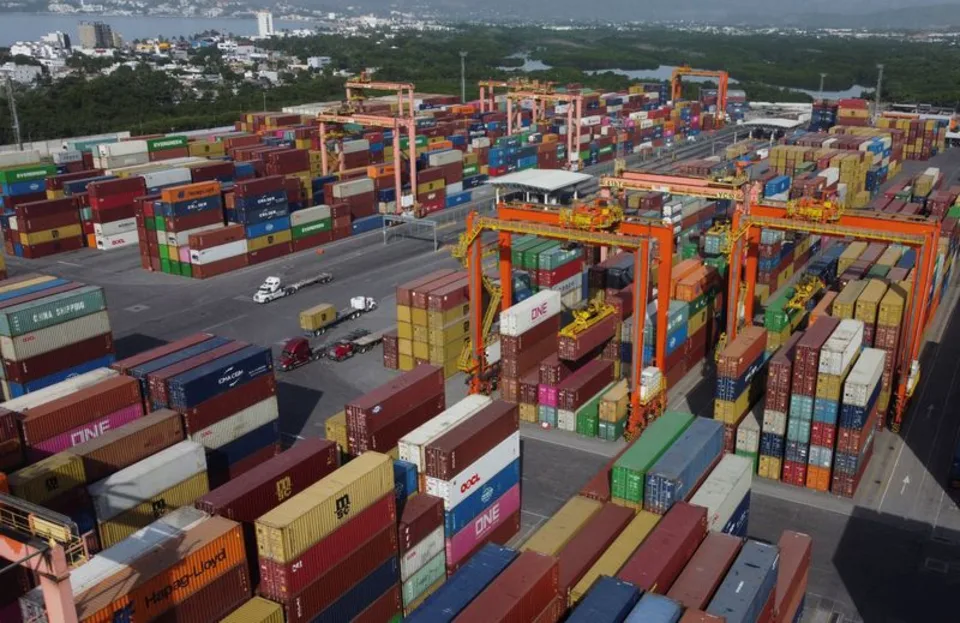
The United States and Mexico are sitting across the negotiating table in Mexico City this week for a third round of bilateral trade talks aimed at revising the United States-Mexico-Canada Agreement, the six-year-old North American trade framework that underpins nearly $1.6 trillion in annual commerce, while Canada watches from the sidelines as the Trump administration simultaneously announces new tariffs on approximately $20 billion worth of Canadian goods. The talks, scheduled to run three days from Tuesday, represent the most consequential renegotiation of North American trade architecture since USMCA trade Talks replaced NAFTA in 2020, and their outcome will shape the supply chains, manufacturing investments, and consumer prices of three economies whose integration runs deeper than any other regional trade relationship on earth.
This is not simply a trade dispute. It is a fundamental restructuring of the rules governing who makes what, where, with whose components, under whose labour standards, and protected from whose competition, across a continent whose industrial web connects a Mexican auto parts factory to a Michigan assembly plant to a Canadian steel supplier in supply chains that no single tariff schedule can cleanly sever without collateral damage to all three countries simultaneously.
The decision by the Trump administration not to extend USMCA on July 1, activating a 10-year wind-down clock that expires unless the three countries agree on improvements, has created the specific urgency that Mexico's new ambassador Roberto Lazzeri captured precisely: every moment of delay is lost competitiveness, market share, and investment.
The USMCA Clock Is Ticking and Canada Is Not in the Room
The July 1 decision by the Trump administration not to trigger USMCA's automatic extension initiated the provision in the agreement that begins a 10-year countdown to the treaty's expiration unless renegotiated. Under the terms of the original USMCA, signed in 2020, the agreement contains a built-in review mechanism requiring parties to either extend it or begin renegotiation, with the extension requiring all three countries' consent. The Trump administration's choice to decline extension rather than consent to continuation signals its assessment that the current terms need fundamental revision before they merit the indefinite continuation that extension would provide.
The bilateral structure of the current negotiations, explicitly excluding Canada, reflects the specific breakdown in the U.S.-Canada trade relationship that the Trump administration's tariffs, Canada's retaliatory measures, and U.S. Trade Representative Jamieson Greer's assessment that there has been little movement towards Canadian concessions have produced. The Trump administration announced new tariffs on nearly $20 billion worth of Canadian goods on Monday, the day before Tuesday's Mexico City talks began, citing Canada's retaliatory tariffs on U.S. autos, steel, aluminum, and liquor and its high dairy tariffs as the justification for the escalatory response.
Greer has meanwhile commended Mexico for its non-retaliation to U.S. tariffs and its pragmatic approach to negotiations, creating the specific reward-versus-punishment asymmetry that the bilateral U.S.-Mexico format embodies, with Mexico receiving the benefit of direct renegotiation engagement while Canada faces the cost of continued exclusion and new tariff escalation.
Three Structural Forces Driving the USMCA Renegotiation
The China bypass problem. The most significant single driver of the Trump administration's USMCA urgency is the specific concern that China and other Asian manufacturers are using Mexico and Canada as transshipment and final assembly points to access the U.S. market on the preferential terms that USMCA's largely tariff-free access provides, without the domestic content and labour standards compliance that the agreement's regional value content rules were designed to require. Chinese car brands' 30 percent sales growth in Mexico in the first half of 2026, reaching a 17 percent market share despite 50 percent tariffs imposed in January, is the specific data point that U.S. negotiators are watching most closely as evidence that the current USMCA framework is insufficiently protecting American manufacturing interests from Chinese competition routed through Mexican assembly.
This is the economic security dimension that USTR's framing identifies as the central purpose of the renegotiation, with raising regional trade protections to keep China and other Asian countries from using Mexico to access the U.S. market on preferential terms representing the specific policy objective whose technical implementation the Mexico City talks are working through in the areas of autos, steel, aluminum, and agricultural and industrial components.
The trade deficit pressure. The U.S.-Mexico trade deficit grew $28 billion, or 17 percent, to $197 billion in 2025, according to U.S. Census Bureau data, with Mexico having benefited substantially from supply chains that shifted away from China following earlier Trump administration tariffs on Chinese goods. The nearshoring trend that made Mexico a manufacturing hub for U.S.-bound goods whose production moved from China created the specific irony that the tariffs designed to reduce American dependence on China contributed to a different bilateral deficit that has become the political target of the current renegotiation. Greer has identified this growing deficit as a key concern for Trump in considering USMCA's future, creating the political pressure for rule changes that would shift more production value to the United States.
The auto content rules. USTR's May proposal requiring that 50 percent of the value of North American-built vehicles originate in the United States, compared to the current regional value content rules that allow a broader North American origin without specifying the U.S. share, would represent the most significant single rule change in the renegotiation for the automotive industry whose integrated regional supply chains span all three countries. The 50 percent U.S. content requirement would require manufacturers with current production configurations to either increase their U.S. sourcing, restructure their supply chains, or accept tariff penalties on vehicles that do not meet the threshold, creating the specific investment and production decisions that the auto industry is watching most closely as the talks proceed.
How North American Trade Got to This Point
1994: NAFTA enters into force, creating the original North American free trade framework whose provisions governed $1.6 trillion in annual cross-border trade for 26 years and transformed the region's manufacturing geography through integrated supply chains whose development has made the three economies mutually interdependent at the level of individual factory floor inputs.
2018 to 2019: The first Trump administration renegotiates NAFTA into USMCA, incorporating new rules on automotive content requiring 75 percent regional value content for tariff-free auto access, new labour provisions requiring higher wages at Mexican auto plants, updated intellectual property protections, and a 16-year sunset clause with a 6-year review.
2020: USMCA enters into force, replacing NAFTA on July 1, 2020, under the formal name United States Mexico Canada Agreement with the Mexican government's simultaneous designation as T-MEC and Canada's as CUSMA.
2022 to 2024: The Biden administration uses USMCA dispute settlement mechanisms over automotive content, energy, and agricultural issues, with multiple panel decisions and ongoing compliance disputes establishing the trade law precedents that the current renegotiation must address.
January 2025: Second Trump administration begins imposing tariffs on Canadian and Mexican goods outside USMCA's normal provisions, citing national security authorities and fentanyl and migration concerns, creating the specific legal tension between the tariffs and USMCA's tariff-free access commitments that Canada and Mexico have both contested.
July 1, 2026: Trump administration declines to extend USMCA, triggering the 10-year wind-down clock and beginning the renegotiation process whose outcome will determine whether the agreement survives in revised form or expires in 2036.
July 2026: Third round of bilateral U.S.-Mexico talks begins in Mexico City. Canada remains excluded. New U.S. tariffs on $20 billion of Canadian goods announced the previous day.
Three Countries, Three Different Calculations
United States. For the Trump administration, the USMCA renegotiation is the trade policy expression of the America First economic nationalism that has defined both Trump terms. The specific objectives, higher U.S. content requirements in autos, economic security provisions blocking Chinese goods' preferential access, and reduced trade deficits, reflect the political constituency of American manufacturing workers and communities whose economic trajectory the administration is using trade policy to influence. The November congressional elections create the specific political timing pressure for visible progress in negotiations whose outcomes the administration can present as wins for American workers regardless of the technical complexity of the supply chain adjustments that implementing those outcomes requires.
Mexico. The Claudia Sheinbaum administration's approach, characterised by Greer as non-retaliatory and pragmatic, reflects Mexico's calculation that its position as the United States' largest trading partner since 2023, having surpassed China, creates the specific leverage that cooperative engagement preserves while confrontational retaliation would jeopardise. Mexico's key priority of winning relief from the 25 percent national security tariffs on Mexican autos and 50 percent on steel and aluminum, duties that Lazzeri identified as creating urgency for resolution, gives Mexico strong incentive to advance the bilateral talks that the auto tariff relief makes valuable even alongside the Chinese car sales growth complication that U.S. negotiators will be pressing Mexico to address through higher trade barriers against non-regional vehicles.
Canada. Mark Carney's government finds itself in the most difficult position of the three, facing new tariffs on $20 billion of goods while being excluded from the bilateral talks that are shaping the agreement whose terms Canada must ultimately accept, modify through its own eventual engagement, or reject at the cost of the agreement's expiration. Carney's statement that his government had made comprehensive proposals to resolve trade disputes with Washington, alongside his assertion that Trump's past tariffs violated USMCA, frames Canada's position as legally correct and diplomatically engaged but operationally sidelined in ways whose resolution requires a change in either the U.S. tariff posture on Canada or Canada's own approach to the dairy and retaliatory tariff issues that Greer has identified as the blockage to Canadian inclusion.
What the Renegotiation Means for $1.6 Trillion in Trade
The $1.6 trillion in annual trade that USMCA governs represents one of the world's largest regional trading relationships, with the three economies having integrated so deeply through the NAFTA and USMCA era that simple trade flow data understates the actual economic interdependence. Automotive manufacturing is the most integrated sector, with a typical North American vehicle crossing the U.S.-Mexico or U.S.-Canada border multiple times during its production as components are assembled, processed, and assembled again in a regional supply chain whose efficiency depends on the tariff-free access that USMCA provides.
The proposed 50 percent U.S. content requirement for autos would, if implemented as USTR proposed in May, require the most significant restructuring of automotive supply chains since NAFTA's original rules of origin were established in 1994. The cost of sourcing a significantly higher share of vehicle value from U.S. suppliers rather than the lower-cost Mexican suppliers that integrated supply chains currently use would increase production costs in ways that manufacturers would ultimately pass through to vehicle prices, affecting the American consumers whose car purchasing decisions are already constrained by elevated interest rates and the broader inflationary environment that the Iran war's energy prices have sustained.
The U.S.-Mexico trade deficit of $197 billion in 2025 is the specific number whose political potency in U.S. trade policy discourse exceeds its economic significance as a policy target, because bilateral trade deficits reflect the pattern of comparative advantage specialisation that trade economists identify as value-creating rather than loss-creating, with Mexico's manufacturing competitiveness in labour-intensive production complementing U.S. strength in high-value design, technology, and services in a regional economy whose total productivity is higher than either country's autarkic alternative would produce.
Who Benefits, Who Loses, and What Decisions Are Being Delayed
Auto manufacturers face the most immediate and significant business impact, with the U.S. content requirement proposal creating the specific investment uncertainty that delays capital expenditure decisions about new model production locations, supplier selection, and manufacturing footprint optimisation. Ford, General Motors, and Stellantis all have deeply integrated North American operations whose current configurations would not immediately meet a 50 percent U.S. content threshold, requiring either significant investment in U.S. supplier development or acceptance of tariff penalties on non-compliant vehicles.
Steel and aluminum producers in all three countries are watching the tariff situation closely, with Mexico's 50 percent U.S. steel and aluminum tariffs creating the specific cost disadvantage for Mexican manufacturers whose competitiveness in the U.S. market depends on input cost parity. The bilateral talks' focus on steel and aluminum technical details indicates that this sector will be among the earliest to see proposed rule changes whose business impact will be substantial for producers across the region.
Agriculture is another sensitive area where the talks' Mexico City agenda includes technical discussions on U.S.-Mexico agricultural trade, with Canada's dairy tariffs being separately identified as a Canada-specific issue that has contributed to Ottawa's exclusion from the current bilateral format. Mexican agricultural exports including avocados, tomatoes, and berries are significant U.S. market competitors whose access terms are subjects of ongoing U.S.-Mexico trade friction alongside the avocado deforestation compliance issue that Greer specifically identified as part of the pragmatic Mexico agenda.
Chinese companies using Mexico as a manufacturing base for U.S. market access face the most significant long-term business impact of the economic security provisions that USTR is pressing into the renegotiated agreement, with higher regional content requirements and China-specific trade barriers potentially eliminating or severely restricting the preferential U.S. market access that Mexican manufacturing sites of Chinese-owned or Chinese-supplied companies currently enjoy. The 30 percent growth in Chinese car sales in Mexico despite existing tariffs suggests that the current barriers are insufficient to deter Chinese market penetration at the level that U.S. negotiators consider necessary for economic security purposes.
Global Impact: What USMCA's Renegotiation Means Beyond North America
The USMCA renegotiation's global implications extend significantly beyond the three parties' bilateral commercial interests to the template it sets for regional trade agreement design, the signal it sends about American trade policy reliability, and the specific consequences for the global supply chain geography that has been reorganising around nearshoring and China-plus-one manufacturing diversification strategies.
The economic security framing of the renegotiation, with its explicit focus on preventing third-country manufacturers from using North American presence to access U.S. market preferences, represents the specific trade policy architecture that the Biden administration also pursued through domestic content requirements in the Inflation Reduction Act's clean energy provisions and that the current administration is extending into the USMCA framework. If USMCA successfully incorporates effective economic security provisions that prevent Chinese goods from benefiting from North American preferential access, it becomes the template for similar provisions in other U.S. trade agreements whose bilateral and regional counterparts in Europe and Asia are watching closely.
For European manufacturers, whose operations in Mexico include significant automotive, aerospace, and industrial production serving the U.S. market, the renegotiation's outcome determines whether their existing production configurations continue to benefit from USMCA's preferential terms or whether new regional content requirements require supply chain restructuring that European companies in Mexico have not budgeted for in their capital planning.
For Asian manufacturers, particularly Japanese, Korean, and German automotive companies whose Mexican plants are significant components of their North American market strategies, the auto content proposals create the most immediate strategic planning uncertainty, with investment decisions about new model production in Mexico potentially being delayed until the renegotiation's outcome clarifies what content requirements future production will need to meet for tariff-free U.S. market access.
What Happens Next: Four Scenarios for USMCA's Future
Scenario 1: Trilateral deal by year-end. Mexico's ambassador Lazzeri's year-end deal expectation, combined with U.S. and Canadian underlying interest in preserving the USMCA framework, could produce a renegotiated agreement that incorporates higher U.S. content requirements, economic security provisions, and Canadian concessions on dairy and retaliatory tariffs in a package that all three parties can present as having achieved their core objectives. This is the market's preferred scenario whose realisation would remove the investment uncertainty that the wind-down clock creates for businesses making decade-long supply chain decisions.
Scenario 2: Bilateral U.S.-Mexico deal with Canada rejoining. If the bilateral talks produce an agreed framework between the U.S. and Mexico, Canada could subsequently negotiate its way back into the agreement by making the concessions on dairy and retaliatory tariffs that the U.S. has been seeking, essentially accepting the bilateral framework as a template that Canada joins rather than shapes. This scenario leaves Canada with less influence over the agreement's terms but preserves its inclusion in the North American trade architecture.
Scenario 3: Prolonged negotiations extending beyond year-end. The technical complexity of auto content rule changes, the political difficulty of Canadian dairy concessions, and the supply chain restructuring implications of economic security provisions could push the negotiation timeline well beyond 2026, leaving the 10-year wind-down clock ticking while businesses operate under sustained uncertainty about the eventual USMCA terms whose investment implications they cannot plan around.
Scenario 4: USMCA collapses after 10 years. If the three countries cannot agree on revised terms, USMCA would expire in 2036, reverting trade relations to Most Favoured Nation tariff rates under WTO schedules that would impose duties averaging several percent on the goods that are currently traded tariff-free. This scenario is the market's worst case and the motivation for industry groups' urgency about maintaining the trilateral framework, but its realisation requires a decade of failed negotiations rather than any single near-term decision.
What to Watch Next
Watch for the Mexico City round's specific outcomes on auto content rules, steel and aluminum tariff relief, and economic security provisions, whose announcement at the end of the three-day session will determine whether the bilateral talks are producing concrete progress or procedural engagement without substantive convergence.
Watch for Canada's response to the new $20 billion tariff package, whose escalation from the existing tariff levels will either push Ottawa toward the dairy and retaliatory tariff concessions that U.S. inclusion conditions require or deepen the bilateral dispute that is keeping Canada sidelined.
Watch for Chinese auto brand sales data from Mexico's second quarter and full-year projections, whose trajectory will determine how urgently U.S. negotiators press the economic security provisions that are designed to address Chinese market penetration through Mexican manufacturing.
Watch for the auto industry's formal submissions to the USTR consultation process on the 50 percent U.S. content proposal, whose specificity about what supply chain restructuring is technically and economically feasible will influence whether the proposal is adopted as proposed, modified, or withdrawn in favour of alternative content measurement methodologies.