
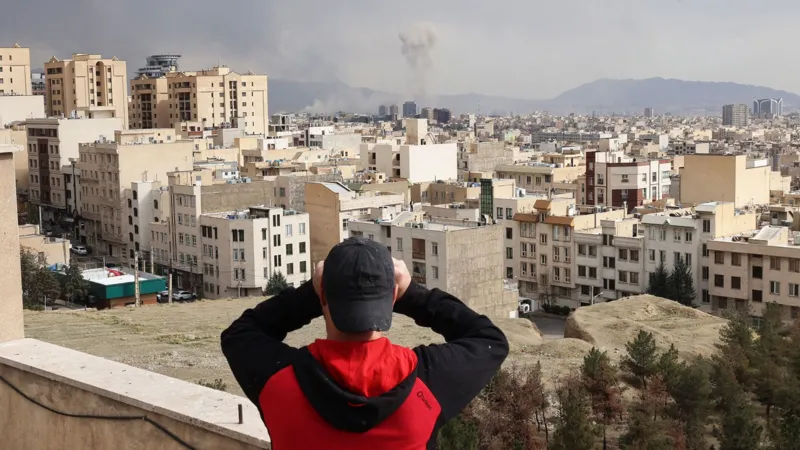
The conflict between the United States, Israel and Iran has rapidly expanded into one of the most serious crises in the Middle East in recent years. The situation intensified after large-scale US and Israeli airstrikes targeted Iran’s military and leadership, resulting in the death of Iran’s Supreme Leader, Ayatollah Ali Khamenei. His death marked a dramatic turning point and triggered swift retaliation from Tehran.
US and Israel attack Iran in a dramatic military escalation that has spread conflict across the Middle East. The strikes targeted Iranian missile systems and senior leaders, triggering retaliatory attacks and raising concerns about how long the war could last.
Lebanon’s armed group Hezbollah, which is backed by Iran, joined the conflict by firing rockets into Israel. Israel responded with strikes on Hezbollah positions in southern Lebanon. What began as a direct confrontation between Israel and Iran has now drawn in multiple countries and armed groups, increasing fears of a wider regional war.
What Triggered the US and Israeli Strikes?
US President Donald Trump stated that the primary goal of the military operation was to ensure that Iran does not develop a nuclear weapon. He said the strikes were aimed at destroying Iran’s missile systems and weakening its military infrastructure. The operation, called “Operation Epic Fury,” followed weeks of tension over Iran’s nuclear programme.
Iran has consistently denied that it is seeking nuclear weapons and maintains that its nuclear activities are for peaceful purposes. However, US and Israeli officials argue that Iran’s missile capabilities and regional influence pose a serious security threat. Israeli Prime Minister Benjamin Netanyahu described the operation as necessary to remove what he called an existential danger to Israel.
The first wave of strikes targeted missile facilities, military sites and senior leaders within Iran’s security structure. According to Israeli military sources, several high-ranking officials from the Islamic Revolutionary Guard Corps were killed. The US Central Command later reported that it had destroyed Iranian naval assets in the Gulf of Oman, further reducing Iran’s military presence in the area.
The Human Cost and Immediate Impact
The fighting has caused significant casualties. Iranian authorities reported hundreds of deaths across multiple locations, including civilians. A strike near a school in southern Iran reportedly killed more than 150 people, including children. These reports have intensified global concern about the humanitarian consequences of the conflict.
Internet services in Iran were largely restricted, and the country’s airspace was closed. Despite the damage, Iran’s military maintained the ability to respond. Retaliatory missile and drone strikes targeted Israeli cities and military installations, as well as US-linked facilities in Gulf countries.
The violence has not been limited to military targets. Civilian areas, including residential neighbourhoods and hotels in Gulf cities, have been hit. In Israel, a residential area in Beit Shemesh was struck, resulting in fatalities. The UK confirmed that a drone attack damaged its military base in Cyprus, though no casualties were reported.
Iran’s Response Across the Region
Iran’s strategy has focused on demonstrating that it can strike beyond its borders. Missile launches and drone operations have targeted countries with close ties to Washington. These actions signal Iran’s intention to broaden the pressure and show strength despite heavy losses.
The involvement of Hezbollah has opened a northern front against Israel. Rocket fire from Lebanon has prompted Israeli airstrikes in Beirut and southern Lebanon. This cross-border fighting raises concerns about further instability in Lebanon, a country already facing economic and political challenges.
The US State Department has urged American citizens in several Middle Eastern countries to leave immediately. Security warnings have increased, and diplomatic missions have strengthened protective measures. As the conflict spreads, regional governments are preparing for further escalation.
Economic and Energy Consequences
The crisis is also affecting global markets. The Strait of Hormuz is a key route for energy exports, and any disruption there has immediate economic consequences. Oil prices surged after reports of attacks on ships and energy facilities near the strait. Gas production in Qatar and refinery operations in Saudi Arabia were temporarily halted, increasing uncertainty in global supply chains.
Rising energy prices could impact economies worldwide, especially in countries that rely heavily on oil imports. Airlines have rerouted flights to avoid conflict zones, and shipping companies are reassessing routes through the Gulf. The economic ripple effects may continue if instability persists.
How Long Could the War Last?
The duration of the conflict remains uncertain. President Trump suggested that operations could continue for several weeks if necessary. Military analysts believe that the length of the war will depend on whether other regional actors become directly involved and whether diplomatic efforts gain momentum.
If both sides continue retaliatory strikes, the conflict could escalate into a prolonged regional war. However, international pressure may push for negotiations to prevent further destruction. Countries such as Oman and Qatar, which have previously acted as mediators, could attempt to reopen diplomatic channels.
For now, the Middle East faces a period of intense uncertainty. The balance between military action and diplomatic restraint will determine whether the crisis remains limited or expands further. As global leaders call for calm, millions of civilians across the region are watching closely, hoping for stability in an increasingly volatile environment.