
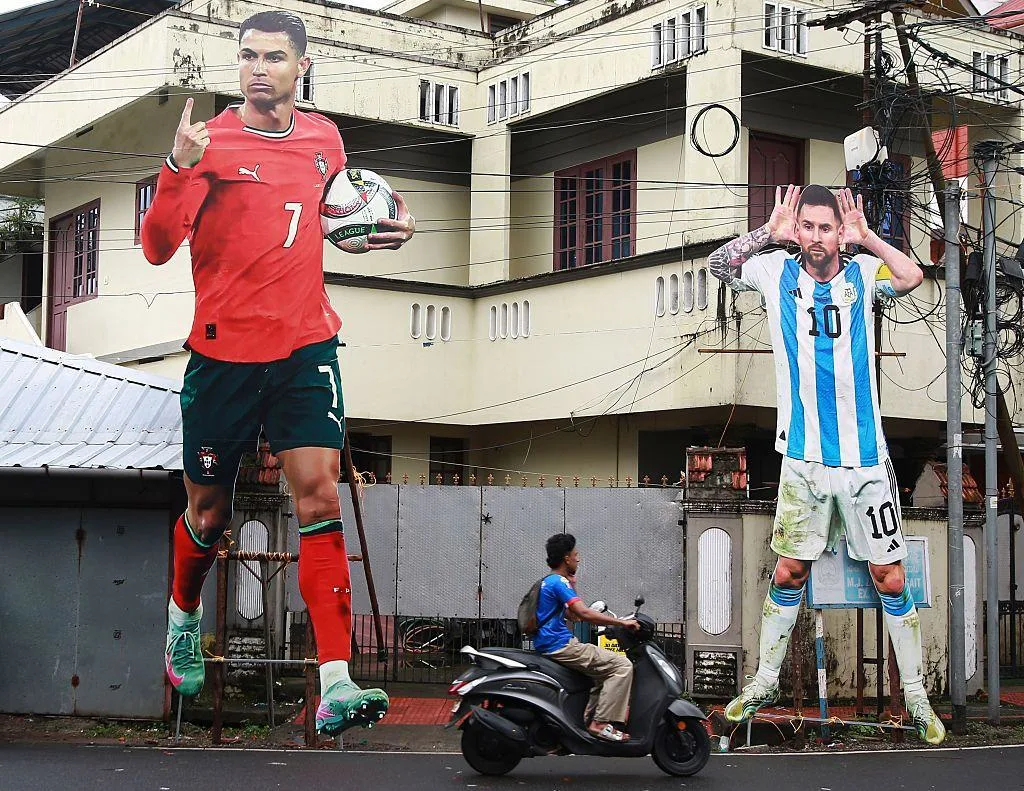
India is one of the largest countries on earth, in population, in cricket passion, and increasingly in sporting ambition. Yet when the FIFA World Cup kicks off every four years, India watches from the sidelines like any other non-participating nation. No Blue Tigers on the pitch. No Indian anthem at the stadium. Just fans cheering for Messi or Ronaldo while silently asking the same question: why not us?
This explainer breaks down the real reasons behind India's absence, covering past failures, present struggles, and whether a future at the World Cup is even possible.
How Indian Football Lost Its Way
India actually had a brief golden era in Asian football during the 1950s and 1960s, winning the Asian Games gold medals in 1951 and 1962. The team was even invited to the 1950 FIFA World Cup in Brazil, though they ultimately withdrew before playing a single game. That early potential, however, was never converted into a long-term footballing culture with proper infrastructure or sustained investment.
Shyam Thapa, the 78-year-old striker who helped India win bronze at the 1970 Asian Games, the country's last major continental success, remembers the era with clarity and frustration. The talent existed across the country. What was missing was any institutional will to nurture it systematically across generations. India's last real continental impact was over five decades ago, and the trajectory since then has been a slow, painful decline.
Cricket Swallowed Everything Else
The Indian Premier League transformed cricket into a billion-dollar economy and with it an all-consuming national obsession. Middle-class parents began channelling their children toward cricket academies, dreaming of IPL contracts worth crores. Football, despite being the most popular sport on the planet, simply could not compete for attention, funding, or young talent in that cultural environment.
As Thapa bluntly put it, parents need to understand that football can offer a rewarding and lucrative career too. But that message has struggled to land in a country where cricket is practically a religion. The grassroots pipeline for football quietly dried up while cricket's infrastructure grew exponentially with private money and media glamour. An entire generation of potential footballers was lost to the cricket dream.
Structural Failures and a Sliding Ranking
India's football governing body, the All India Football Federation (AIFF), has been at the centre of repeated controversy and poor administration. The Indian Super League (ISL), launched in 2014 with Bollywood celebrities and business tycoons backing it, was meant to be the turning point. It brought professional structure, foreign talent, and national visibility to Indian club football and raised genuine hopes for the first time in years.
But by 2025, the ISL's future had become genuinely uncertain. The AIFF failed to attract any commercial partners for the latest season, leaving hundreds of professional footballers in financial limbo and generating a damaging wave of negative press. The federation was ultimately forced to run a stripped-down version of the league without any sponsors. AIFF president Kalyan Chaubey's ambitious Vision 2047, a roadmap promising to bring 35 million children into football, now reads more like a forgotten campaign slogan than a working policy with measurable targets.
India's FIFA Ranking Tells a Harsh Story
Numbers do not lie. India currently sits at 136th in the FIFA world rankings, a sharp and painful drop over the past 18 months. For context, the two Asian debutants at the 2026 World Cup, Uzbekistan and Jordan, are ranked 52nd and 63rd respectively. Even within the Asian continent, India is not considered among the top 15 or 20 nations by any credible measure.
The 2026 World Cup expanded to a 48-team format, giving Asia 8 to 9 qualifying spots. On paper, this was the best opportunity India had ever seen. Yet the team failed to reach the third round of AFC qualifiers and also failed to book a place at the 2027 AFC Asian Cup. Former captain Sunil Chettri, who came out of retirement in 2025, has been clear and honest: consistent Asian Cup qualification should be the immediate goal, not dreams of the World Cup just yet. One step at a time.
The OCI Policy Could Be a Game Changer
One specific policy shift being actively pushed by the AIFF could make a genuine difference to the national team's quality. Currently, players of Indian origin holding foreign citizenship must renounce their passport entirely to represent India, which is a significant and often deal-breaking barrier. The proposed change would allow Overseas Citizens of India (OCI cardholders) to play for the national team without giving up their foreign passports.
At the 2026 World Cup alone, four players of Indian origin are representing other nations: Tahsin Mohammed for Qatar, Nishan Velupillay for Australia, Sarpreet Singh for New Zealand, and Samuel Moutoussamy for Congo. That is real talent playing at the highest stage under different flags. If India could access even a portion of this diaspora talent pool, it would meaningfully strengthen the squad. Australia-born Ryan Williams already showed what is possible after choosing to represent India.