
Diplomatic efforts to end the three-month US-Iran war lurched into crisis on Thursday after the two countries exchanged fresh Iran US air strikes near the Strait of Hormuz, hours after President Donald Trump publicly rejected a reported draft agreement that would have restored commercial shipping through the world's most critical oil and gas trade corridor. The escalation shattered a fragile ceasefire that had been in place since early April and sent oil prices surging more than three percent in a single session, reversing the modest relief that markets had briefly enjoyed after Wednesday's five percent decline. For global traders, energy importers, and diplomatic intermediaries who had been cautiously betting on a near-term resolution, Thursday's events were a sharp reminder of how thin the margin between a deal and a full military resumption remains.
The sequence of events unfolded rapidly. US Central Command shot down four Iranian attack drones and struck a ground control station in Bandar Abbas that was, according to a US official speaking anonymously to Reuters, about to launch a fifth drone. The official described the actions as "measured, purely defensive and intended to maintain the ceasefire." Iran's Islamic Revolutionary Guard Corps responded by targeting what it described as the US airbase from which the Bandar Abbas strike was launched. Kuwait, which hosts a major US military installation, confirmed it was responding to missile and drone attacks without specifying their origin. Israel reported air raid sirens in northern Israel linked to hostile aircraft activity, adding a third front to an already multi-layered regional confrontation.
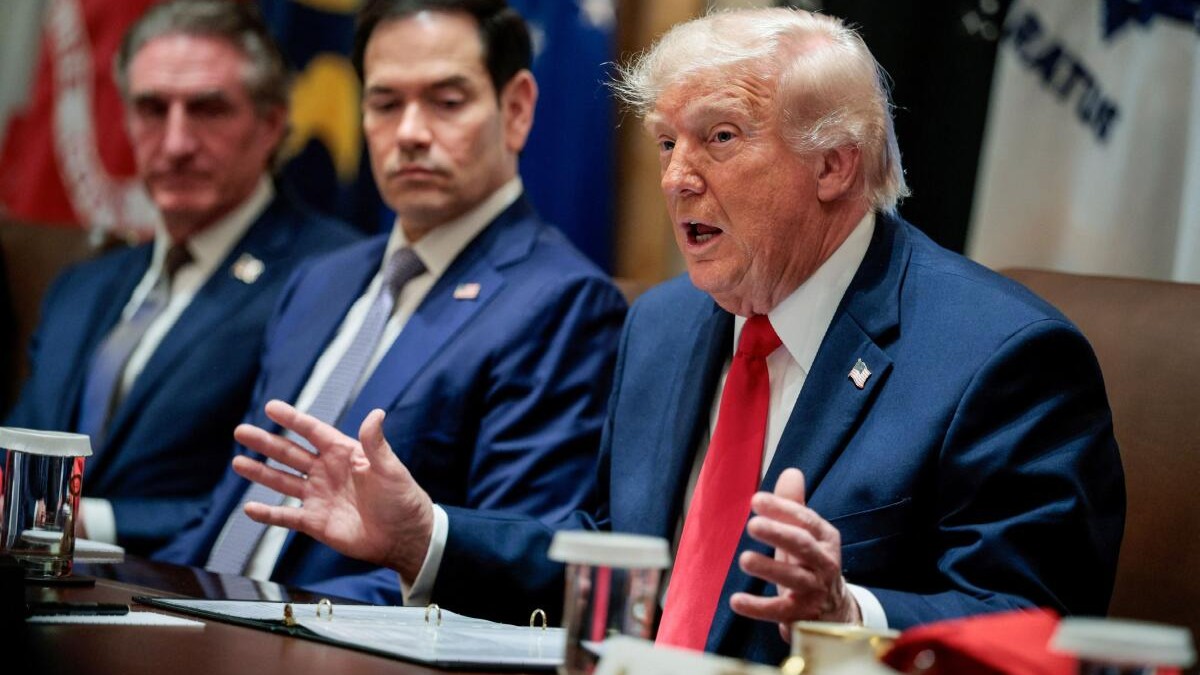
The diplomatic backdrop to Thursday's exchange was defined by Trump's direct dismissal of a draft agreement that Iranian state television had reported was close to being finalised. The draft, as described by Iranian media, would have restored commercial shipping through the Strait of Hormuz to pre-war levels within a month, with Iran and Oman jointly managing traffic through the waterway. Trump rejected the arrangement outright, saying no single country would have control over international waters and issuing an extraordinary threat against Oman, a longstanding US diplomatic and military partner. "It's international waters and Oman will behave just like everybody else or we'll have to blow them up," Trump said at a cabinet meeting, remarks that stunned regional observers and signalled Washington's uncompromising position on the governance of the world's most commercially vital maritime chokepoint.
How Three Months of War Have Unravelled Global Trade Frameworks and Ceasefire Progress
When the US and Israel launched the initial strikes against Iran on February 28, the immediate focus was military, but the secondary consequences for global trade were almost instantaneous. The Strait of Hormuz, through which roughly one fifth of the world's oil and liquefied natural gas flows under normal conditions, began operating at severely reduced capacity within days. Shipping insurance premiums spiked, tanker operators rerouted vessels or held them at anchor, and major commodity buyers in Asia and Europe scrambled to source alternative supplies. The disruption was not a gradual erosion; it was an abrupt structural shock to a trade infrastructure that the global economy had spent decades treating as a permanent feature of the energy supply landscape.
The ceasefire reached in early April was intended to create space for diplomacy, but it never fully stabilised the trade environment. The US Treasury moved to sanction the Persian Gulf Strait Authority, the Iranian body managing passage fees through the waterway, warning that any shipping company paying those fees risked secondary sanctions exposure. That move placed international tanker operators in an impossible position: refusing to pay Tehran risked confrontation with Iranian naval forces in the strait, while paying Tehran risked losing access to US dollar clearing systems and American financial markets. The dual pressure froze commercial decision-making across the global shipping industry and kept thousands of tankers stranded even after the ceasefire nominally took effect.
Throughout the ceasefire period, diplomatic back-channels involving Qatar, Oman, and other Gulf intermediaries had been working to bridge the gap between Washington and Tehran on the key commercial and geopolitical issues blocking a final agreement. Iran's stated preconditions included the full and unconditional release of frozen Iranian assets held by the United States, something Ali Bagheri Kani of Iran's National Security Council made explicit this week. "We are seeking the release of all Iranian assets blocked by the United States, and this is the legal right of the Iranian nation," Kani said. Washington, for its part, has insisted that any comprehensive deal must include the dismantling of Iran's nuclear enrichment capacity, a condition Tehran has refused to accept in the current round of talks, saying nuclear issues will only be addressed in a second phase of negotiations that has not yet been agreed.
What Trump's Oman Threat, Frozen Assets Dispute, and Nuclear Deadlock Mean for Trade Recovery
The most commercially significant question facing global markets right now is whether the Strait of Hormuz can be reopened on terms that are both diplomatically acceptable and commercially viable for international shipping. The Iranian state television draft described a framework under which Iran and Oman would jointly manage traffic through the strait and commercial shipping would return to pre-war volumes within 30 days of a deal. Trump's rejection of any arrangement giving a single country control over the waterway, combined with his direct threat against Oman's sovereignty, effectively closed off the most advanced public proposal on the table and left intermediary diplomats without a working framework to negotiate around.
The nuclear dimension adds a further layer of complexity that is particularly acute for the diplomacy-trade relationship. Secretary of State Marco Rubio stated plainly at Wednesday's cabinet meeting that Iran will never have a nuclear weapon, a non-negotiable position that conflicts directly with Iran's insistence that its nuclear programme is for peaceful purposes and will not be subject to dismantlement. Iranian sources have indicated that nuclear talks will come in a second round of negotiations, a sequencing that several of Trump's closest political allies have already signalled they find unacceptable. That domestic political constraint on Trump's negotiating flexibility means the window for a deal that trades Hormuz reopening for frozen asset release without addressing the nuclear file may be narrower than either side publicly acknowledges.
For the global trading system, the immediate consequences of Thursday's escalation were visible within hours. Oil futures gained more than three percent as news of the strikes spread through Asian and European trading sessions. Stocks fell and the dollar rose, a classic risk-off pattern that reflects market anxiety about a prolonged military confrontation rather than a temporary ceasefire disruption. The broader trade disruption, now entering its fourth month, has reshaped energy procurement strategies for importers across Asia and Europe, pushed fertiliser and food prices higher through the LNG-to-agriculture cost chain, and exposed the fragility of a global trade architecture that had been built on the assumption that the Strait of Hormuz would remain permanently open under international maritime law. Restoring that assumption will require not just a ceasefire announcement but a verified, durable diplomatic settlement that neither Thursday's strikes nor the current state of negotiations brings any closer.