
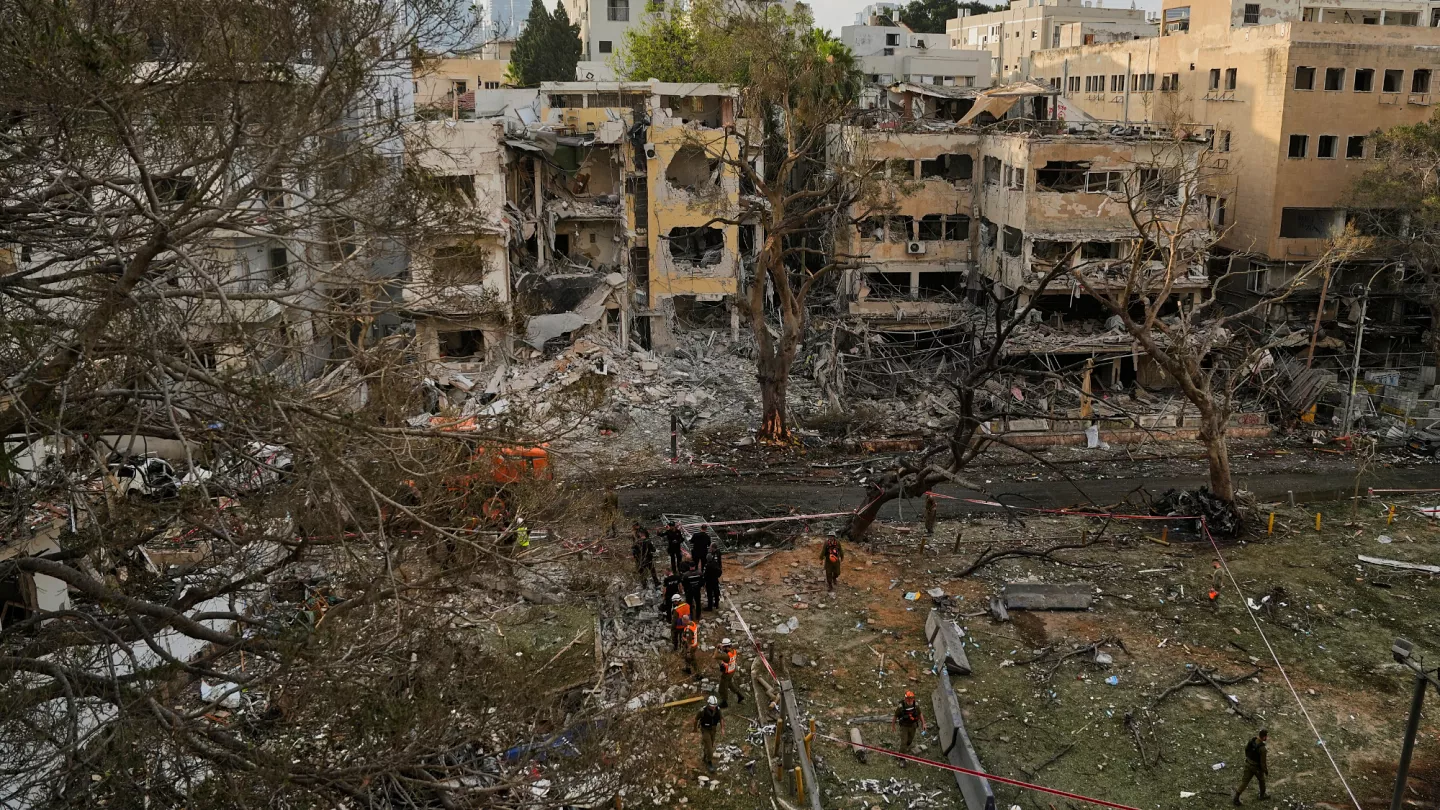
The conflict in the Middle East has entered a dangerous new phase after Israeli airstrikes killed at least 31 people in Lebanon, while Iran launched missile and drone attacks across several countries in the Gulf region. At the same time, Kuwait confirmed that multiple American warplanes crashed within its territory, adding to fears that the crisis is rapidly spreading beyond its original frontlines.
The latest developments highlight growing regional instability, with governments scrambling to protect civilians, secure military assets, and evacuate foreign nationals as airspace closures and security alerts multiply across the Middle East Conflict.
Israel Signals Possible Ground Operations in Lebanon
The Israeli military has openly indicated that it may launch ground operations in Lebanon following fresh cross-border attacks by Hezbollah. During a briefing with reporters, an Israel Defense Forces spokesperson said that “all options are on the table,” making it clear that Israel is prepared for both defensive and offensive action along its northern border.
The spokesperson warned that Hezbollah would “pay a heavy price” for its attacks, stating that Israel has mobilised close to 100,000 reservists. According to the military, dozens of battalions, brigades, and divisions have been deployed and placed on high readiness to respond to any escalation, including a full-scale ground assault if ordered by political leaders.
Rising Civilian Impact Inside Lebanon
Inside Lebanon, the situation is becoming increasingly dire as Israeli strikes hit areas linked to Hezbollah. Local sources report that at least 31 people were killed in the latest wave of attacks, with damage reported in residential areas and infrastructure already weakened by years of economic crisis and previous conflicts.
Many Lebanese citizens are expressing frustration and fear, saying the country is being pulled into another war it cannot afford. Residents note that large parts of southern Lebanon have not recovered from the conflict that weakened Hezbollah 18 months ago, leaving towns and villages vulnerable to renewed bombardment and displacement.
Criticism Grows Over Hezbollah’s Strategy
Public criticism of Hezbollah is growing within Lebanon, with many residents accusing the group of prioritising Iranian interests over national stability. Analysts and locals alike say the latest confrontation risks dragging Lebanon into a devastating conflict with Israel that could undo years of fragile recovery.
Hezbollah’s own supporters are among the hardest hit, as their homes and communities come under fire once again. Reports from the ground describe families fleeing their villages, sleeping on streets, and seeking shelter wherever possible as airstrikes intensify along the border.
Iran Expands Strikes Across the Gulf Region
Iran has widened its retaliation campaign by launching missile and drone strikes across several Gulf states, including Kuwait, Bahrain, Qatar, and the United Arab Emirates. Explosions have been reported in multiple cities, raising alarm among regional governments and international observers concerned about a wider war.
New images show plumes of smoke rising over Kuwait City following reports of a possible strike near the US embassy. The embassy has issued urgent warnings to American citizens, advising them not to visit the facility and to remain indoors while the security situation remains volatile.
US Warplanes Crash in Kuwait
Kuwait’s Ministry of Defence confirmed that several American fighter aircraft crashed on Tuesday morning under circumstances that remain unclear. Officials said the crews survived without serious injuries and were evacuated to hospitals for precautionary health checks, describing their conditions as stable.
The ministry stated that it is coordinating closely with the United States to investigate the cause of the incident. While no official link has been confirmed, the crashes come amid heightened military activity across the region, increasing speculation about technical failures, defensive responses, or operational strain.
Iranian Drone Hits UK Military Base in Cyprus
Further complicating the crisis, Cyprus confirmed that an Iranian Shahed drone crashed into British military facilities at RAF Akrotiri, a UK base located on British territory in southern Cyprus. Cypriot President Nikos Christodoulides said the drone caused minor material damage but no casualties.
The president stressed that Cyprus does not intend to be part of any military operation and remains in constant contact with European and international leaders. Following the incident, the UK Ministry of Defence announced it was moving family members out of the Akrotiri base as a precautionary measure.
UK Issues Warnings to Citizens in the Gulf
UK Foreign Secretary Yvette Cooper has warned that the situation in the Gulf is becoming increasingly stressful for British citizens living in the region. She estimates that around 300,000 British nationals are currently in Gulf countries, with more than 100,000 registered with the UK Foreign Office for safety updates.
Cooper said many people are struggling to return home due to widespread airspace closures and flight cancellations. She assured the public that the UK government is working “immensely hard” to help citizens return safely and is reviewing every possible option as the crisis continues to evolve.
Britain Distances Itself From Direct Attacks on Iran
Speaking to the BBC, Cooper emphasised that the UK has not taken part in attacks on Iran, despite allowing the United States to use British bases for defensive operations against Iranian missile threats. She described Iran’s actions as reckless, noting that strikes have hit countries that were not involved in any attacks on Iranian territory.
When asked about the launch point of the drone that struck RAF Akrotiri, Cooper said full details were still being assessed and that the Ministry of Defence would release more information once investigations were complete.
Region Faces Growing Risk of Full-Scale War
With Israeli forces mobilised, Iranian strikes spreading, and Western military assets coming under threat, analysts warn that the Middle East is approaching a tipping point. The risk of miscalculation is rising as multiple actors operate in close proximity, increasing the chance of accidental or unintended escalation.
Diplomats and international organisations are urging restraint, warning that further expansion of the conflict could destabilise global energy markets, disrupt international travel, and trigger humanitarian crises across several countries already under strain.
Uncertain Days Ahead for the Middle East
As missiles, drones, and military deployments reshape the region’s security landscape, civilians remain caught in the middle of a rapidly unfolding crisis. Governments across the Middle East and beyond are now racing against time to prevent the conflict from spiralling into a broader war with far-reaching consequences.
The coming days will likely determine whether diplomacy can regain ground or whether the region moves closer to a prolonged and destructive confrontation that few appear prepared to endure.