
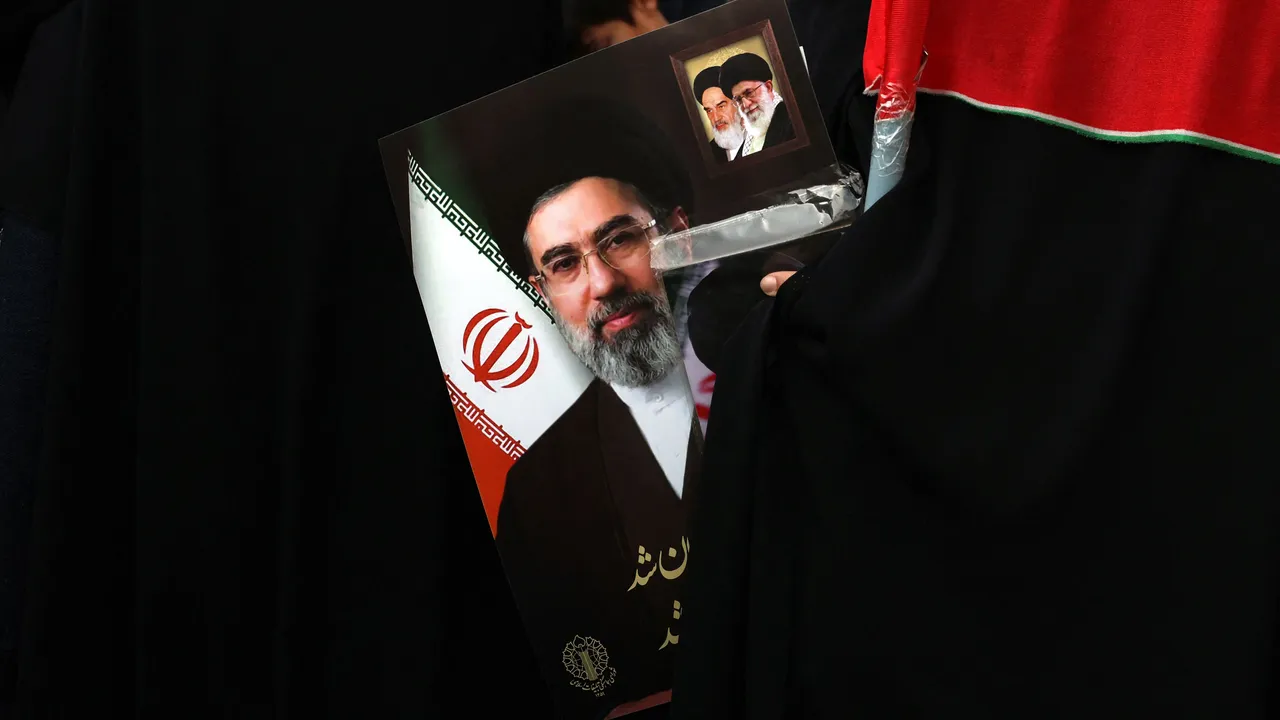
Mojtaba Khamenei alive dead Iran supreme leader 2026 question has become one of the most widely circulated and most difficult to verify stories of the U.S.-Israeli-Iran war, with social media rumours about the death of Iran's new Supreme Leader spreading rapidly following his complete absence from public appearances since he assumed power in March 2026, even as Iranian officials continue to insist he is alive and no credible independent evidence has confirmed that he died in or after the airstrikes. The speculation stems directly from the February 28, 2026 U.S.-Israeli strikes on Tehran that killed his father, Ali Khamenei, along with several other senior Iranian figures, and from reports based on intelligence leaks and regional media suggesting that Mojtaba was also injured in the same operation, with burns, leg injuries, and facial wounds mentioned in various accounts whose exact severity remains disputed and unverified. At this stage, the current fact-check assessment is that claims Mojtaba Khamenei was killed in a U.S. missile strike are not confirmed by credible evidence, Iranian officials have not announced his death, and the most authoritative international voice to address the question directly, Israeli Prime Minister Benjamin Netanyahu, has stated he believes Mojtaba is alive but operating from a bunker or secure undisclosed location.
The social media dynamics driving the speculation are significant and worth examining independently of the underlying facts about Mojtaba's status. Videos from Mashhad showing murals featuring his image among deceased political figures generated millions of views within hours of circulation, with large numbers of viewers interpreting the imagery as symbolic confirmation of his death rather than as artistic or political expression. Iranian officials dismissed those claims, but in the information environment of an active war in which verified information about senior figures in one of the combatant countries is extremely difficult to obtain, the combination of genuine public absence, unverified injury reports, and ambiguous visual imagery creates the conditions in which death rumours achieve viral traction regardless of the underlying facts. The absence of verified video or a direct public appearance from Mojtaba since he assumed power provides the factual gap that speculation fills.
Netanyahu's assessment, delivered during a CBS News 60 Minutes interview, that Mojtaba is alive but likely operating from a bunker or secure undisclosed location, and that he may be trying to exert his authority but with less effectiveness than his father commanded, is the most substantive public statement from a senior government official who would have access to intelligence assessments about Iran's supreme leadership status. Netanyahu's framing of Mojtaba as a diminished authority figure rather than a dead one is consistent with the broader Israeli and American assessment that the February strikes severely disrupted Iran's command structure without eliminating the Islamic Republic's institutional continuity, a distinction that matters enormously for how the diplomatic and military situation evolves as the ceasefire holds and negotiations proceed.
How Mojtaba Khamenei Became Supreme Leader and Why His Absence Is Significant
The joint U.S.-Israeli strikes on Tehran on February 28, 2026, represented the opening action of the current war and produced consequences that went well beyond the immediate military damage to include the death of Supreme Leader Ali Khamenei, who was among the senior Iranian figures killed in the operation. Ali Khamenei had been the supreme leader of the Islamic Republic for more than three decades following Ayatollah Khomeini's death in 1989, providing the institutional continuity and religious authority that held together the complex governance structure of a state whose legitimacy rests on the concept of Velayat-e Faqih, or guardianship of the Islamic jurist, a theological and political concept that concentrates ultimate authority in a supreme religious and political leader who is not subject to democratic accountability in the conventional sense. His death in the first hours of the war removed the figure who had managed Iran's foreign policy, nuclear programme, regional proxy networks, and internal political balance for over thirty years.
Mojtaba Khamenei's succession as supreme leader following his father's death was not constitutionally routine in the way that succession in more conventionally governed states typically is, because Iran's constitution vests the selection of a new supreme leader in the Assembly of Experts, a body of senior clerics whose deliberations are not fully transparent and whose selection process under wartime conditions with significant disruption to normal institutional functioning cannot have followed the procedures that peacetime succession would require. The circumstances of the succession, occurring in the immediate aftermath of devastating airstrikes, under conditions of active war, with significant questions about who among the senior clerical and political establishment had survived the strikes and was available to participate in whatever deliberative process produced the succession outcome, mean that the legitimacy and durability of Mojtaba's leadership position is itself a question that the information available publicly cannot definitively answer.
Mojtaba Khamenei's profile before the war was considerably lower than that of the other figures who might have been considered supreme leader succession candidates, with his public role being primarily associated with his father's household and with the IRGC's informal political networks rather than with the clerical scholarship and public religious authority that the supreme leadership's theological legitimacy requires. His selection, under whatever process produced it, raised immediate questions about whether he would be able to command the institutional deference and political loyalty across Iran's complex governing structures that his father had accumulated across three decades of leadership, questions that Netanyahu's assessment of his diminished authority compared to Ali Khamenei directly reflects.
The Injury Reports and Why They Cannot Be Independently Verified
The reports suggesting Mojtaba Khamenei was injured in the February 28 strikes, with burns, leg injuries, and facial wounds mentioned across intelligence leaks and regional media, reflect the kind of partial and unverifiable information that typically circulates during active conflict about the physical condition of an adversary's senior leadership. Israel and the United States would both have strong intelligence interests in assessing Mojtaba's physical status and governing capacity, but the intelligence assessments that inform those governments' internal decision-making are not released publicly in forms that allow independent verification of the specific injury claims. Regional media outlets, particularly those in countries with intelligence relationships with Iran or with access to Iranian information networks, sometimes publish injury reports that reflect genuine intelligence access but that cannot be verified by journalists without independent access to the same sources.
The absence of publicly released verified footage of Mojtaba Khamenei since he assumed power in March 2026 is the single most significant factual element supporting the speculation about his status, because a supreme leader who is alive, functional, and exercising authority over a state at war would normally be expected to make public appearances or televised addresses, particularly during the major national events and religious observances that have passed in the two months since he assumed power. The specific absence of live footage or verified direct communication from him creates genuine uncertainty about his physical and governing status that Iranian officials' insistence on his continued leadership cannot resolve without the verification that an independent public appearance would provide. Whether the absence reflects injury-related incapacitation, security protocols that prohibit public appearances during the war, or some other factor is the central question that available public information cannot answer.
Where Mojtaba Khamenei Is Believed to Be and What It Means for Diplomacy
The prevailing assessment among intelligence analysts and international officials, best represented by Netanyahu's public statement, is that Mojtaba Khamenei is alive and operating from a bunker or secure military facility inside Iran, having gone into protective isolation following the strikes that killed his father and reportedly injured him. This operational security posture would be entirely rational for a wartime supreme leader who represents the primary symbolic target of an adversary's decapitation strategy, and Iran's sophisticated and extensive underground military and governmental infrastructure, developed specifically to maintain command continuity under military attack, would provide the physical environment for extended leadership operations without public visibility. The question of whether he is exercising meaningful authority from that location or whether operational control of Iranian military and diplomatic decisions has effectively devolved to other figures, the IRGC leadership, the foreign ministry, or a collective decision-making structure, is the analytically crucial question that his public absence makes impossible to assess from outside Iran.
The diplomatic implications of uncertain Iranian leadership are considerable, because negotiations over the complex issues of nuclear programme, sanctions relief, Hormuz navigation, and Lebanon fighting require a counterpart with sufficient authority to make binding commitments on Iran's behalf and sufficient legitimacy to deliver Iranian institutional compliance with any agreements reached. Washington's rejection of parts of Tehran's recent ceasefire and nuclear proposals, and the stalled state of Islamabad-format talks, occur in an environment where the identity and authority of the Iranian decision-maker is itself unclear, creating the possibility that proposals and counter-proposals being exchanged through diplomatic channels may not accurately reflect the preferences and constraints of whoever actually holds decision-making power inside Iran's current leadership structure. Analysts warning that unclear leadership conditions complicate already fragile diplomatic discussions are identifying the specific operational problem that Mojtaba's continued absence from verifiable public engagement creates for the negotiation process.
Iran still possesses nearly 440 kilograms of uranium enriched to 60 percent, according to current estimates repeatedly cited during ongoing negotiations, a stockpile that remains well below the 90 percent weapons-grade level but that represents a significant technical hedge against the complete elimination of Iran's nuclear capability that U.S. and Israeli demands have been focused on. The decisions about that stockpile, about Hormuz navigation policy, and about the Lebanese Hezbollah front, are the decisions whose authorisation is most consequential for both the war's continuation and its potential resolution, and the uncertainty about who in Iran's leadership structure is making those decisions is not merely an analytical curiosity but a practical obstacle to the kind of credible diplomatic engagement that a durable peace settlement requires.