
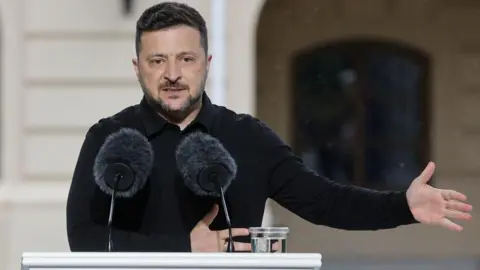
Zelensky Putin face to face talks peace letter 2026 has been formally proposed by Ukrainian President Volodymyr Zelensky in a more than 1,800-word open letter to Russian President Vladimir Putin, calling for direct bilateral negotiations between the two leaders in a neutral country such as Switzerland or Turkey and accompanying the diplomatic overture with a full ceasefire demand for the duration of any proposed negotiations, in what Kyiv is framing as a deliberate move to seize peace initiative momentum at a moment when Washington's attention is consumed by the Iran war and the prospect of American mediation returning to the Ukraine conflict on any predictable timeline is uncertain. Trump endorsed the proposal on Thursday, saying he thought it would be great if the two leaders met and urging them to get it done, while the Kremlin confirmed receipt of the letter and Putin said he was certainly prepared and willing to reach an agreement with Ukraine but that compromises needed to be made, though he simultaneously cast doubt on whether a deal could ever happen by questioning Zelensky's legitimacy as Ukraine's representative given the absence of presidential elections since his term expired in May 2024. The letter's tone was notably defiant rather than conciliatory, with Zelensky referencing Ukraine's recent drone strikes on Russia's territory, noting that Kyiv had been paying a visit to St Petersburg the day before, and adding pointedly that after 26 years in power, age is beginning to take its toll on Putin.
The most diplomatically significant element of the letter is not the meeting proposal itself, which Zelensky has made before and which the Kremlin has consistently responded to by offering a meeting in Moscow, but Kyiv's explicit public acknowledgment that the United States is fully focused on the issue of Iran and that it would be wrong to simply wait until the war in Europe returns to the centre of American attention. This framing represents a strategic shift in Ukraine's diplomatic communication, accepting as a stated premise that American attention has been diverted to the Iran war and building the case for direct bilateral Ukraine-Russia engagement as the consequence rather than waiting for American mediation capacity to return. For Kyiv to publicly announce that Washington is not paying attention is to simultaneously acknowledge a geopolitical reality, apply pressure on Washington by making its distraction visible, and position Ukraine as a proactive peace-seeking actor rather than a passive recipient of superpower diplomatic attention.
The letter arrived on the same day Putin was speaking at the St Petersburg International Economic Forum, where he told foreign journalists without apparently having seen the letter that he was prepared and willing to reach an agreement with Ukraine but that compromises were necessary, a statement whose simultaneous openness and conditionality reflects the pattern of Russian diplomatic communication that acknowledges dialogue while loading it with preconditions. Previous peace talks in Geneva, Abu Dhabi, and Istanbul have all failed to produce the framework that would allow a ceasefire to hold and negotiations to advance toward a genuine settlement, and the ceasefire negotiations that were progressing in the first months of Trump's second term have stalled in recent months as the Iran war absorbed American diplomatic bandwidth and as Russian and Ukrainian military operations continued to produce the daily civilian casualties and infrastructure destruction that make any ceasefire's humanitarian value more urgent while its political achievement more difficult.
Why Ukraine-Russia Peace Talks Have Repeatedly Failed and What Zelensky's Letter Addresses
The sequence of failed peace processes that Zelensky's letter implicitly references, Geneva, Abu Dhabi, and Istanbul, documents the specific pattern of Ukrainian-Russian diplomatic engagement that has characterised the current phase of the conflict: both sides willing to send representatives to talks in neutral locations, both sides presenting maximalist positions that the other cannot accept, and both sides using the talks as diplomatic cover for military operations that continue regardless of the negotiating timeline. The structural gap between Ukraine's position that it will not cede any territory to Russia because doing so would embolden future Russian aggression, a position Kyiv has maintained since the 2022 invasion, and Russia's position that Ukraine must withdraw from the four occupied regions of Donetsk, Luhansk, Kherson, and Zaporizhzhia and abandon its NATO aspiration is not a gap that any amount of diplomatic creativity can bridge without one or both sides accepting the fundamental compromise that their domestic political situations have made publicly impossible to endorse. The peace talks that have failed were not failed primarily because of the location, format, or mediator choice but because the substantive positions of the parties remain incompatible with any agreement that both leaderships could survive politically.
Zelensky's call for a full ceasefire for the duration of negotiations addresses one of the specific process problems that has undermined previous talks, because negotiating while military operations continue imposes real-time military costs on the concessions that negotiations require, making both sides less willing to make the territorial or political compromises that settlement demands at exactly the moments when negotiations are closest to producing them. A ceasefire that creates genuine separation between the military and diplomatic tracks would change the negotiating dynamics by removing the daily military pressure that reinforces each side's maximalist position, but Putin's immediate ruling out of a ceasefire condition on the same day Zelensky proposed it documents the Russian calculation that continuing military operations serves its strategic interests more than a pause that might solidify Ukrainian defensive positions and create international recognition of current territorial lines.
The Ukraine-Russia territory dispute's specific geography, with Russia having formally annexed four Ukrainian regions that it does not fully control and with Ukrainian forces maintaining significant presence in parts of those regions, creates a military and political reality that any ceasefire line would need to navigate in ways that would immediately be read as de facto recognition of whatever territorial disposition the ceasefire froze. The Kremlin's insistence that Ukraine withdraw from the four annexed regions before any meaningZelenskyful settlement can proceed is a demand for a territorial concession that would give Russia the complete control over territories it has formally annexed but not fully secured militarily, making it a maximalist negotiating position rather than a ceasefire precondition, and Zelensky's letter's implicit rejection of this framing by proposing direct talks without preconditions is the specific diplomatic move that the letter's meeting proposal represents.
The Iran War's Role in Changing Ukraine's Diplomatic Context
The Iran war's impact on Ukraine's strategic and diplomatic situation extends well beyond the diversion of American attention that Zelensky's letter explicitly acknowledges, creating a broader shift in the international context that affects everything from weapons supply priorities to the diplomatic bandwidth of the Western coalition that has been Ukraine's primary support base since 2022. American military and logistical focus on the Gulf region, the domestic political consequences of the Iran war's inflation impact on American voters, and the Republican congressional resistance to further foreign military commitments that the Iran war has amplified all reduce the likelihood that the large-scale American military and financial support for Ukraine that has been a cornerstone of its defence capacity will be sustained at the levels of previous years. Zelensky's acknowledgment that it would be wrong to wait for Washington's attention to return is the public facing of a private Ukrainian assessment that the window for American-mediated peace terms may be narrowing and that Ukraine's diplomatic initiative must reflect its own agency rather than waiting for a superpower patron whose attention is elsewhere.
The contrast between the diplomatic and media intensity surrounding the Iran war negotiations and the relative quiet of Ukraine peace diplomacy in recent months documents the specific competition for international attention that Zelensky is navigating. When Trump is simultaneously conducting the Iran war, negotiating ceasefire terms with Tehran, attending the Beijing summit with Xi Jinping, and managing the domestic political consequences of the conflict's economic impact, the Ukraine war's daily developments must generate extraordinary salience to compete for American presidential attention and the diplomatic capital that American presidential engagement represents. Zelensky's St Petersburg drone strike reference in the letter, noting Kyiv had been paying a visit the previous day, serves the dual purpose of demonstrating Ukrainian military capability and creating the kind of provocative diplomatic communication that generates international coverage that the more standard diplomatic language of the meeting proposal alone would not produce.
Putin's Legitimacy Challenge, Trump's Position, and What a Meeting Would Require
Putin's statement questioning whether Zelensky is a legitimate representative of Ukraine, based on the absence of presidential elections since Zelensky's term expired in May 2024, is one of the most revealing examples of diplomatic bad faith in the current peace process, because it raises a procedural objection whose resolution Russia has made impossible through its own actions. Ukrainian elections have been suspended under the martial law that was declared following Russia's full-scale invasion in February 2022, and the martial law that prevents elections is itself a direct consequence of the Russian military invasion that Putin ordered, making his challenge to Zelensky's legitimacy a circular argument in which Russia creates the conditions that prevent democratic renewal and then uses those conditions to question the democratic mandate of the government it created those conditions against. The legal question about Zelensky's status that Putin invited lawyers to analyse is not a genuine procedural concern but a negotiating tool designed to give Russia the option to refuse engagement on process grounds when the substantive concessions required for a deal are politically inconvenient.
The Kremlin's confirmation that it received Zelensky's letter and its standard response that Zelensky is welcome to meet Putin in Moscow reflects the Russian diplomatic posture of maintaining nominal openness to dialogue while loading the practical arrangements with conditions that serve as de facto refusals. A meeting in Moscow would require Zelensky to travel to the capital of the country that has been conducting a war of aggression against Ukraine for more than four years, in a geopolitical context that would be interpreted globally as a Ukrainian capitulation rather than a negotiating encounter between equals, making the Moscow venue offer a rejection dressed as an acceptance. Zelensky's specific proposal of Switzerland or Turkey as meeting venues addresses precisely this dynamic, suggesting established neutral ground whose selection would not carry the symbolic freight of either Moscow or Kyiv while providing the security and international monitoring framework that genuine negotiations require.
Trump's endorsement of the meeting proposal, saying it would be great if they met and urging them to get it done while declining to specify what compromises he wanted each side to make, reflects the American president's preferred posture of encouraging a deal whose content he does not define in public, leaving himself the flexibility to claim credit for whatever outcome emerges while avoiding the political exposure of specifying terms that either side might find unacceptable. His statement that he thinks the US has been instrumental in bringing the two countries closer to peace and his belief that both sides will make certain compromises suggests American confidence in the process that the absence of any substantive progress in recent months does not obviously justify, but maintains the optimistic public framing that allows Trump to remain engaged in the peace process narrative without committing to the specific pressures on each side that genuine brokerage would require.