
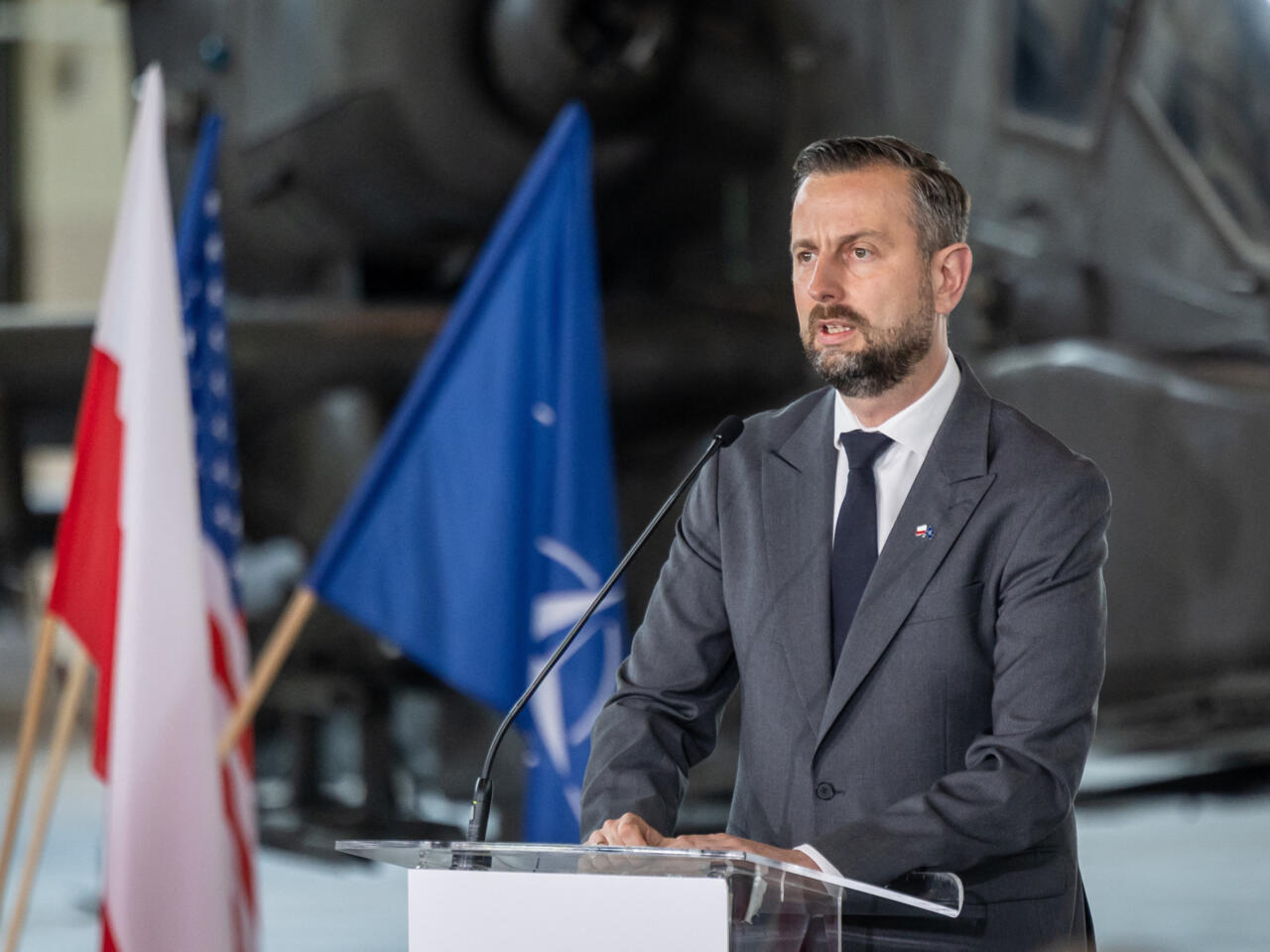
Poland's Defence Minister Wladyslaw Kosiniak-Kamysz has called on Poland warns Ukraine to exercise greater precision in its drone operations, warning that stray flights risk giving Russia an opening to exploit tensions among NATO allies. Speaking at a press conference in Tallinn, the Estonian capital, the minister made clear that allied territory must not be violated or put at risk, no matter the circumstances. His remarks came in the wake of a series of drone-related airspace incidents across the Baltic states that have put European defence officials on edge.
"Ukraine must be more precise here, of course, to avoid giving rise to Russian provocations," Kosiniak-Kamysz told reporters. He followed that with a direct statement of principle: "Our territories should not be violated, they should not be threatened." The comments were measured but firm, reflecting the delicate balancing act Poland and other NATO members face as they continue to support Ukraine militarily while protecting their own sovereign airspace from unintended incursions.
The statement arrives at a particularly sensitive moment in the broader European security landscape. With the war in Ukraine now well into its third year, the frequency and range of Ukrainian drone operations have increased substantially. That expanded operational footprint has brought with it a new category of risk, one that sits not with Russian missiles targeting allied nations, but with allied nations having to manage the downstream consequences of Ukrainian military activity near or over their borders.
How Drone Airspace Violations Have Escalated Across the Baltic Region
The concerns raised by Poland's defence minister did not emerge in a vacuum. Over the past year, a string of airspace incidents across the Baltic states and neighbouring countries has steadily built pressure on European defence ministries to address the issue more forcefully. These incidents have ranged from unidentified drone sightings near sensitive infrastructure to confirmed crossings of national airspace, each one prompting urgent consultations among NATO members about protocols and response procedures.
Estonia, Latvia, and Lithuania, all of which share proximity to the ongoing conflict zone and to Russia's sphere of military activity, have been particularly alert to any unexplained aerial activity. The choice of Tallinn as the venue for Kosiniak-Kamysz's remarks was therefore significant, placing his message directly in the region most affected by airspace anxiety. Baltic officials have repeatedly called for clearer communication from Kyiv about drone flight paths, especially for long-range operations that travel far from the frontlines before completing their mission.
These past incidents matter because they feed directly into Russian propaganda narratives. Moscow has consistently attempted to frame Ukraine's military operations as reckless or destabilising, and any airspace breach over a NATO member state hands the Kremlin a ready-made talking point. Polish officials are acutely aware of this dynamic, which is why the minister's language centred specifically on avoiding the conditions that allow Russian "provocations" to take hold in the first place. The concern is not just operational, it is strategic.
Why NATO Allies Are Walking a Tightrope on Ukraine Drone Policy
As of now, the core tension is straightforward. Ukraine depends on long-range drone strikes as one of its most effective tools against Russian military infrastructure, energy systems, and logistics networks deep inside Russian territory. These operations have had real strategic impact, disrupting Russian supply lines and forcing the Kremlin to divert air defence resources away from the front. Curtailing or restricting Ukrainian drone capability in any meaningful way would carry serious military consequences for Kyiv at a time when battlefield pressure remains intense.
At the same time, NATO member states have treaty obligations to protect their own airspace, and the political cost of repeated violations, however unintentional, is real. Citizens in Poland, Estonia, Latvia, and Lithuania are watching these incidents closely. Governments that appear unable or unwilling to assert control over what happens in their own skies face uncomfortable questions from voters and opposition parties alike. The minister's public statement is, in part, a way of demonstrating to domestic audiences that the issue is being taken seriously at the highest levels of defence leadership.
The practical solution being discussed across NATO channels involves closer real-time coordination between Ukrainian military planners and allied airspace authorities. This would allow neighbouring countries to be notified in advance of drone flight corridors, giving them the ability to distinguish between known Ukrainian operations and unidentified aerial activity that may require an intercept response. It is a technically and diplomatically complex arrangement, but one that senior officials on both sides appear increasingly open to formalising as the scale of drone operations continues to grow.